

Upcomming Events
-
11Aashadha
-
12AashadhaInternational Day against Drug Abuse and Illicit Trafficking 2 days remaning
-
13AashadhaShani Pradosh Vrata 3 days remaning
-
15Aashadha
-
18AashadhaWorld Sports Journalist Day 8 days remaning
-
20AashadhaInternational Cooperative Day 10 days remaning
-
23AashadhaGorakhkali Puja 13 days remaning
-
24AashadhaBudhastami Vrata 14 days remaning
-
26AashadhaYogini Ekadashi Vrata (Smarta) 16 days remaning
-
27AashadhaYogini Ekadashi Vrata (Vaishnava)/World Population Day 17 days remaning
-
28AashadhaPradosh Vrata 18 days remaning
-
29AashadhaBhanu Jayanti 19 days remaning
-
31AashadhaWorld Youth Skill Day 21 days remaning
-
1Shrawan
-
5ShrawanSurya Pooja 27 days remaning
-
6ShrawanBudhastami Vrata/Gorakhkali Puja 28 days remaning
-
9ShrawanHarishayani Ekadashi Vrata/Chaturmaas Vrata Aarambha 31 days remaning
-
10ShrawanPradosh Vrata 32 days remaning
-
12ShrawanWorld Hepatitis Day 34 days remaning
-
13ShrawanGuru Purnima Vrata/Vyas Jayanti/World Tiger Day 35 days remaning
-
14Shrawan
-
15ShrawanKhir Khane Din 37 days remaning
-
16ShrawanWorld BreastFeeding Week 38 days remaning
-
18ShrawanVitak Katha Prarambha 40 days remaning
-
21ShrawanGorakhkali Puja 43 days remaning
-
23ShrawanNational Soil Conservation Day 45 days remaning
-
24Shrawan
-
25ShrawanSom Pradosh Vrata 47 days remaning
-
26ShrawanGathāṃmugaḥ Caḥhre 48 days remaning
-
27ShrawanInternational Youth Day 49 days remaning
-
28ShrawanGunla Parwa Arambha/World Calligraphy Day 50 days remaning
-
30ShrawanVaraha Jayanti 52 days remaning
-
1BhadraNag Panchami Barta/Singh Sankranti 54 days remaning
-
2BhadraKalki Jayanti 55 days remaning
-
3BhadraTulasidas Jayanti/National Information Day/World Photography Day 56 days remaning
-
4BhadraGorakhkali Puja 57 days remaning
-
7BhadraPutrada Ekadashi Vrata 60 days remaning
-
9BhadraPradosh Vrata 62 days remaning
-
12Bhadra
-
13BhadraGaijatra/International Day Against Nuclear Tests 66 days remaning
Jyotish
-
Jyotish Mohan Ghimireसम्पुर्णानन्द संस्कृत विश्वव...
-
 Jyotish Damodar Poudelनेपाल संस्कृत विश्व बिद्यालय�...
-
Jyotish Narayan Prasad Bhandariज्योतिषका उप-प्राध्यापक (lecturer of A...
-
Jyotish Purushottam Ghimireनेपाल संस्कृत विश्वविद्यालय, �...
-
 Jyotish Dharmendra Krishna Paudelशास्त्री धर्मेन्द्र कृष्ण पौ�...
-
Jyotish Narayan Prasad Gautamगुरुकुल शिक्षा प्रणालीबाट ज्�...
-
Jyotish Pandit Mukunda Nepalज्योतिष पण्डित मुकुन्द नेपाल�...
-
 Jyotish Mukunda Sharmaस्वाध्याय, सत्सङ्ग र सदाचारजस�...
-
Jyotish Deepak Prasad Kafleसम्पूर्णानन्द संस्कृत विश्वव...
-
Jyotish Vaman Sapkotaशिक्षा - व्याकरणाचार्य, पौरोही...
-
Jyotish Smarika Acharyaबाल्मीकि बिद्यापिठ बाट ज्योत�...
-
Jyotish Amrit Paudelवाराणसीकै सम्पूर्णानन्द संस्...
-
Jyotish Hamro patroनेपाल संस्कृत विश्वविद्यालय �...
-
Jyotish Krishna Prasad Bhandariउपप्राध्यापक (Asst. professor of Sanskrit) नेपा�...
-
Jyotish Damodar Kaushikज्योतिष र व्याकरण विषयमा आचार�...
-
Jyotish Khageshwor Subediगुरुकुल पद्दति बाट ज्योतिषीय �...
-
 Jyotish Kuresh Pandey११ वर्षको अनुभवसहित विभिन्न ध�...
-
Jyotish Dipendra Khatiwadaसम्पुर्णानन्द संस्कृत बिश्वब...
-
Jyotish Ghanashyam Pokharelनेपाल संस्कृत विश्वविद्यालयब...


call
Hororscope
 Mesh
Mesh Brish
Brish Mithun
 Karkat
  Singha
  Kanya
Kanya Tula
Tula Brischik
 Dhanu
Dhanu  Makar
Makar  Kumbha
 Meen
Meen
मेष (चु, चे, चो, ला, लि, लु, ले, लो, अ) मनमा लागेको कुरा पूरा गर्ने इच्छा बलियो हुनेछ। अरूले भनेको सबै कुरा पत्याउनु भन्दा आफ्नै अनुभवलाई आधार बनाउनु राम्रो हुनेछ। बीचमा आएको सानो परिवर्तनले पछि फाइदा दिलाउन सक्छ। दिनको अन्त्यमा आफूले गरेको निर्णयप्रति सन्तुष्टि मिल्नेछ। आजको शुभ रंग हल्का सेतो हो भने शुभ अंक ५ रहेको छ।



2083 Aashadha
6
Saturday
Jun 20, 2026
जेठ शुक्ल षष्ठी
Bhoto Jatra/Sithi Nakha/Kumarsasthi/World Refugee Day
जेठ शुक्ल षष्ठी

MY NOTE


भोटो जात्रा
Exclusive audio
The sky-touching chariot is constructed in Sikhar pattern (Mountain like pattern), the wooden edifice is about 15 to 20 meters in height and 4.5 meters in diameter. From the construction of the Chariot to the Bhoto Jatra, this longest Jatra has a process of 2 months and today is the main day.
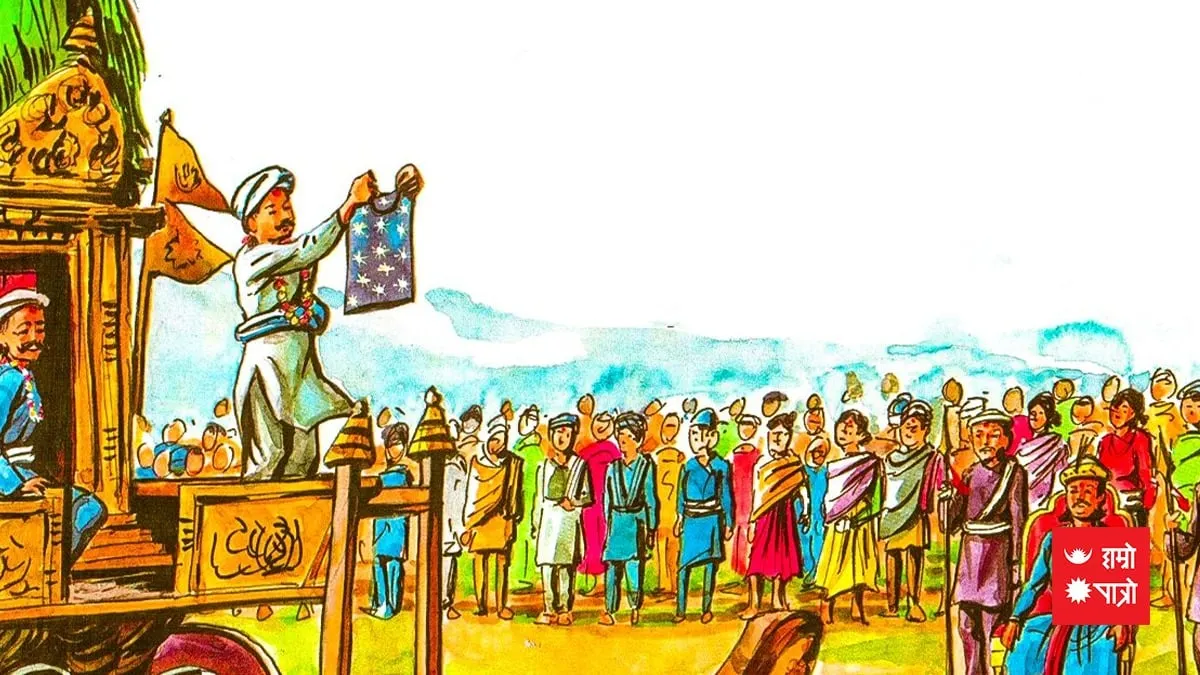
Story of Bhoto Jatra
Bhoto Jatra relates the incident of finding a real owner of a divine vest 9Bhoto) which was gifted to a farmer by a serpent king. People of eight localities in Patan—Natol, Gabahal, Mekhabahal, Kusunti, Kayanni, Walmaya, Dhaugol, and Sachhi Chhe—usually lead the Machhindranath chariot procession. This chariot brings an ancient relevance, it is believed that ancient Lichivi King Narendra Deb brought the idol of Rato Matsandrnath from Assam India to rid his kingdom of the drought. This chariot procession also marks the beginning monsoon in Nepal, clouds have arrived with water and hope within.
Avalokitswora has an eye upon us and his grace is pervasive. Utmost wishes of the chariot procession.
Sithi Nakha
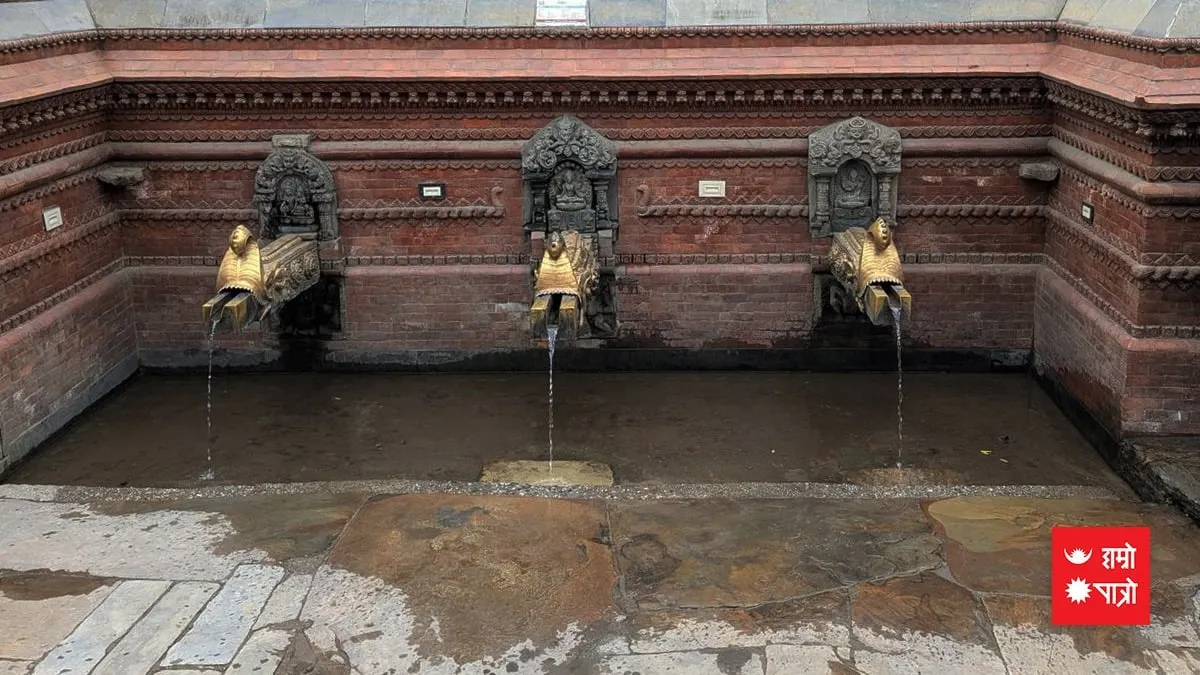
Sithi Nakha
Exclusive audio
According to the Newa civilization and rites, the Sithi Nakha festival is celebrated every year on the day of Jeshtha Shukla Sashti.
Just as Kathmandu is popular as a city of temples, so is Kathmandu a city of pottery and ponds, wells, stone fountains, and boreholes. Considering the cleanliness and orderliness of these things which are very important for water resources, it has become a custom to celebrate Sithi Nakh. Today, the importance of Sithi Nakha to Kathmandu and Kathmandu residents has increased even more.
Highlights of Sithi Nakha
This festival also highlights the importance of water source conservation and the need for clean water. Today, it is customary to worship around wells, boreholes, and ponds and to clean up before worship. In this way, after everyone has gathered and worshiped, the far-reaching ritual of being religiously and culturally compelled not to litter there throughout the year is commendable.
It is believed that the water resource should be closed for a few days after cleaning in Sithi Nakha to stabilize the water level. When water is cleaned, it is cleaned by entering inside the dug wells, ponds, and boreholes, and by doing so, the underneath wastes like mud, silt, and sediment come up to the surface of the water. After cleaning the spring in this way, milk, ghee, honey, curd, and other things are added there. There is a fact that the water source in the Kathmandu valley is not as clean and full as before, resources have degraded because of rapid urbanization and mismanaged constructions/ habitat.
No matter how much rain falls, there is a cement floor around it, so the water source will not be able to absorb the rain. Due to this, most of the water sources are drying up and the people of the valley have to depend on pipes, tankers, and jars for water.
Activities on Sithi Nakha
On the day of Sithi Nakha, after the collective cleaning of the water source, it is customary to go to each other's home to greet and the welcome is delivered also through offering traditional Newa food such as Bara, Chatamari, Choyala, etc. On the same day, Chandi Devi is worshiped at Chaskhel in Bhaktapur and Kumar Kartikeya (Son of Lord Shiva and Parwati) is worshipped at Jaisidebal Kathmandu. Kumar Kartikeya is referred to by the community as a picture of eight lotus flowers placed at the entrance of his house or an artistic expression carved in metal, the entrance of a traditional Newa home is decorated by such artistic metal lotus.
Want to talk a little bit about Kumar Kartikeya, this son of Shivaji is described in the Puranas as a colonel in a supernatural army, referred to as Mahasenani. This strong man, Kumar, who can kill demons like Tarakasur is also described as the son of Ganga. It is said in the Puranas that he had six heads and was on the banks of the Ganges at the time of his birth. The river Ganga itself flows through Shivaji's Jata, so the form of Ganga has a lot to do with the water and its purity.
A unique blend of environment, milieu, and lifestyle, this festival has been teaching us the lesson of water and spring sanitation for centuries. Public awareness programs are being run in the Nepali community through foreign projects, from hand washing to drinking clean water. If we look closely, our ancient traditions are scientific and transformative in themselves. Good luck to Sithi Nakh: May our water source and mind be both pure and clean.
World Refugee Day

विश्व शरणार्थी दिवस
Exclusive audio
Background:
World Refugee Day is an international day designated by the United Nations to honor refugees around the globe. It falls each year on June 20 and celebrates the strength and courage of people who have been forced to flee their home country to escape conflict or persecution. World Refugee Day is an occasion to build empathy and understanding for their plight and to recognize their resilience in rebuilding their lives.
One in every 113 people in the world is a refugee and has to leave home, so all of us need to pay attention to this issue. Let the idea of world brotherhood and Vudaiva Kutumbakam come to every country of the world and reduce the number of wars and natural disasters so that the refugee problem will be solved by itself.
What does seeking safety mean?
1. Right to seek asylum
2. Safe access
3. No pushbacks
4. No discrimination
5. Humane treatment
What happens today?
Each year, World Refugee Day is marked by a variety of events in many countries around the globe in support of refugees. These activities are led by or involve refugees themselves, government officials, host communities, companies, celebrities, school children, and the general public.
The inspiring theme of World Refugee Day 2026, “Until Everyone Is Safe,” delivers an important message that our collective efforts must continue until every refugee, displaced person, and community affected by persecution can live with safety, dignity, and their basic rights protected.
As long as even one person remains unsafe anywhere in the world, humanity as a whole cannot truly be safe. On this day, let us understand the struggles of displaced people, honor their courage, and show our solidarity in building a world where everyone has the opportunity to live in safety and peace.
Kumarsasthi
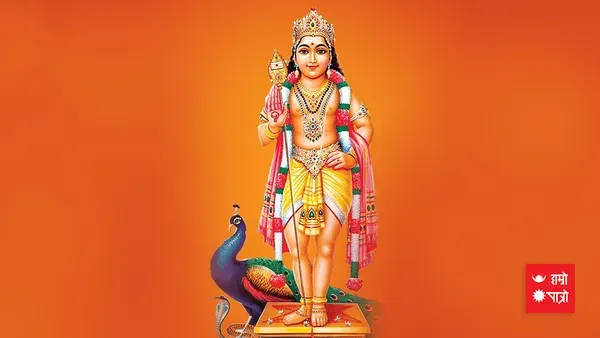
Kumarsasthi
विशेष अडियो सामग्री
Skanda is the name of Kumar Kartikeya, elder son of Lord Shiva
Skanda, the eldest son of Lord Shiva, also known as Kumar Kartikeya. Kumar Kartikeya is worshiped on the 6th day of Skanda. Skanda Shashti is celebrated every month on the sixth day of Shukla Paksha.
It is believed that if one can remember Kumar Kartikeya and mother Parvati by fasting and worshiping on this day, the obstacles will be removed.
The Mantra for Skanda Puja
देव सेनापते स्कन्द कार्तिकेय भवोद्भव, कुमार गुह गांगेय शक्तिहस्त नमोस्तु ते॥
ऊँ ऐं हुं क्षुं क्लीं कुमाराय नमः
ऊँ नमः पिनाकिने इहागच्छ इहातिष्ठ
ऊँ नमः पशुपतये
Today worship is started by setting up a lamp urn and setting up an idol of Lord Ganesha.
May the glory of Skanda Shashti alleviate the sufferings of all.
Upcomming Events
-
11Aashadha
-
12AashadhaInternational Day against Drug Abuse and Illicit Trafficking 2 days remaning
-
13AashadhaShani Pradosh Vrata 3 days remaning
-
15Aashadha
-
18AashadhaWorld Sports Journalist Day 8 days remaning
-
20AashadhaInternational Cooperative Day 10 days remaning
-
23AashadhaGorakhkali Puja 13 days remaning
-
24AashadhaBudhastami Vrata 14 days remaning
-
26AashadhaYogini Ekadashi Vrata (Smarta) 16 days remaning
-
27AashadhaYogini Ekadashi Vrata (Vaishnava)/World Population Day 17 days remaning
-
28AashadhaPradosh Vrata 18 days remaning
-
29AashadhaBhanu Jayanti 19 days remaning
-
31AashadhaWorld Youth Skill Day 21 days remaning
-
1Shrawan
-
5ShrawanSurya Pooja 27 days remaning
-
6ShrawanBudhastami Vrata/Gorakhkali Puja 28 days remaning
-
9ShrawanHarishayani Ekadashi Vrata/Chaturmaas Vrata Aarambha 31 days remaning
-
10ShrawanPradosh Vrata 32 days remaning
-
12ShrawanWorld Hepatitis Day 34 days remaning
-
13ShrawanGuru Purnima Vrata/Vyas Jayanti/World Tiger Day 35 days remaning
-
14Shrawan
-
15ShrawanKhir Khane Din 37 days remaning
-
16ShrawanWorld BreastFeeding Week 38 days remaning
-
18ShrawanVitak Katha Prarambha 40 days remaning
-
21ShrawanGorakhkali Puja 43 days remaning
-
23ShrawanNational Soil Conservation Day 45 days remaning
-
24Shrawan
-
25ShrawanSom Pradosh Vrata 47 days remaning
-
26ShrawanGathāṃmugaḥ Caḥhre 48 days remaning
-
27ShrawanInternational Youth Day 49 days remaning
-
28ShrawanGunla Parwa Arambha/World Calligraphy Day 50 days remaning
-
30ShrawanVaraha Jayanti 52 days remaning
-
1BhadraNag Panchami Barta/Singh Sankranti 54 days remaning
-
2BhadraKalki Jayanti 55 days remaning
-
3BhadraTulasidas Jayanti/National Information Day/World Photography Day 56 days remaning
-
4BhadraGorakhkali Puja 57 days remaning
-
7BhadraPutrada Ekadashi Vrata 60 days remaning
-
9BhadraPradosh Vrata 62 days remaning
-
12Bhadra
-
13BhadraGaijatra/International Day Against Nuclear Tests 66 days remaning
Jyotish
-
Jyotish Mohan Ghimireसम्पुर्णानन्द संस्कृत विश्वव...
-
Jyotish Damodar Poudelनेपाल संस्कृत विश्व बिद्यालय�...
-
Jyotish Narayan Prasad Bhandariज्योतिषका उप-प्राध्यापक (lecturer of A...
-
Jyotish Purushottam Ghimireनेपाल संस्कृत विश्वविद्यालय, �...
-
Jyotish Dharmendra Krishna Paudelशास्त्री धर्मेन्द्र कृष्ण पौ�...
-
Jyotish Narayan Prasad Gautamगुरुकुल शिक्षा प्रणालीबाट ज्�...
-
Jyotish Pandit Mukunda Nepalज्योतिष पण्डित मुकुन्द नेपाल�...
-
Jyotish Mukunda Sharmaस्वाध्याय, सत्सङ्ग र सदाचारजस�...
-
Jyotish Deepak Prasad Kafleसम्पूर्णानन्द संस्कृत विश्वव...
-
Jyotish Vaman Sapkotaशिक्षा - व्याकरणाचार्य, पौरोही...
-
Jyotish Smarika Acharyaबाल्मीकि बिद्यापिठ बाट ज्योत�...
-
Jyotish Amrit Paudelवाराणसीकै सम्पूर्णानन्द संस्...
-
Jyotish Hamro patroनेपाल संस्कृत विश्वविद्यालय �...
-
Jyotish Krishna Prasad Bhandariउपप्राध्यापक (Asst. professor of Sanskrit) नेपा�...
-
Jyotish Damodar Kaushikज्योतिष र व्याकरण विषयमा आचार�...
-
Jyotish Khageshwor Subediगुरुकुल पद्दति बाट ज्योतिषीय �...
-
Jyotish Kuresh Pandey११ वर्षको अनुभवसहित विभिन्न ध�...
-
Jyotish Dipendra Khatiwadaसम्पुर्णानन्द संस्कृत बिश्वब...
-
Jyotish Ghanashyam Pokharelनेपाल संस्कृत विश्वविद्यालयब...
call
Hororscope
मेष (चु, चे, चो, ला, लि, लु, ले, लो, अ) मनमा लागेको कुरा पूरा गर्ने इच्छा बलियो हुनेछ। अरूले भनेको सबै कुरा पत्याउनु भन्दा आफ्नै अनुभवलाई आधार बनाउनु राम्रो हुनेछ। बीचमा आएको सानो परिवर्तनले पछि फाइदा दिलाउन सक्छ। दिनको अन्त्यमा आफूले गरेको निर्णयप्रति सन्तुष्टि मिल्नेछ। आजको शुभ रंग हल्का सेतो हो भने शुभ अंक ५ रहेको छ।




Liked by: