

Upcomming Events
-
11Aashadha
-
12AashadhaInternational Day against Drug Abuse and Illicit Trafficking 2 days remaning
-
13AashadhaShani Pradosh Vrata 3 days remaning
-
15Aashadha
-
18AashadhaWorld Sports Journalist Day 8 days remaning
-
20AashadhaInternational Cooperative Day 10 days remaning
-
23AashadhaGorakhkali Puja 13 days remaning
-
24AashadhaBudhastami Vrata 14 days remaning
-
26AashadhaYogini Ekadashi Vrata (Smarta) 16 days remaning
-
27AashadhaYogini Ekadashi Vrata (Vaishnava)/World Population Day 17 days remaning
-
28AashadhaPradosh Vrata 18 days remaning
-
29AashadhaBhanu Jayanti 19 days remaning
-
31AashadhaWorld Youth Skill Day 21 days remaning
-
1Shrawan
-
5ShrawanSurya Pooja 27 days remaning
-
6ShrawanBudhastami Vrata/Gorakhkali Puja 28 days remaning
-
9ShrawanHarishayani Ekadashi Vrata/Chaturmaas Vrata Aarambha 31 days remaning
-
10ShrawanPradosh Vrata 32 days remaning
-
12ShrawanWorld Hepatitis Day 34 days remaning
-
13ShrawanGuru Purnima Vrata/Vyas Jayanti/World Tiger Day 35 days remaning
-
14Shrawan
-
15ShrawanKhir Khane Din 37 days remaning
-
16ShrawanWorld BreastFeeding Week 38 days remaning
-
18ShrawanVitak Katha Prarambha 40 days remaning
-
21ShrawanGorakhkali Puja 43 days remaning
-
23ShrawanNational Soil Conservation Day 45 days remaning
-
24Shrawan
-
25ShrawanSom Pradosh Vrata 47 days remaning
-
26ShrawanGathāṃmugaḥ Caḥhre 48 days remaning
-
27ShrawanInternational Youth Day 49 days remaning
-
28ShrawanGunla Parwa Arambha/World Calligraphy Day 50 days remaning
-
30ShrawanVaraha Jayanti 52 days remaning
-
1BhadraNag Panchami Barta/Singh Sankranti 54 days remaning
-
2BhadraKalki Jayanti 55 days remaning
-
3BhadraTulasidas Jayanti/National Information Day/World Photography Day 56 days remaning
-
4BhadraGorakhkali Puja 57 days remaning
-
7BhadraPutrada Ekadashi Vrata 60 days remaning
-
9BhadraPradosh Vrata 62 days remaning
-
12Bhadra
-
13BhadraGaijatra/International Day Against Nuclear Tests 66 days remaning
Jyotish
-
Jyotish Mohan Ghimireसम्पुर्णानन्द संस्कृत विश्वव...
-
 Jyotish Damodar Poudelनेपाल संस्कृत विश्व बिद्यालय�...
-
Jyotish Narayan Prasad Bhandariज्योतिषका उप-प्राध्यापक (lecturer of A...
-
Jyotish Purushottam Ghimireनेपाल संस्कृत विश्वविद्यालय, �...
-
 Jyotish Dharmendra Krishna Paudelशास्त्री धर्मेन्द्र कृष्ण पौ�...
-
Jyotish Narayan Prasad Gautamगुरुकुल शिक्षा प्रणालीबाट ज्�...
-
Jyotish Pandit Mukunda Nepalज्योतिष पण्डित मुकुन्द नेपाल�...
-
 Jyotish Mukunda Sharmaस्वाध्याय, सत्सङ्ग र सदाचारजस�...
-
Jyotish Deepak Prasad Kafleसम्पूर्णानन्द संस्कृत विश्वव...
-
Jyotish Vaman Sapkotaशिक्षा - व्याकरणाचार्य, पौरोही...
-
Jyotish Smarika Acharyaबाल्मीकि बिद्यापिठ बाट ज्योत�...
-
Jyotish Amrit Paudelवाराणसीकै सम्पूर्णानन्द संस्...
-
Jyotish Hamro patroनेपाल संस्कृत विश्वविद्यालय �...
-
Jyotish Krishna Prasad Bhandariउपप्राध्यापक (Asst. professor of Sanskrit) नेपा�...
-
Jyotish Damodar Kaushikज्योतिष र व्याकरण विषयमा आचार�...
-
Jyotish Khageshwor Subediगुरुकुल पद्दति बाट ज्योतिषीय �...
-
 Jyotish Kuresh Pandey११ वर्षको अनुभवसहित विभिन्न ध�...
-
Jyotish Dipendra Khatiwadaसम्पुर्णानन्द संस्कृत बिश्वब...
-
Jyotish Ghanashyam Pokharelनेपाल संस्कृत विश्वविद्यालयब...


call
Hororscope
 Mesh
Mesh Brish
Brish Mithun
 Karkat
  Singha
  Kanya
Kanya Tula
Tula Brischik
 Dhanu
Dhanu  Makar
Makar  Kumbha
 Meen
Meen
मेष (चु, चे, चो, ला, लि, लु, ले, लो, अ) मनमा लागेको कुरा पूरा गर्ने इच्छा बलियो हुनेछ। अरूले भनेको सबै कुरा पत्याउनु भन्दा आफ्नै अनुभवलाई आधार बनाउनु राम्रो हुनेछ। बीचमा आएको सानो परिवर्तनले पछि फाइदा दिलाउन सक्छ। दिनको अन्त्यमा आफूले गरेको निर्णयप्रति सन्तुष्टि मिल्नेछ। आजको शुभ रंग हल्का सेतो हो भने शुभ अंक ५ रहेको छ।



2083 Aashadha
15
Monday
Jun 29, 2026
जेठ शुक्ल पूर्णिमा
Dahi chiura Khane Din/Rashtriya Dhan Diwas/Jya: Punhi/Kabir Jayanti
जेठ शुक्ल पूर्णिमा

MY NOTE


दहीचिउरा खाने दिन
Exclusive audio
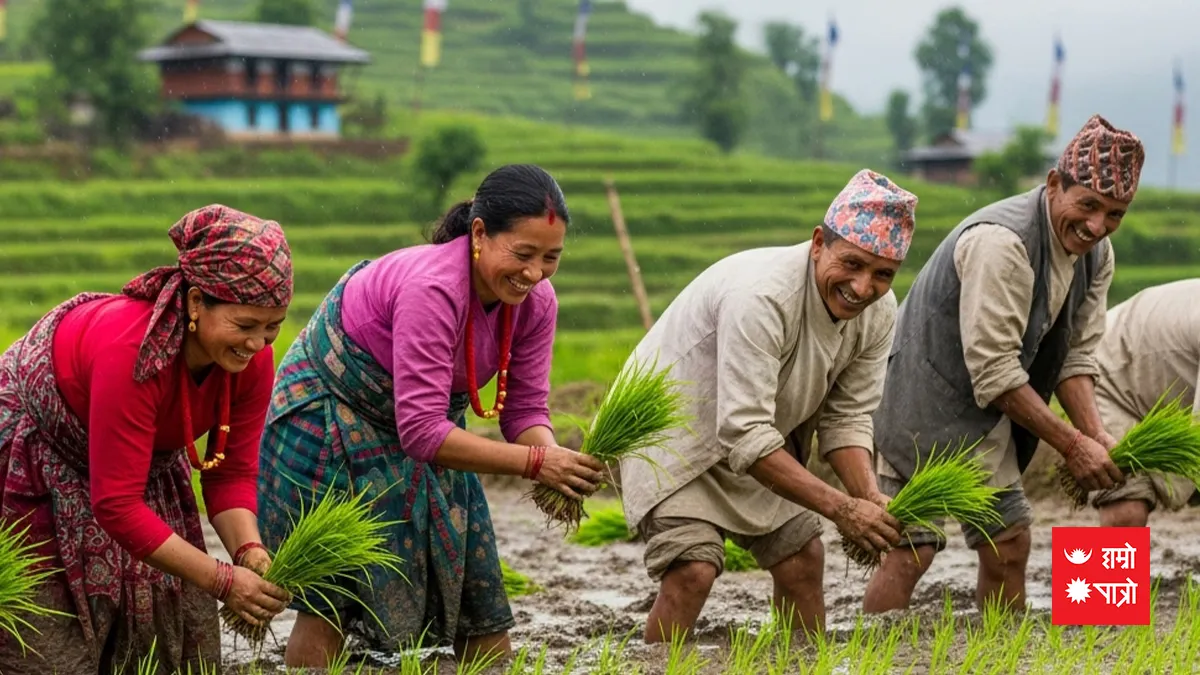
As much as possible, let's play with the rain, rice plants, and mud again today. The lifestyle of the Nepali environment is very close to nature and soil. Food of the farmers are delivered in the fields, the array of colorful slippers on the field signifies the synergy of Asar.
The plantation "Ropai" of Terai
In the Terai, the food taken to the farmers in this way is called jalkhai. Generally, it is customary to take thick bread of wheat flour and salt, oil, chilly pickle, etc. in the jalkhai. In the Terai, if the owner of the farm comes to the field to plant paddy himself, it is customary for all the farmers to chase away the landlord by spreading mud.
The month of Ashadh has not only social and economic but also literary significance. Various exciting and popular songs have been written and sung in the periphery of Ashadh for generations, such as in the field of planting paddy in the month of Ashadh/ Asar. Since such songs are sung while planting paddy, they are sung simply and slowly, so that the working farmers can forget their fatigue and work for a long time. Ashadhe Pandhra, which is one of such plantations, is a festival that kills fatigue during a busy time.
Ashadhe Pandhra is also called as Dahichura Eating Day
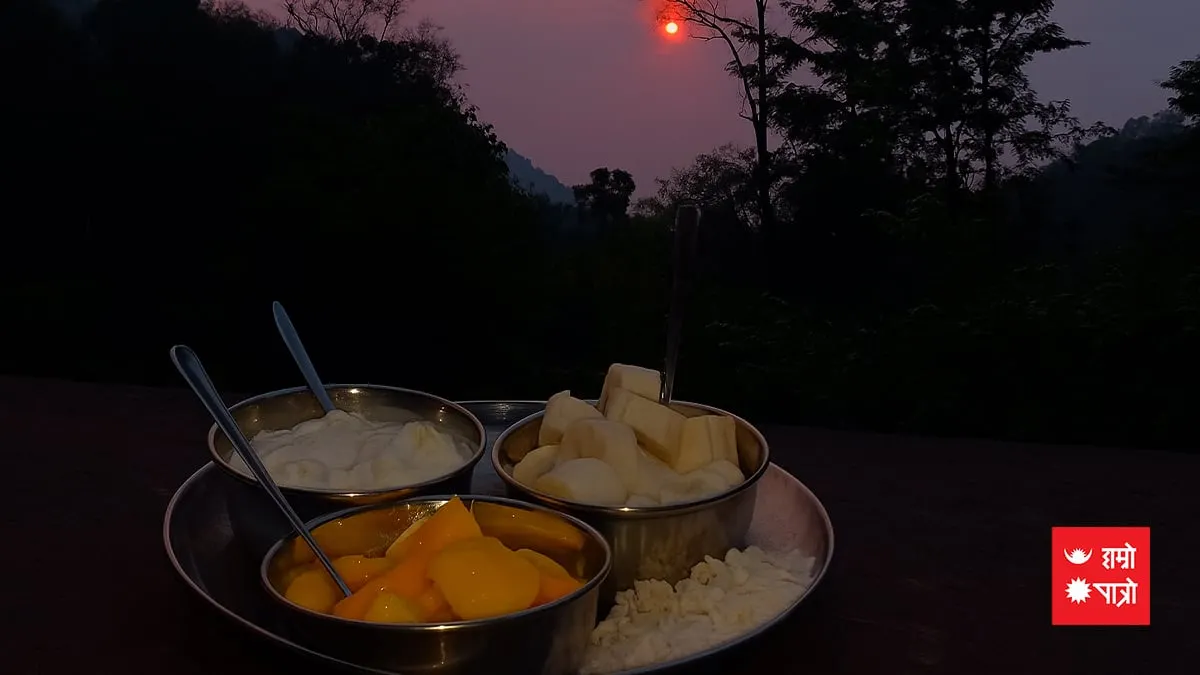
Ashadhe Pandhra is also called as Dahichura Eating Day (Yogurt and Beaten rice) because of the specialties made by Dahi Chura, Mango, and other dishes.
May the rain of hope be good for planting paddy, may the water of that rain also alleviate our sorrows, and may we sow love and harmony with each other along with the seed of paddy, may love to grow.
Let the roof of the house be filled with water, let the message of hope and love flow, let the leaking roofs be avoided, and let your
dreams are awakened.
Do try Dahi Chiura today, best wishes
Rashtriya Dhan Diwas
राष्ट्रिय धान दिवस
Exclusive audio
For this reason too, the 15th of Asar is considered as the National Paddy Day.
As much as possible, let's play with the rain, rice plants, and mud again today. The lifestyle of the Nepali environment is very close to nature and soil. Food of the farmers are delivered in the fields, the array of colorful slippers on the field signifies the synergy of Asar.
The plantation "Ropai" of Terai
In the Terai, the food taken to the farmers in this way is called jalkhai. Generally, it is customary to take thick bread of wheat flour and salt, oil, chilly pickle, etc. in the jalkhai. In the Terai, if the owner of the farm comes to the field to plant paddy himself, it is customary for all the farmers to chase away the landlord by spreading mud.
National Paddy Day / Dhan Diwas has been formally celebrated in Nepal since 2061 BS. But for centuries, it has been the custom to celebrate the 15th of Asar as a time of eating Dahi chura, planting paddy and celebration remained. This year, it is being celebrated all over Nepal as the 21th Paddy Day. This day has a special significance in keeping the morale of the farmers high and reflecting on the problems and issues of the agricultural profession.
Nepali month "Asar" correlates with the name of an Iranian village
Welcome to the celebration on the 15th of Asar, this year too, like other years, Asar has arrived with clouds, mud, and greenery. Asar, the third month of Bikram Samvat, is an agricultural village in the Lorestan district of Iran.Remember that in the Nepali dictionary we use a lot of acquired and influenced Iranian words, in this sense, it is confirmed that there is an old relationship with Iran and Devanagari script, the background of the word Asar has also shown a proof towards Iran. On the other hand, one of the five daily prayers in Islam is called Asr. In Egypt, the god of death is called Osiris Asar. In any case, to understand Asar, we do not have to keep on doing word surgery. This month of planting paddy and growing maximum by consuming minimum is often said as "Mano Khayera Muri Ubjaune", this month is special for agricultural work. The clouds are now fully matured, raindrops pouring and accumulating in streams, this month is a milestone for the food sovereignty of Nepal.
Kabir Jayanti

कवीर जयन्ती
Exclusive audio
When is Sant Kabir Jayanti?
According to the Hindu lunar calendar, Sant Kabir Jayanti is celebrated on the day of Jyeshtha Purnima, the full moon in the Hindu month of Jyeshtha. This means it normally takes place in late May or June. History of Sant Kabir Jayanti Jayanti means birth anniversary and Sant Guru Kabir Jayanti marks the birthday of Sant Kabir, an Indian mystic poet and saint who lived in the 15th century. His writings and work influenced Hinduism's Bhakti movement and his verses are also found in the Sikh scriptures of Adi Granth.
The year of Kabir's birth is open to debate, with arguments made for both 1398 and 1518, though whatever the year, it is commonly accepted that he was born and raised in a family of Muslim weavers. Despite his Islamic background, Kabir became a disciple of the Hindu Bhakti saint Ramananda. Until other Gurus and Saints of the time, Kabir lived the simple life of a weaver. He got married and had children. During his life, he suffered some degree of persecution from both Muslims and Hindus, yet on his death, both religions tried to claim the body.
That legacy of Kabir continues through the Path of Kabir (Kabir panth), a religious community that recognizes him as its founder and is one of the Sant Mat sects. The members are known as Kabir panthis.In 1915, Kabir's poetry was brought to a wider audience when his work was translated into English by the famous Bengali polymath, Rabindranath Tagore.
Jya Punhi
ज्यापुन्ही
Exclusive audio
Newa Calender marking Jya Punhi and Panauti jatra
The eighth month of the Newa calendar is Tachala which coincides with the second month of Bikram Samvat. The full moon begins on the 15th day, starting with the new moon. This month is also divided into Shuklapaksha and Chandrapaksha which are called Tachala Thwa and Tachala Ga. Jya Punhi and its importance in Buddhism Now let's talk about the day of the full moon which is also called Gaindu Purne. On this day all Hindus and Buddhists celebrate together with joy. For Buddhists, this day is celebrated as Jya Punhi.
It is said that Prince Siddhartha left home in search of knowledge on this day. There are some arguments that Buddha left his wife and son at home when he left home and thus disturbed his wife and son by abandoning domestic life and acquiring tragedy but several Buddhist scriptures acknowledge Yashodhara for her contribution and support to Buddha in his knowledge pursuit. In any case, on this full moon, Gautama Buddha gave up his domestic life to gain knowledge. The importance of this full moon is associated with knowledge and sacrifice, so the Newa community celebrates this full moon with joy. The originality of this pilgrimage is connected with the ancient and holy city of Panauti, 30 km southeast of Kathmandu.
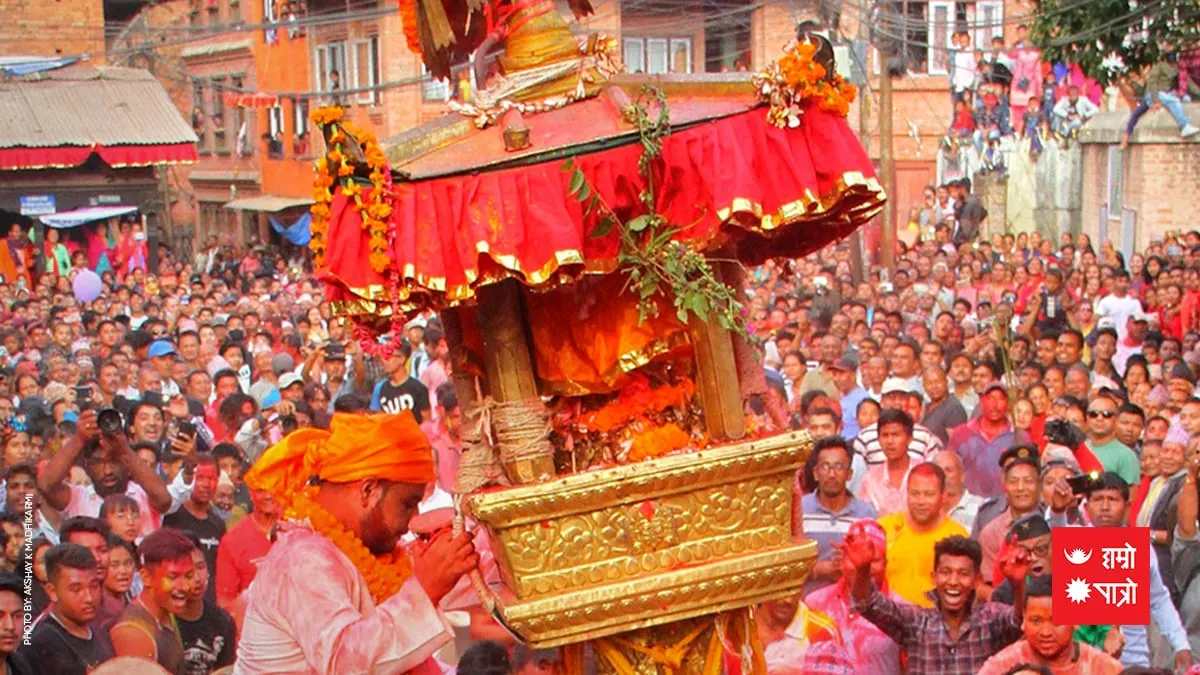
The Pauauti city and its ancient importance As a tributary of the Roshi, Punyamati, and Padmavati rivers, Panauti is a sacred city in Nepal that has been preserving art and cultural heritages for thousands of years. This Jatra is a fest of mating rituals between Lord Unmata Bhairava and Goddesses Bhadrakali. In this rath yatra, the intercourse analogy between Lord Bhairava and Bhadrakali is depicted and indirectly expressed, so it is customary to do some stages of the rath yatra secretly at night.
During the rath yatra, the chariots are taken to different places in the city, and water is sprinkled on the chariots. It takes 9 days to complete the Archana and Jatra versions of Jya Punhi, therefore the arrival and departure of Punhi last for 9 days. Dashami of Shuklapaksha, the Achanju priest offers sacrifices to the Tantric deities. On this auspicious day, the holy bath in the Punyamati Khola and Roshi Khola, also known as Roshimati are of special importance. This ritual is also called the Panauti bath.
This year's Jya Punhi or Panauti Punhi or Gaihu Purne, whatever you say, best wishes for this Purne. May the calm, civilized, positive, and inspiring energy always move in our life like the full moon of Shukla paksha.
Upcomming Events
-
11Aashadha
-
12AashadhaInternational Day against Drug Abuse and Illicit Trafficking 2 days remaning
-
13AashadhaShani Pradosh Vrata 3 days remaning
-
15Aashadha
-
18AashadhaWorld Sports Journalist Day 8 days remaning
-
20AashadhaInternational Cooperative Day 10 days remaning
-
23AashadhaGorakhkali Puja 13 days remaning
-
24AashadhaBudhastami Vrata 14 days remaning
-
26AashadhaYogini Ekadashi Vrata (Smarta) 16 days remaning
-
27AashadhaYogini Ekadashi Vrata (Vaishnava)/World Population Day 17 days remaning
-
28AashadhaPradosh Vrata 18 days remaning
-
29AashadhaBhanu Jayanti 19 days remaning
-
31AashadhaWorld Youth Skill Day 21 days remaning
-
1Shrawan
-
5ShrawanSurya Pooja 27 days remaning
-
6ShrawanBudhastami Vrata/Gorakhkali Puja 28 days remaning
-
9ShrawanHarishayani Ekadashi Vrata/Chaturmaas Vrata Aarambha 31 days remaning
-
10ShrawanPradosh Vrata 32 days remaning
-
12ShrawanWorld Hepatitis Day 34 days remaning
-
13ShrawanGuru Purnima Vrata/Vyas Jayanti/World Tiger Day 35 days remaning
-
14Shrawan
-
15ShrawanKhir Khane Din 37 days remaning
-
16ShrawanWorld BreastFeeding Week 38 days remaning
-
18ShrawanVitak Katha Prarambha 40 days remaning
-
21ShrawanGorakhkali Puja 43 days remaning
-
23ShrawanNational Soil Conservation Day 45 days remaning
-
24Shrawan
-
25ShrawanSom Pradosh Vrata 47 days remaning
-
26ShrawanGathāṃmugaḥ Caḥhre 48 days remaning
-
27ShrawanInternational Youth Day 49 days remaning
-
28ShrawanGunla Parwa Arambha/World Calligraphy Day 50 days remaning
-
30ShrawanVaraha Jayanti 52 days remaning
-
1BhadraNag Panchami Barta/Singh Sankranti 54 days remaning
-
2BhadraKalki Jayanti 55 days remaning
-
3BhadraTulasidas Jayanti/National Information Day/World Photography Day 56 days remaning
-
4BhadraGorakhkali Puja 57 days remaning
-
7BhadraPutrada Ekadashi Vrata 60 days remaning
-
9BhadraPradosh Vrata 62 days remaning
-
12Bhadra
-
13BhadraGaijatra/International Day Against Nuclear Tests 66 days remaning
Jyotish
-
Jyotish Mohan Ghimireसम्पुर्णानन्द संस्कृत विश्वव...
-
Jyotish Damodar Poudelनेपाल संस्कृत विश्व बिद्यालय�...
-
Jyotish Narayan Prasad Bhandariज्योतिषका उप-प्राध्यापक (lecturer of A...
-
Jyotish Purushottam Ghimireनेपाल संस्कृत विश्वविद्यालय, �...
-
Jyotish Dharmendra Krishna Paudelशास्त्री धर्मेन्द्र कृष्ण पौ�...
-
Jyotish Narayan Prasad Gautamगुरुकुल शिक्षा प्रणालीबाट ज्�...
-
Jyotish Pandit Mukunda Nepalज्योतिष पण्डित मुकुन्द नेपाल�...
-
Jyotish Mukunda Sharmaस्वाध्याय, सत्सङ्ग र सदाचारजस�...
-
Jyotish Deepak Prasad Kafleसम्पूर्णानन्द संस्कृत विश्वव...
-
Jyotish Vaman Sapkotaशिक्षा - व्याकरणाचार्य, पौरोही...
-
Jyotish Smarika Acharyaबाल्मीकि बिद्यापिठ बाट ज्योत�...
-
Jyotish Amrit Paudelवाराणसीकै सम्पूर्णानन्द संस्...
-
Jyotish Hamro patroनेपाल संस्कृत विश्वविद्यालय �...
-
Jyotish Krishna Prasad Bhandariउपप्राध्यापक (Asst. professor of Sanskrit) नेपा�...
-
Jyotish Damodar Kaushikज्योतिष र व्याकरण विषयमा आचार�...
-
Jyotish Khageshwor Subediगुरुकुल पद्दति बाट ज्योतिषीय �...
-
Jyotish Kuresh Pandey११ वर्षको अनुभवसहित विभिन्न ध�...
-
Jyotish Dipendra Khatiwadaसम्पुर्णानन्द संस्कृत बिश्वब...
-
Jyotish Ghanashyam Pokharelनेपाल संस्कृत विश्वविद्यालयब...
call
Hororscope
मेष (चु, चे, चो, ला, लि, लु, ले, लो, अ) मनमा लागेको कुरा पूरा गर्ने इच्छा बलियो हुनेछ। अरूले भनेको सबै कुरा पत्याउनु भन्दा आफ्नै अनुभवलाई आधार बनाउनु राम्रो हुनेछ। बीचमा आएको सानो परिवर्तनले पछि फाइदा दिलाउन सक्छ। दिनको अन्त्यमा आफूले गरेको निर्णयप्रति सन्तुष्टि मिल्नेछ। आजको शुभ रंग हल्का सेतो हो भने शुभ अंक ५ रहेको छ।




Liked by: