
Upcomming Events
-
26Aashadha
-
27Aashadha
-
28AashadhaPradosh Vrata 2 days remaning
-
29AashadhaBhanu Jayanti 3 days remaning
-
31AashadhaWorld Youth Skill Day 5 days remaning
-
1ShrawanSaune Shankranti/Luto Falne Din/Dakshinaayan Arambha 7 days remaning
-
5ShrawanSurya Pooja 11 days remaning
-
6ShrawanBudhastami Vrata/Gorakhkali Puja 12 days remaning
-
9ShrawanHarishayani Ekadashi Vrata/Chaturmaas Vrata Aarambha 15 days remaning
-
10ShrawanPradosh Vrata 16 days remaning
-
12ShrawanWorld Hepatitis Day 18 days remaning
-
13ShrawanGuru Purnima Vrata/Vyas Jayanti/World Tiger Day 19 days remaning
-
14Shrawan
-
15ShrawanKhir Khane Din 21 days remaning
-
16ShrawanWorld BreastFeeding Week 22 days remaning
-
18ShrawanVitak Katha Prarambha 24 days remaning
-
21ShrawanGorakhkali Puja 27 days remaning
-
23ShrawanNational Soil Conservation Day 29 days remaning
-
24Shrawan
-
25ShrawanSom Pradosh Vrata 31 days remaning
-
26ShrawanGathāṃmugaḥ Caḥhre 32 days remaning
-
27ShrawanInternational Youth Day 33 days remaning
-
28ShrawanGunla Parwa Arambha/World Calligraphy Day 34 days remaning
-
30ShrawanVaraha Jayanti 36 days remaning
-
1BhadraNag Panchami Barta/Tharu Guriya Parwa/Singh Sankranti 38 days remaning
-
2BhadraKalki Jayanti 39 days remaning
-
3BhadraTulasidas Jayanti/National Information Day/World Photography Day 40 days remaning
-
4BhadraGorakhkali Puja 41 days remaning
-
7BhadraPutrada Ekadashi Vrata 44 days remaning
-
9BhadraPradosh Vrata 46 days remaning
-
12Bhadra
-
13BhadraGaijatra/International Day Against Nuclear Tests 50 days remaning
-
14Bhadra
-
15BhadraNational Library Day 52 days remaning
-
16BhadraMangal Chauthi Vrata 53 days remaning
-
18BhadraGaura Saptami 55 days remaning
-
19BhadraShree Krishna Janmashtami/Gaura Parva/Gorakhkali Puja/Durwashtami 56 days remaning
-
20Bhadra
-
22BhadraAja Ekadashi Vrata/Nijamati Sewa Diwas 59 days remaning
-
23Bhadra
Jyotish
-
 Jyotish Mukunda Sharmaस्वाध्याय, सत्सङ्ग र सदाचारजस�...
-
Jyotish Purushottam Ghimireनेपाल संस्कृत विश्वविद्यालय, �...
-
 Jyotish Dharmendra Krishna Paudelशास्त्री धर्मेन्द्र कृष्ण पौ�...
-
Jyotish Pandit Mukunda Nepalज्योतिष पण्डित मुकुन्द नेपाल�...
-
Jyotish Vaman Sapkotaशिक्षा - व्याकरणाचार्य, पौरोही...
-
Jyotish Narayan Prasad Gautamगुरुकुल शिक्षा प्रणालीबाट ज्�...
-
Jyotish Khageshwor Subediगुरुकुल पद्दति बाट ज्योतिषीय �...
-
Jyotish Mohan Ghimireसम्पुर्णानन्द संस्कृत विश्वव...
-
Jyotish Krishna Prasad Bhandariउपप्राध्यापक (Asst. professor of Sanskrit) नेपा�...
-
Jyotish Hamro patroनेपाल संस्कृत विश्वविद्यालय �...
-
Jyotish Damodar Kaushikज्योतिष र व्याकरण विषयमा आचार�...
-
Jyotish Smarika Acharyaबाल्मीकि बिद्यापिठ बाट ज्योत�...
-
Jyotish Narayan Prasad Bhandariज्योतिषका उप-प्राध्यापक (lecturer of A...
-
 Jyotish Damodar Poudelनेपाल संस्कृत विश्व बिद्यालय�...
-
Jyotish Amrit Paudelवाराणसीकै सम्पूर्णानन्द संस्...
-
Jyotish Dipendra Khatiwadaसम्पुर्णानन्द संस्कृत बिश्वब...
-
Jyotish Deepak Prasad Kafleसम्पूर्णानन्द संस्कृत विश्वव...
-
 Jyotish Kuresh Pandey११ वर्षको अनुभवसहित विभिन्न ध�...
-
Jyotish Ghanashyam Pokharelनेपाल संस्कृत विश्वविद्यालयब...


call
Hororscope
 Mesh
Mesh Brish
Brish Mithun
 Karkat
  Singha
  Kanya
Kanya Tula
Tula Brischik
 Dhanu
Dhanu  Makar
Makar  Kumbha
 Meen
Meen
मेष (चु, चे, चो, ला, लि, लु, ले, लो, अ) दिनको सुरुवात सामान्य रहनेछ, तर बिस्तारै कामले गति लिनेछ। अरूले टारेको जिम्मेवारी पनि तपाईंले सम्हाल्नुपर्ने हुन सक्छ। आफ्नो काम समयमै सक्दा मन ढुक्क हुनेछ। आजको शुभ रंग हरियो हो भने शुभ अंक ३ रहेको छ।



2083 Baishakh
8
Tuesday
Apr 21, 2026
वैशाख शुक्ल पञ्चमी
Mangal Chauthi Vrata/Chhanda Diwas/Aadhyaguru Shankarachaarya Jayanti/Bungadyo : Rato Matsyandranath Rath Yatra Prambha
वैशाख शुक्ल पञ्चमी

MY NOTE


बुंगद्यः (रातो मच्छिन्द्रनाथ) रथ यात्रा प्रारम्भ
Exclusive audio
Kathmandu Valley annually commemorates the chariot festival (Jatra) on the glory of Yogi Machhindranaath since 1600 years and even more. This Jatra lasts for two months starting from Baisakh Shukla pratipada till Asar Shukla Chauthi.
The longest Jatra of the Kathmandu valley
The cultural and religious significance of Jatra is of particular importance, says the cultural expert.
The Jatra, which is one of the most important of Patan and the longest Jatra of the valley has been carrying an undisputable discipline and symmetrical faith prehistoric. Today is the commencing day of this Jatra, my utmost prayers for
Reintroducing Yogi Machhindranaath
Machhindranaath before I begin my write-up by reintroducing Yogi Machhindranaath through my drab words and naive explanations, forgive me if any wrong judgment. Yogi Machhindranaath is a Siddha who can control the forces of nature, he is hugely observed as a lord of rainfall in Nepal. One who practices Yoga is called Yogi and Yogi Machhindranaath is a Siddha who is also acknowledged for delivering his knowledge to Gorakhnath, Yogi Gorakhnath is hugely worshipped across the globe and Nepali royal clan expresses their large proximity with the rituals in offering and worshiping Yogi Gorakhnath. Go means "Earth" and Rakh means to protect, the entire earth is protected by a boy called Gorakhnath who is not just a disciple but also a son of Yogi Machhindranaath There is a very interesting story of the manifestation of Gorakhnath by Yogi Machhindranaath, I will elaborate that story some other day. In Sanskrit Machhindranaath translates to the lord of fishes, Yogi Machhindranaath is Maha svarupa and Matsya Svarupa, he is a founder of Kaula tradition. Let me explain Kaula for you, it is said that Yogi Machhindranaath spent twelve years in a belly of fish in the ocean (this is called "Kula"). Kula is also described as an illusion that is mastered and defeated by Yogi Machhindranaath "Kaula" is the origin of Vajrayana Buddhism and Kashmiri Shaivism
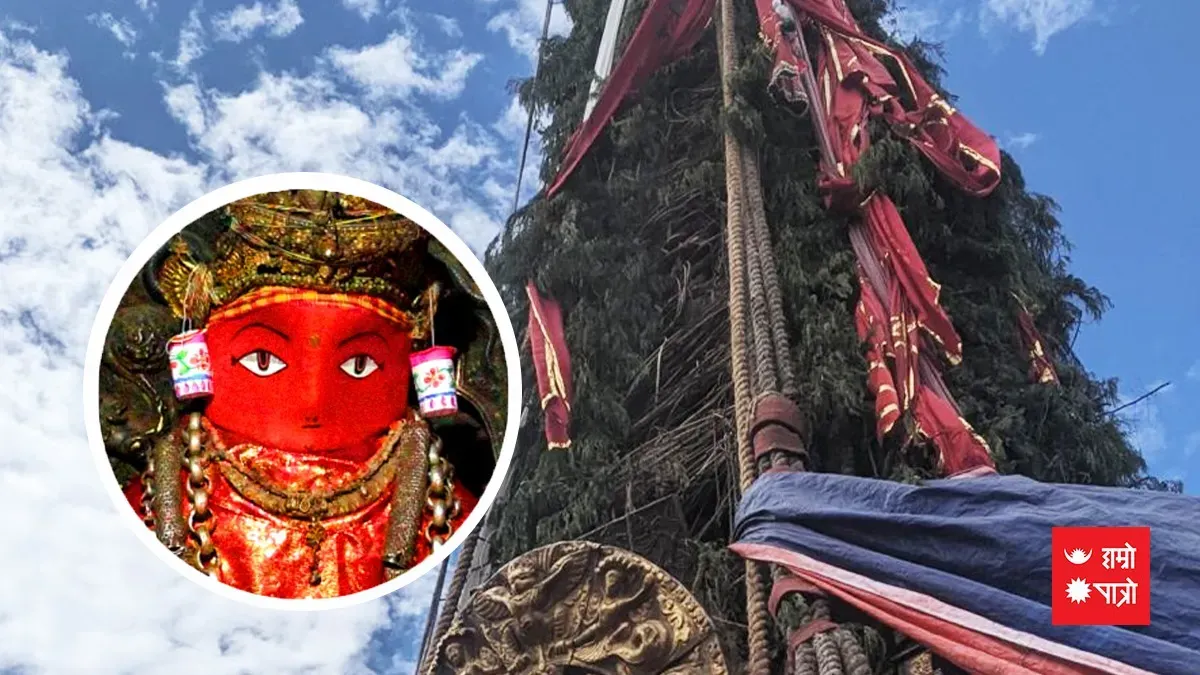
Machhindranaath is called Bungadyo: in the local Newa language, recognized by both (Hindus and Buddhists) as an incarnation of Lord Shiva in Hindu and as an incarnation of Avalokiteśvara in Buddhism.At the beginning of the Jatra of Lalitpur-based Red Matsyendranath, the idol of Karunamayi is made from the soil of the present Mahepi hill, and the spirit of the Karunamayi in the Kalash is established in that clay idol. That idol is washed today, all these rituals happen under delicate supervision and keen involvement of community people. This auspicious chariot is then carried and placed in several avenues of Lalitpur city during these two months of the Jatra celebration, finally, after showing the auspicious "Bhoto" at Jawalakhel, this Jatra concludes that the idol is respectfully carried to Bungmati. The ancient village of Bungmati is the birthplace of Yogi Machhindranaath, this is where the holy idol of Machhindranaath rests for the next six months after the chariot festival.
Lord Machhindranaath has a million Kripas upon us, may his blessings and leadership drive us.
Mangal Chauthi Vrata
Mangal Chauthi Vrata
Exclusive audio
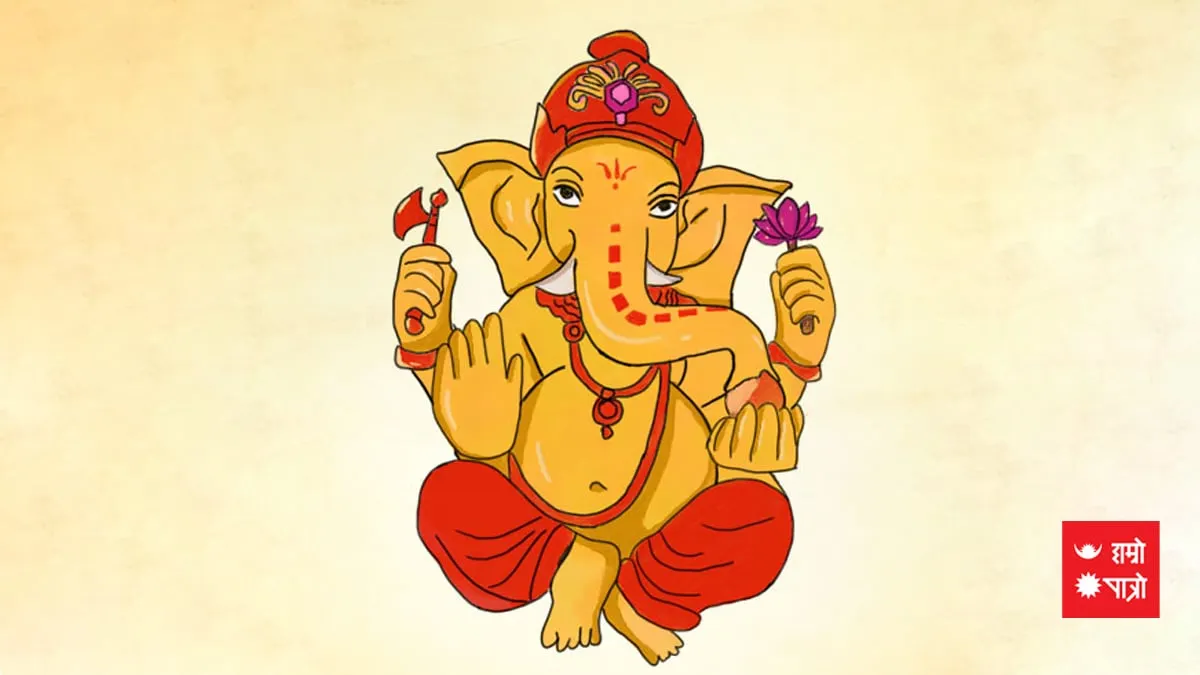
In Hindu rites, people worship and remember Lord Ganesha before starting any work so that there is no hindrance. It is customary to worship Lord Ganesha as a benevolent deity.
विघ्नेश्वराय वरदाय सुरप्रियाय, लम्बोदराय सकलाय जगद्विताय
नागाननाय श्रुतियज्ञविभुषिताय, गौरीसुताय गणनाथ नमो नमस्ते
Meaning:
Salutations to Vighnesvara (who eliminates my afflictions and hurdles), the giver of boons, beloved of the gods, tall, full of arts, benefactor of the world, with the mouth of an elephant, and beautified by the Vedas, the son of Parvati. O Gananath, greetings to you.
Relation of Tuesday, Chaturthi and Lord Ganesha
Today, Tuesday is also considered as the day of Lord Ganesha.
Since the birth date of Lord Ganesha falls on Chaturthi, it is customary to celebrate this day as Mangal Chauthi with special worship. Those who fast for Lord Ganesha on Tuesday start fasting from today.
Lord Ganesha is known as the deity who bestows auspicious fruits. If you are up to commencing any new work, then today is considered very auspicious. May all be well on this auspicious day.
Worship Methodology of Mangal Chauthi
Greetings to Vighneshwar, the giver of gifts, beloved of the gods, lambodar, full of arts, benefactor of the world, elephant-like face and adorned with Vedas and sacrifices, O Gananath, greetings to you.
Those who worship, recite, fast, narrate and adore Ganesha on this day with Riddhi Siddhi will get wealth, son, spouse, the good fortune of Mars and peace of mind and will get rid of all kinds of sorrows (suffering and disruption, etc.)
Worship materials should be prepared including paddy, rice, barley, sesame, kush, duna, tapari, panchamrit, avir, saffron, vermilion, red akshata, coconut, fruit, dish, incense, lamp, camphor, red flower, garland and preparing laddu, dubo etc can also be done. Turn east, north or west, sit in pure asana, lighting and invoking the lamp is done after.
Then with barley, sesame, water, flower, kush or dubo and drabya in the right hand, the Sankalpa i.e. place and time should be pronounced, the name of one's family and relatives should be pronounced with one's gotra, and the sankalpa should be taken with a sense of sakam or nishkam. Indeed, there is no rocket science to worship lord Ganesha, a pure heart and an unquestionable devotion are the key integrals, remember with compassion, Lord Ganesha will never disappoint you.
In this way, Ganesha will be pleased with the worship done with reverence and devotion and will surely fulfill the desires of the devotees. Astu
Chhanda Diwas
छन्द दिवस
Exclusive audio
Background of Rastriya Chhanda Diwas
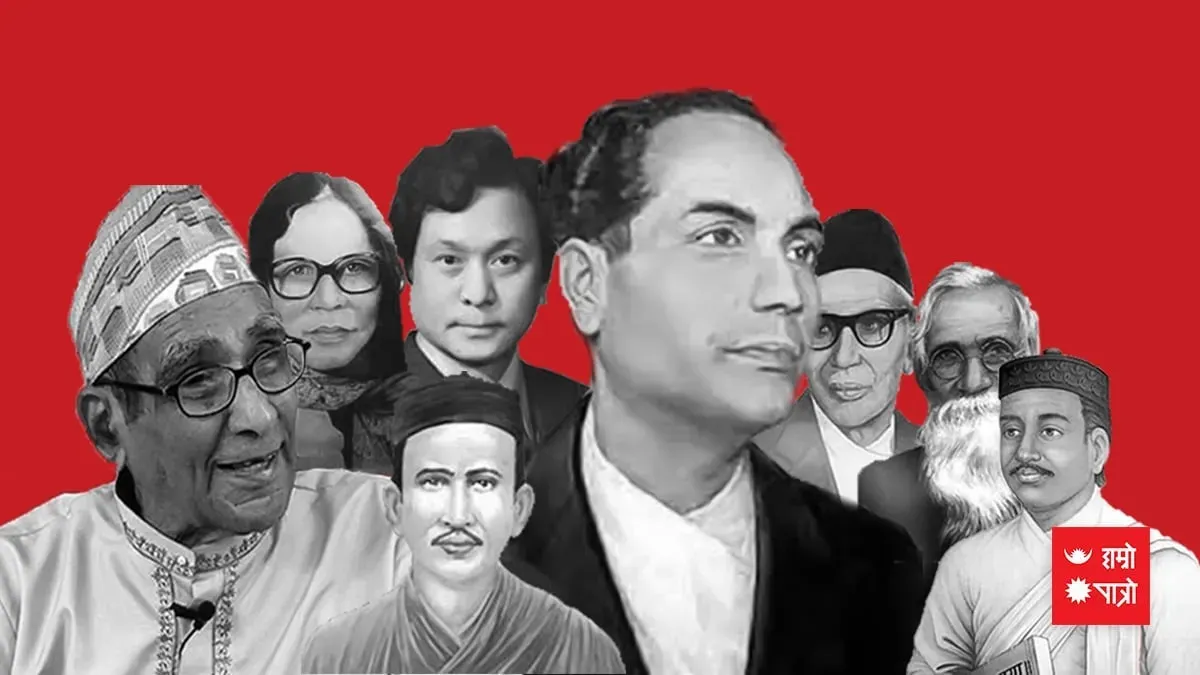
Rhyme Day is being celebrated today by programs related to the conservation of rhymes and their usage in the poetry genre of literature. Expressing concern over the declining use of rhymer verses in poetry literature, poet Madhav Viyogi commenced national rhyme day on 20th April 1996 as a campaign of protecting rhyme (Chanda Bachau Aviyana.) Chhanda is the Nepali and Sanskrit translation of rhyme. The verse is mentioned in the Rig Veda. Regulation of prose writing is done by grammar while the regulator of poetry is rhythm.
Later Nepal Panchanga Nirnayak Samiti also accredited this day as national rhyme day. Panchanga Nirnayak Samiti is the government authority to decide festivals, dates and approve festival calendars in Nepal. Various literary events are organized on the occasion of Chhanda Day by reciting rhymed poems on most of the country's literary platforms. This day is celebrated to protect the poetic culture in literature and highlight the style of poetry.
Importance of rhymes in poetry
Rhyming is an important element of poetry because it adds a musical quality to the language and helps to create a sense of rhythm and unity within the poem. It can also make the poem more memorable and easier to recite, as well as enhancing its emotional impact on the reader or listener.
Rhyming can take many forms in poetry, including end rhymes (where the last words in two or more lines rhyme), internal rhymes (where words within a line rhyme with each other), and slant rhymes (where the words have similar sounds but are not exact matches).
Some poets use rhyme more extensively than others, but it can be an effective tool for creating a certain mood or atmosphere in a poem. For example, the use of perfect rhymes (where the rhyming words are exact matches in sound and spelling) can create a sense of stability and order, while the use of slant rhymes can create a more subtle, nuanced effect.
Ultimately, the importance of rhyming in poetry depends on the individual poet and the specific poem they are creating. Some poets may choose to use rhyme sparingly or not at all, while others may rely heavily on it to create a certain effect or mood.
Whenever poetry combines volume or number of characters, punctuation, motion, rhythm, the rhythmic composition is created. Chhanda is also called Padhya and Brita. The composed balance of vowel and consonant brings a pure rhyme in poetry, in this aspect rhyme is an accumulation of sounds. Reciter slows or increases their sounds and manages their rhymes of poetry aligned with the words of poems and their feelings. Rhymes have the power of mesmerizing listeners and give them several opportunities to dwelling inside the open sky of imagination. Contemporary poetry has an increasing trend of decreasing rhymes which is deviating it from the true sense of poetry. Writing in chhanda is not an easy task, one who must write poems must surrender themselves to poetry and words. This day also alarms every poet and creators to have adequate knowledge of words, articulation, and comprehension. It's indeed very challenging to write poems under its preset rules and science, eastern literature defines specific laws into every aspect of creation and expression.
Every poet should live their poems and every poem should be a reflection of their creator and audiences, merely gathering words is not poetry as there should be rules, science, and a stream of feelings that connects everyone.
Meaningful chhanda diwas.
Aadhyaguru Shankarachaarya Jayanti
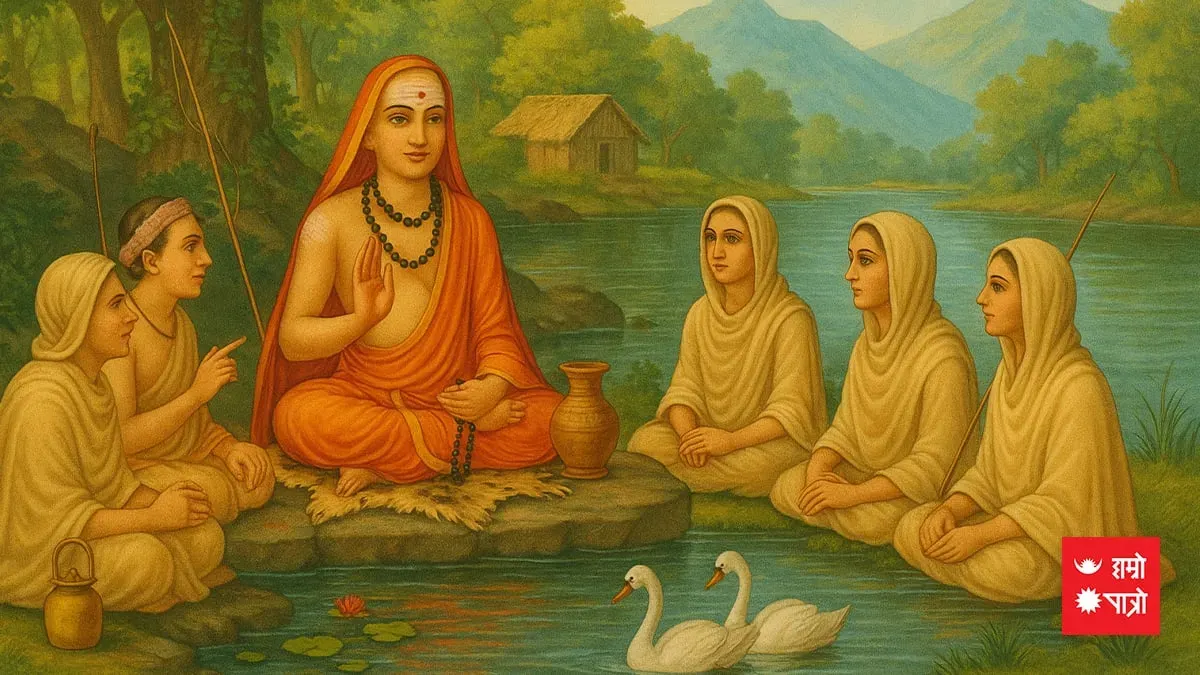
Aadhyaguru Shankarachaarya Jayanti
Exclusive audio
Who is Shankaracharya ?
Jagatguru Adi Shankaracharya is a champion thinker and a charmer, an unchallenged king of Santana philosophy who appeared right on time when the entire world was sunk in a quagmire of superstitions and scriptural misinterpretations.Shankaracharya also represents the most riotous sardonicism in the universe of philosophy, he is turned hidden Buddhist by Vedantic, and Buddhist curse him for ending the wave of Buddhism in the Indian subcontinent and reestablish Vedas.
However, a single person who only lived till his mid-thirties was able to study Vedas, interpret them, reinterpret them, and travel across the Indian subcontinent organized debates and created a balance in society through delivering the knowledge of Vedas. His philosophical prowess satisfied the Vedic scholars and his sharp intellect and magical articulation defeated his philosophical rivalries. Layman was hugely pleased by his simple yet pious way of devotion, his bhajans mesmerized the crowds and the Sanatan Philosophy was reestablished with all its glory. I still can't figure out why some historians and writers blamed him as a hidden Buddhist, plausibly this could be because he redeemed falsely imposed worthless priests and ended the academic imperils of Sanatan manifest.
The contribution of Adi Guru Shankaracharya.
To understand the herculean contribution made by Jagatguru, we must go back to the 8th century CE, The religious and spiritual essence was rampant during that time, and rigid and exploitive ritualism was highly prevailing in society. Because of this rigid and exploitive ritualism, rejecting Vedas and accepting Buddhism was happening, villages and cities were transforming into anti-Sanatan ideas and the religious and spiritual transition was creating a huge wave of Buddhism into the Indian subcontinent. The essence of Sanatan philosophy, with its all-embracing message of love, compassion, and pervasiveness of humankind, was completely lost in the blind ritualistic performance.
Disliked by Buddhists.
On the other side, Buddhists curse him for ending the wave of expanding Buddhism, but that is nothing but a conspiracy. I belong to Nepal, which is the world's only Hindu capital (the former world's only Hindu Kingdom), but an exclusive spiritual land that holds a mesmerizing mixture of Hinduism and Buddhism. We have temples and idols where the same idols or statues are named after different gods of Hindu and Buddhist philosophies. Buddha is worshiped equally as other Hindu deities and gods. The ancient pond in Kathmandu valley is believed to have been cut by the Buddhist deity "Majushree," and people from both faiths worship him. An idol at Pashupati is worshiped as Manjushree by Buddhists; however, the same idol is worshipped as "Saraswoti" by Hindus. This harmony and integration were commenced and institutionalized by Jagatguru, who redefined Bhakti as a tool to achieve eternal oneness with the ultimate energy.
Shankaracharya started writing major commentaries on scriptural texts at the age of 12 and concluded his every commentary and redefinition by the age of 16, was a true son of God, an incarnation sent to reestablish and reconstruct the spiritual and religious essence of society. He expanded the narrow philosophies and drab systems of worship, established 4 ashrams in 4 corners of India, and institutionally placed his four disciples to propagate Advita through them. These Aashramsare the institutions that still institutionalize and safeguard Sanatan philosophies and construct researches and sastrathas. Let me say a million words, but still, they will not complete the article on the contribution of Jagat Guru. I must say that I am not bringing his birth, family, or village into today's context. Jagaturu must not be confined to all these minimal identifications; an incarnation of Lord Shiva only lived for 32 years and achieved all these.
Happy birth anniversary to Jagatguru, We need another Shankaracharya today.
Upcomming Events
-
26Aashadha
-
27Aashadha
-
28AashadhaPradosh Vrata 2 days remaning
-
29AashadhaBhanu Jayanti 3 days remaning
-
31AashadhaWorld Youth Skill Day 5 days remaning
-
1ShrawanSaune Shankranti/Luto Falne Din/Dakshinaayan Arambha 7 days remaning
-
5ShrawanSurya Pooja 11 days remaning
-
6ShrawanBudhastami Vrata/Gorakhkali Puja 12 days remaning
-
9ShrawanHarishayani Ekadashi Vrata/Chaturmaas Vrata Aarambha 15 days remaning
-
10ShrawanPradosh Vrata 16 days remaning
-
12ShrawanWorld Hepatitis Day 18 days remaning
-
13ShrawanGuru Purnima Vrata/Vyas Jayanti/World Tiger Day 19 days remaning
-
14Shrawan
-
15ShrawanKhir Khane Din 21 days remaning
-
16ShrawanWorld BreastFeeding Week 22 days remaning
-
18ShrawanVitak Katha Prarambha 24 days remaning
-
21ShrawanGorakhkali Puja 27 days remaning
-
23ShrawanNational Soil Conservation Day 29 days remaning
-
24Shrawan
-
25ShrawanSom Pradosh Vrata 31 days remaning
-
26ShrawanGathāṃmugaḥ Caḥhre 32 days remaning
-
27ShrawanInternational Youth Day 33 days remaning
-
28ShrawanGunla Parwa Arambha/World Calligraphy Day 34 days remaning
-
30ShrawanVaraha Jayanti 36 days remaning
-
1BhadraNag Panchami Barta/Tharu Guriya Parwa/Singh Sankranti 38 days remaning
-
2BhadraKalki Jayanti 39 days remaning
-
3BhadraTulasidas Jayanti/National Information Day/World Photography Day 40 days remaning
-
4BhadraGorakhkali Puja 41 days remaning
-
7BhadraPutrada Ekadashi Vrata 44 days remaning
-
9BhadraPradosh Vrata 46 days remaning
-
12Bhadra
-
13BhadraGaijatra/International Day Against Nuclear Tests 50 days remaning
-
14Bhadra
-
15BhadraNational Library Day 52 days remaning
-
16BhadraMangal Chauthi Vrata 53 days remaning
-
18BhadraGaura Saptami 55 days remaning
-
19BhadraShree Krishna Janmashtami/Gaura Parva/Gorakhkali Puja/Durwashtami 56 days remaning
-
20Bhadra
-
22BhadraAja Ekadashi Vrata/Nijamati Sewa Diwas 59 days remaning
-
23Bhadra
Jyotish
-
Jyotish Mukunda Sharmaस्वाध्याय, सत्सङ्ग र सदाचारजस�...
-
Jyotish Purushottam Ghimireनेपाल संस्कृत विश्वविद्यालय, �...
-
Jyotish Dharmendra Krishna Paudelशास्त्री धर्मेन्द्र कृष्ण पौ�...
-
Jyotish Pandit Mukunda Nepalज्योतिष पण्डित मुकुन्द नेपाल�...
-
Jyotish Vaman Sapkotaशिक्षा - व्याकरणाचार्य, पौरोही...
-
Jyotish Narayan Prasad Gautamगुरुकुल शिक्षा प्रणालीबाट ज्�...
-
Jyotish Khageshwor Subediगुरुकुल पद्दति बाट ज्योतिषीय �...
-
Jyotish Mohan Ghimireसम्पुर्णानन्द संस्कृत विश्वव...
-
Jyotish Krishna Prasad Bhandariउपप्राध्यापक (Asst. professor of Sanskrit) नेपा�...
-
Jyotish Hamro patroनेपाल संस्कृत विश्वविद्यालय �...
-
Jyotish Damodar Kaushikज्योतिष र व्याकरण विषयमा आचार�...
-
Jyotish Smarika Acharyaबाल्मीकि बिद्यापिठ बाट ज्योत�...
-
Jyotish Narayan Prasad Bhandariज्योतिषका उप-प्राध्यापक (lecturer of A...
-
Jyotish Damodar Poudelनेपाल संस्कृत विश्व बिद्यालय�...
-
Jyotish Amrit Paudelवाराणसीकै सम्पूर्णानन्द संस्...
-
Jyotish Dipendra Khatiwadaसम्पुर्णानन्द संस्कृत बिश्वब...
-
Jyotish Deepak Prasad Kafleसम्पूर्णानन्द संस्कृत विश्वव...
-
Jyotish Kuresh Pandey११ वर्षको अनुभवसहित विभिन्न ध�...
-
Jyotish Ghanashyam Pokharelनेपाल संस्कृत विश्वविद्यालयब...
call
Hororscope
मेष (चु, चे, चो, ला, लि, लु, ले, लो, अ) दिनको सुरुवात सामान्य रहनेछ, तर बिस्तारै कामले गति लिनेछ। अरूले टारेको जिम्मेवारी पनि तपाईंले सम्हाल्नुपर्ने हुन सक्छ। आफ्नो काम समयमै सक्दा मन ढुक्क हुनेछ। आजको शुभ रंग हरियो हो भने शुभ अंक ३ रहेको छ।




Liked by: