
Upcomming Events
-
27Aashadha
-
28AashadhaPradosh Vrata tomorrow
-
29AashadhaBhanu Jayanti 2 days remaning
-
31AashadhaWorld Youth Skill Day 4 days remaning
-
1ShrawanSaune Shankranti/Luto Falne Din/Dakshinaayan Arambha 6 days remaning
-
5ShrawanSurya Pooja 10 days remaning
-
6ShrawanBudhastami Vrata/Gorakhkali Puja 11 days remaning
-
9ShrawanHarishayani Ekadashi Vrata/Chaturmaas Vrata Aarambha 14 days remaning
-
10ShrawanPradosh Vrata 15 days remaning
-
12ShrawanWorld Hepatitis Day 17 days remaning
-
13ShrawanGuru Purnima Vrata/Vyas Jayanti/World Tiger Day 18 days remaning
-
14Shrawan
-
15ShrawanKhir Khane Din 20 days remaning
-
16ShrawanWorld BreastFeeding Week 21 days remaning
-
18ShrawanVitak Katha Prarambha 23 days remaning
-
21ShrawanGorakhkali Puja 26 days remaning
-
23ShrawanNational Soil Conservation Day 28 days remaning
-
24Shrawan
-
25ShrawanSom Pradosh Vrata 30 days remaning
-
26ShrawanGathāṃmugaḥ Caḥhre 31 days remaning
-
27ShrawanInternational Youth Day 32 days remaning
-
28ShrawanGunla Parwa Arambha/World Calligraphy Day 33 days remaning
-
30ShrawanVaraha Jayanti 35 days remaning
-
1BhadraNag Panchami Barta/Tharu Guriya Parwa/Singh Sankranti 37 days remaning
-
2BhadraKalki Jayanti 38 days remaning
-
3BhadraTulasidas Jayanti/National Information Day/World Photography Day 39 days remaning
-
4BhadraGorakhkali Puja 40 days remaning
-
7BhadraPutrada Ekadashi Vrata 43 days remaning
-
9BhadraPradosh Vrata 45 days remaning
-
12Bhadra
-
13BhadraGaijatra/International Day Against Nuclear Tests 49 days remaning
-
14Bhadra
-
15BhadraNational Library Day 51 days remaning
-
16BhadraMangal Chauthi Vrata 52 days remaning
-
18BhadraGaura Saptami 54 days remaning
-
19BhadraShree Krishna Janmashtami/Gaura Parva/Gorakhkali Puja/Durwashtami 55 days remaning
-
20Bhadra
-
22BhadraAja Ekadashi Vrata/Nijamati Sewa Diwas 58 days remaning
-
23Bhadra
-
25BhadraWorld Suicide Prevention Day 61 days remaning
Jyotish
-
Jyotish Pandit Mukunda Nepalज्योतिष पण्डित मुकुन्द नेपाल�...
-
Jyotish Smarika Acharyaबाल्मीकि बिद्यापिठ बाट ज्योत�...
-
Jyotish Vaman Sapkotaशिक्षा - व्याकरणाचार्य, पौरोही...
-
Jyotish Narayan Prasad Bhandariज्योतिषका उप-प्राध्यापक (lecturer of A...
-
 Jyotish Mukunda Sharmaस्वाध्याय, सत्सङ्ग र सदाचारजस�...
-
Jyotish Purushottam Ghimireनेपाल संस्कृत विश्वविद्यालय, �...
-
Jyotish Khageshwor Subediगुरुकुल पद्दति बाट ज्योतिषीय �...
-
 Jyotish Dharmendra Krishna Paudelशास्त्री धर्मेन्द्र कृष्ण पौ�...
-
Jyotish Mohan Ghimireसम्पुर्णानन्द संस्कृत विश्वव...
-
Jyotish Narayan Prasad Gautamगुरुकुल शिक्षा प्रणालीबाट ज्�...
-
Jyotish Krishna Prasad Bhandariउपप्राध्यापक (Asst. professor of Sanskrit) नेपा�...
-
Jyotish Hamro patroनेपाल संस्कृत विश्वविद्यालय �...
-
Jyotish Damodar Kaushikज्योतिष र व्याकरण विषयमा आचार�...
-
 Jyotish Damodar Poudelनेपाल संस्कृत विश्व बिद्यालय�...
-
Jyotish Amrit Paudelवाराणसीकै सम्पूर्णानन्द संस्...
-
Jyotish Dipendra Khatiwadaसम्पुर्णानन्द संस्कृत बिश्वब...
-
Jyotish Deepak Prasad Kafleसम्पूर्णानन्द संस्कृत विश्वव...
-
 Jyotish Kuresh Pandey११ वर्षको अनुभवसहित विभिन्न ध�...
-
Jyotish Ghanashyam Pokharelनेपाल संस्कृत विश्वविद्यालयब...


call
Hororscope
 Mesh
Mesh Brish
Brish Mithun
 Karkat
  Singha
  Kanya
Kanya Tula
Tula Brischik
 Dhanu
Dhanu  Makar
Makar  Kumbha
 Meen
Meen
मेष (चु, चे, चो, ला, लि, लु, ले, लो, अ) दिनको सुरुवात सामान्य रहनेछ, तर बिस्तारै कामले गति लिनेछ। अरूले टारेको जिम्मेवारी पनि तपाईंले सम्हाल्नुपर्ने हुन सक्छ। आफ्नो काम समयमै सक्दा मन ढुक्क हुनेछ। आजको शुभ रंग हरियो हो भने शुभ अंक ३ रहेको छ।



2082 Mangsir
9
Tuesday
Nov 25, 2025
मंसिर शुक्ल पञ्चमी
Vivah Panchami/Shadananda Jayanti/International Day for the Elimination of Violence against Women
मंसिर शुक्ल पञ्चमी

MY NOTE


Vivah Panchami
Exclusive audio
अपहृत्य शचीं भार्यां शक्यमिन्द्रस्य जीवितुम् ।
नहि रामस्य भार्यां मामानीय स्वस्तिमान् भवेत् ॥
पूर्वोक्त, सर्ग ४८, छन्द २३०
On the contrary, Indra's wife Sachi can live happily, but no one who abducts the wife of the dignified Purushottam Ram can live happily, meaning that her destruction by Lord Rama is irrefutable.
And that's exactly what happened, Ramayana is an ideal love story, and love begins with the bond of marriage. The tithi of marriage is called Panchami. This sacred tithi from before history has special significance in the devotional path, Ram Sita is unbreakable and remains so.
Living Ramayana in Nepal
I have always stated that the Ramayana life is still alive in Nepal, especially in Mithila capital Janakpur of Nepal, Bibaha Panchami is a piece of evidence to it. Today, in the Treta era, it is believed that Prince Ram of Ayodhya came and married Princess Sita at Janakpur Dham, the capital of Mithila state. We would like to explain the wedding Panchami in the context of Ramayana of Treta era, Mansir Shukla Panchami i.e. today the marriage of Ardash Jodi Ram Sita took place in Janakpur of Nepal according to Vedic Sanatan Hindu culture.
In the weekly wedding celebration, Ramjan's wedding Panchami festival, devotees organize tilkotsav, matkor, and worship according to religious rituals, the Bibaha Panchami festival is formally concluded exactly like of typical marriage. That is why there is a myth that anyone should not look at the Sait (Auspicious date) when they get married on the day of Bibaha Panchami.
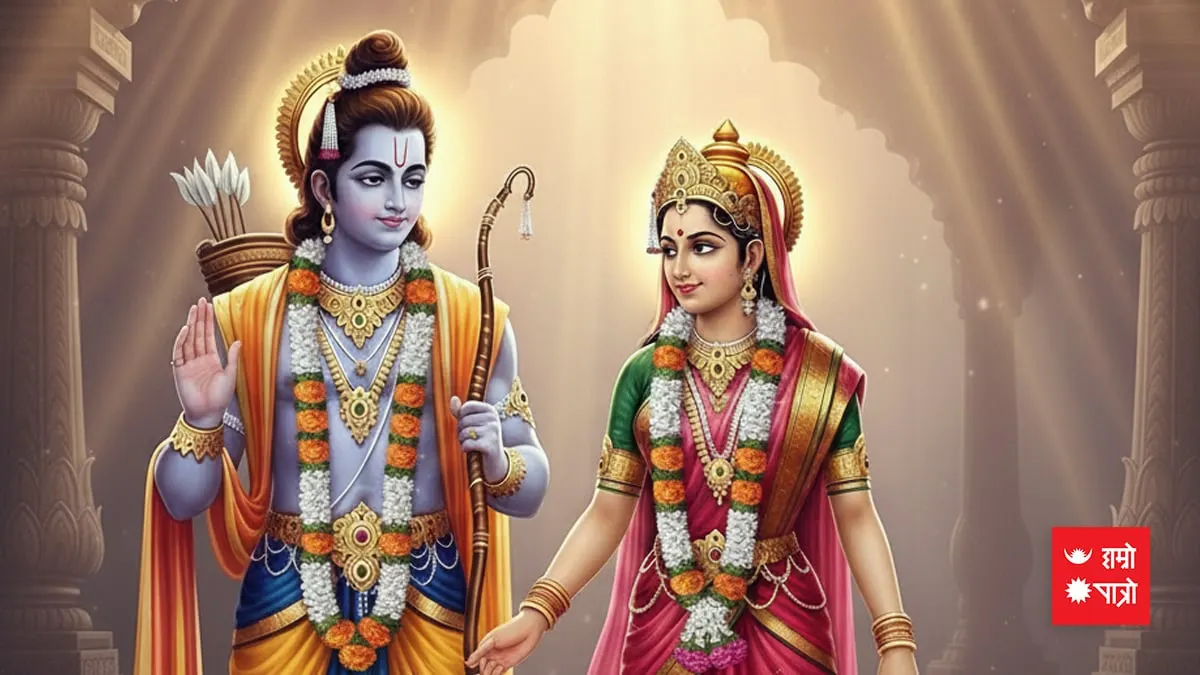
Janakpur is the birthplace of Sita. Sita or Janaki is the main character of Ramayana. Sita is the eldest daughter of King Janak, the ruler of Mithila kingdom. Ram is the eldest son of King Dasharatha of Ayodhya. Sita is an example of an ideal wife, an ideal mother, an ideal brother-in-law, an ideal daughter-in-law, an ideal queen, and an ideal woman in general.
Sita is revered as a source of virtue, femininity, motherhood, and compassion. Shiva used to move the bow, which was protected by King Janak, which could not be lifted even by the great heroes. Sita used to move the bow around alone while cleaning the shrine.
That is why King Janak had promised to do Sita's swayamvara only with a brave man who could lift Shiva's bow. The marriage of Sita and Rama was solemnized in Janakpur after the same Shiva bow was broken by Prince Ram of Ayodhya.
The wedding Panchami has been celebrated since that time. Sita's sisters Urmila, Mandvi, and Shrutakirti were also married to Rama's brothers Laxman, Bharat, and Shatrughan.
"सीताराम गुनगान करु,
धीरज धर्मक ज्ञान करु।
राम जनकपुर आबि रहला,
धार्मिक लीला सब केँ देखला।
हनुमान संग सेतु बनायल,
लंका पर विजय पताक उडायल।
सीताक आदर्श जग केँ देखायल,
रामराज्य सँ धर्म स्थापन भेल।"
मिथिलाके सियाराम जगतजननी एछ
"Sing the glories of Sita and Ram,
Learn the wisdom of patience and righteousness.
When Ram came to Janakpur,
He displayed divine acts to all.
What happens at Janakpur, Capital of Mithila ?
The wedding ceremony is held in the afternoon, but since morning, the Ramjanki temple and other temples in the Mithila area are crowded with visitors. Bajagaja, jhanki, bhajan kirtan, and dance are performed in the festival, while the devotees who see the janti and dola are overwhelmed. After the Swayambar of Ram and Sita, the chariots carrying the bride and groom are taken on a procession including traditional music around Janakpur city and end at the Janaki temple area.
Even today, in remembrance of this ancient mythical marriage, it is customary to bring a janta from India to Janakpur, Nepal, and pay homage to the idols of Rama and Sita. In this way, Jantas coming from India are especially saints. Janakpur, a city rich in ponds, lakes, and beautiful Maithil culture, today looks full of divine beauty.
Even in this age, Ram Sita's marriage is as important as it was before. Today, a massive fair has been held at the Janaki temple premises and the people of Janakpur are continuing the tradition and intimacy they have been following since Tretayug.
Ramayana
The great Ramayana, which has 24,000 lines and 500 chapters, and seven sections, is the story of the ups and downs of the lives of Rama and Sita. The Ramayana, written by the sage Valmiki after the earlier Ratnakar bandit, is also very popular in Nepal, Sri Lanka, Thailand, Cambodia, Malaysia, and Indonesia. These lines of Ramayana were memorized by Rama's sons Love and Kush. After hearing the verses of Ramayana, Rama recognized his sons.
After Sita's ordeal, Ramayana has taken a different angle and turn. By teaching lessons on the importance of men and women, equality, family responsibilities, state policies, and dignity, Ramayana has given great value to the human community and civilization.
Let the stories and sayings of Sita and Rama go on for centuries.
Happy Bibaha Panchami to all.
Shadananda Jayanti
Shadananda Jayanti
Exclusive audio
Who is guru Sadananda ?
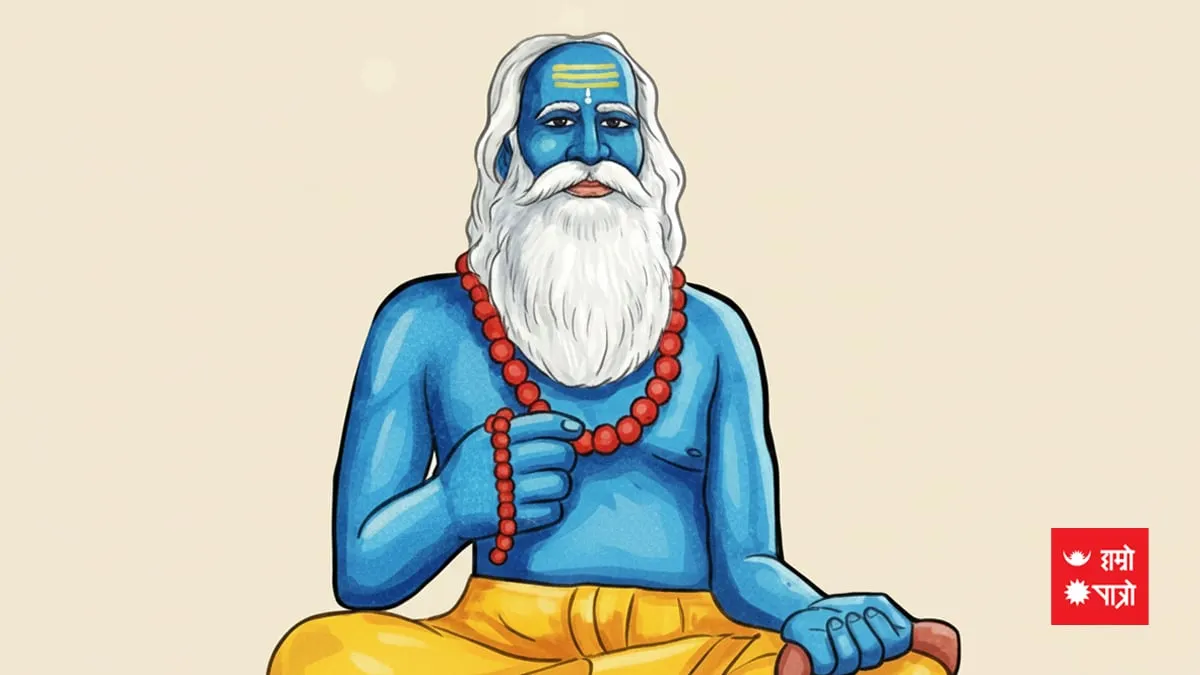
Shadananda Adhikari, the famous social worker, and Brahmachari Sadhu and educationist of Nepal, i.e. Balaguru Shadananda was born on the day of Shukla Panchami (Vivah Panchami) in the year 1892 BS in Dingla, Gadigaun, Bhojpur district of Nepal. The child of father Laxmi Narayan Adhikari and mother Rukmini Adhikari, he became known as Brahmachari Guru Shadananda.
Even during the Rana regime, Guru Shadananda for the first time built a culture school and started an environment of learning for the children of the common people. Technically, this school was established long before schools like Durbar High school were established in the capital city.
Realizing the difficulties of gaining education, Shadananda devoted his entire life to promoting education in rural Nepal. Shadananda established himself as a practitioner of yoga, a practitioner of Ashtanga Yoga, and a connoisseur of Eastern philosophy through hard penance in his life. Shadananda, who acquired knowledge of Yajna rituals at the age of eight, studied yoga in Banaras, India.
Shadananda, who was believed by the people to have divine power, was later honored with the title of Shri 108. In his honor, a municipality in Bhojpur district in the Koshi zone has been named after Balaguru Shadananda. The post ticket is published in his name. The Brahmachari Shadananda Pratishthan honors Balaguru every year with the "Shadananda National Award" for outstanding contributions in the field of Nepali language, culture, history, and spiritual philosophy and literature.
His invaluable contribution to education will always be appreciated.
International Day for the Elimination of Violence against Women
International Day for the Elimination of Violence against Women
Exclusive audio
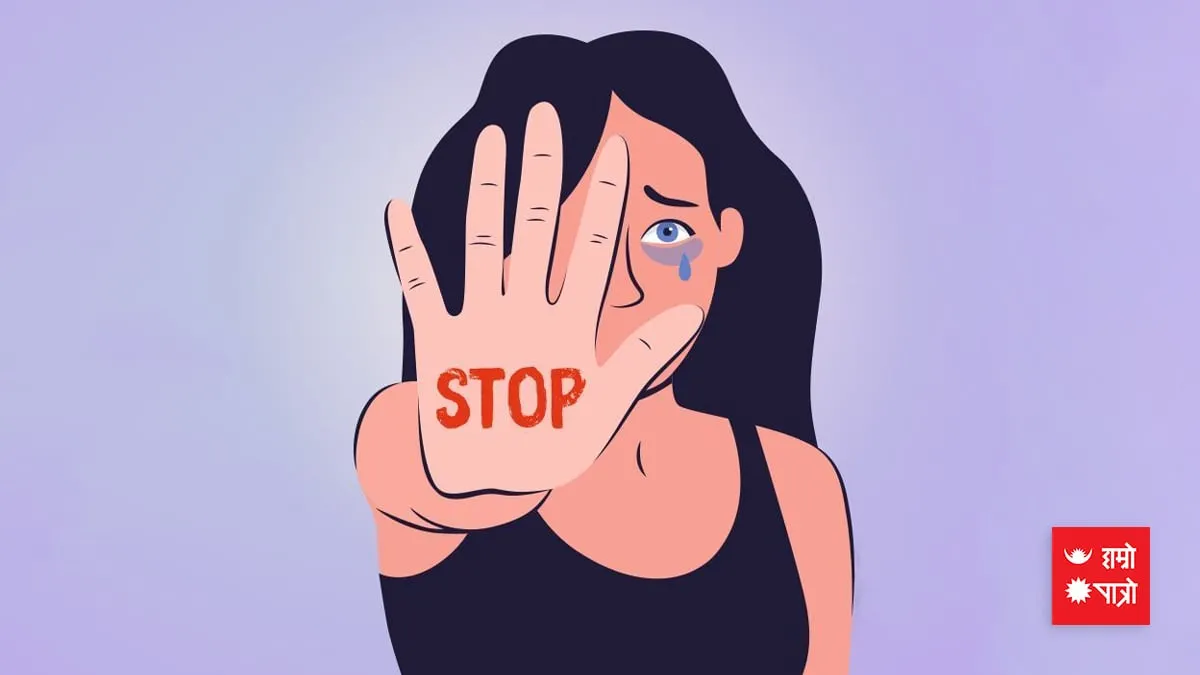
Every year from 25th November to 10th December, various activities and programs are organized for 16 days to show solidarity and generate public awareness against gender-based violence.
Global Statistics on "Violence against women"
According to various studies, one in three women worldwide has experienced some form of violence in their lifetime and most of the violence has been experienced by their close, boyfriend, confidant, or spouse.
Another study shows that 35 percent of women worldwide are victims of some form of physical or sexual violence in their lifetime.
Background:
The United Nations General Assembly in 1999 has decided to observe November 25 as the Day against Violence against Women. And from 2000 A.D this observation started.
Sustainable Development Goal
Violence against women continues to be an obstacle to achieving equality, development, peace as well as to the fulfillment of women and girls’ human rights. All in all, the promise of the Sustainable Development Goals (SDGs) - to leave no one behind - cannot be fulfilled without putting an end to violence against women and girls.
Women and creation
The life of a person starting from the mother's womb gradually moves forward with the love of sister, wife, and co-existence of the society. But ironically, these same female characters who created the world are still victims of violence all over the world. Today is the day against any kind of violence against women, who are synonymous with Mother Nature and the epitome of human creation.
There are still reports of violence against women in the daily newspapers, TV, or radio. Did this happen at the risk of not bringing dowry in such and such place? The news that this was done on the charge of witchcraft and forcing it on the girl child is heartbreaking. Voices of violence and inequality against women are heard not only in Nepal but also in many developed countries of the world.
Sanatana Hindu Philosophy and importance of women
The pages of history bear witness to the fact that in the practical rules of Vedic Sanatan Hindu and our Vedic tradition, this dignified civilization has given equality and respect to both men and women. Worshiped goddesses, the custom of treating daughters and daughters-in-law as synonyms of Lakshmi, the Panchakanyas required in every puja or yajna, and the custom of the Kumari, the living goddess, are all rituals of respect and reverence for women.
The UNiTE to End Digital Violence against Women and Girls 2025 campaign raises its voice against the growing problem of digital violence faced by women. In Nepal too, many examples of such online abuse can be seen. The government needs to create strong laws to stop digital violence, technology companies must keep their platforms safe, and donors should support feminist organizations with proper resources. And we, as individuals, must speak up to support the survivors.
Only through these combined efforts can we end digital violence against women.
The campaign against violence against women will not be successful unless the society and the nation treat the girl and the boy equally. Stories and stories of violence against women are often hidden and lost without expressing or reporting. In particular, the Government of Nepal states that men and women are legally equal and capable. If there is any kind of violence against you, you can get justice by reporting it to the concerned legal and advocacy body.
Just as the existence of Shiva without Parvati is secondary, Vishnu without Lakshmi is half, the story of Krishna without Radha is not exciting, the ancestor of Jesus Christ without Mother Mary is not complete. So the love and intimacy of woman with man and respecting woman is vital. Come today let us promise that we will always be vigilant against violence against women. Long live the end of violence through women's empowerment
Upcomming Events
-
27Aashadha
-
28AashadhaPradosh Vrata tomorrow
-
29AashadhaBhanu Jayanti 2 days remaning
-
31AashadhaWorld Youth Skill Day 4 days remaning
-
1ShrawanSaune Shankranti/Luto Falne Din/Dakshinaayan Arambha 6 days remaning
-
5ShrawanSurya Pooja 10 days remaning
-
6ShrawanBudhastami Vrata/Gorakhkali Puja 11 days remaning
-
9ShrawanHarishayani Ekadashi Vrata/Chaturmaas Vrata Aarambha 14 days remaning
-
10ShrawanPradosh Vrata 15 days remaning
-
12ShrawanWorld Hepatitis Day 17 days remaning
-
13ShrawanGuru Purnima Vrata/Vyas Jayanti/World Tiger Day 18 days remaning
-
14Shrawan
-
15ShrawanKhir Khane Din 20 days remaning
-
16ShrawanWorld BreastFeeding Week 21 days remaning
-
18ShrawanVitak Katha Prarambha 23 days remaning
-
21ShrawanGorakhkali Puja 26 days remaning
-
23ShrawanNational Soil Conservation Day 28 days remaning
-
24Shrawan
-
25ShrawanSom Pradosh Vrata 30 days remaning
-
26ShrawanGathāṃmugaḥ Caḥhre 31 days remaning
-
27ShrawanInternational Youth Day 32 days remaning
-
28ShrawanGunla Parwa Arambha/World Calligraphy Day 33 days remaning
-
30ShrawanVaraha Jayanti 35 days remaning
-
1BhadraNag Panchami Barta/Tharu Guriya Parwa/Singh Sankranti 37 days remaning
-
2BhadraKalki Jayanti 38 days remaning
-
3BhadraTulasidas Jayanti/National Information Day/World Photography Day 39 days remaning
-
4BhadraGorakhkali Puja 40 days remaning
-
7BhadraPutrada Ekadashi Vrata 43 days remaning
-
9BhadraPradosh Vrata 45 days remaning
-
12Bhadra
-
13BhadraGaijatra/International Day Against Nuclear Tests 49 days remaning
-
14Bhadra
-
15BhadraNational Library Day 51 days remaning
-
16BhadraMangal Chauthi Vrata 52 days remaning
-
18BhadraGaura Saptami 54 days remaning
-
19BhadraShree Krishna Janmashtami/Gaura Parva/Gorakhkali Puja/Durwashtami 55 days remaning
-
20Bhadra
-
22BhadraAja Ekadashi Vrata/Nijamati Sewa Diwas 58 days remaning
-
23Bhadra
-
25BhadraWorld Suicide Prevention Day 61 days remaning
Jyotish
-
Jyotish Pandit Mukunda Nepalज्योतिष पण्डित मुकुन्द नेपाल�...
-
Jyotish Smarika Acharyaबाल्मीकि बिद्यापिठ बाट ज्योत�...
-
Jyotish Vaman Sapkotaशिक्षा - व्याकरणाचार्य, पौरोही...
-
Jyotish Narayan Prasad Bhandariज्योतिषका उप-प्राध्यापक (lecturer of A...
-
Jyotish Mukunda Sharmaस्वाध्याय, सत्सङ्ग र सदाचारजस�...
-
Jyotish Purushottam Ghimireनेपाल संस्कृत विश्वविद्यालय, �...
-
Jyotish Khageshwor Subediगुरुकुल पद्दति बाट ज्योतिषीय �...
-
Jyotish Dharmendra Krishna Paudelशास्त्री धर्मेन्द्र कृष्ण पौ�...
-
Jyotish Mohan Ghimireसम्पुर्णानन्द संस्कृत विश्वव...
-
Jyotish Narayan Prasad Gautamगुरुकुल शिक्षा प्रणालीबाट ज्�...
-
Jyotish Krishna Prasad Bhandariउपप्राध्यापक (Asst. professor of Sanskrit) नेपा�...
-
Jyotish Hamro patroनेपाल संस्कृत विश्वविद्यालय �...
-
Jyotish Damodar Kaushikज्योतिष र व्याकरण विषयमा आचार�...
-
Jyotish Damodar Poudelनेपाल संस्कृत विश्व बिद्यालय�...
-
Jyotish Amrit Paudelवाराणसीकै सम्पूर्णानन्द संस्...
-
Jyotish Dipendra Khatiwadaसम्पुर्णानन्द संस्कृत बिश्वब...
-
Jyotish Deepak Prasad Kafleसम्पूर्णानन्द संस्कृत विश्वव...
-
Jyotish Kuresh Pandey११ वर्षको अनुभवसहित विभिन्न ध�...
-
Jyotish Ghanashyam Pokharelनेपाल संस्कृत विश्वविद्यालयब...
call
Hororscope
मेष (चु, चे, चो, ला, लि, लु, ले, लो, अ) दिनको सुरुवात सामान्य रहनेछ, तर बिस्तारै कामले गति लिनेछ। अरूले टारेको जिम्मेवारी पनि तपाईंले सम्हाल्नुपर्ने हुन सक्छ। आफ्नो काम समयमै सक्दा मन ढुक्क हुनेछ। आजको शुभ रंग हरियो हो भने शुभ अंक ३ रहेको छ।




Liked by: