
Upcomming Events
-
27Aashadha
-
28AashadhaPradosh Vrata tomorrow
-
29AashadhaBhanu Jayanti 2 days remaning
-
31AashadhaWorld Youth Skill Day 4 days remaning
-
1ShrawanSaune Shankranti/Luto Falne Din/Dakshinaayan Arambha 6 days remaning
-
5ShrawanSurya Pooja 10 days remaning
-
6ShrawanBudhastami Vrata/Gorakhkali Puja 11 days remaning
-
9ShrawanHarishayani Ekadashi Vrata/Chaturmaas Vrata Aarambha 14 days remaning
-
10ShrawanPradosh Vrata 15 days remaning
-
12ShrawanWorld Hepatitis Day 17 days remaning
-
13ShrawanGuru Purnima Vrata/Vyas Jayanti/World Tiger Day 18 days remaning
-
14Shrawan
-
15ShrawanKhir Khane Din 20 days remaning
-
16ShrawanWorld BreastFeeding Week 21 days remaning
-
18ShrawanVitak Katha Prarambha 23 days remaning
-
21ShrawanGorakhkali Puja 26 days remaning
-
23ShrawanNational Soil Conservation Day 28 days remaning
-
24Shrawan
-
25ShrawanSom Pradosh Vrata 30 days remaning
-
26ShrawanGathāṃmugaḥ Caḥhre 31 days remaning
-
27ShrawanInternational Youth Day 32 days remaning
-
28ShrawanGunla Parwa Arambha/World Calligraphy Day 33 days remaning
-
30ShrawanVaraha Jayanti 35 days remaning
-
1BhadraNag Panchami Barta/Tharu Guriya Parwa/Singh Sankranti 37 days remaning
-
2BhadraKalki Jayanti 38 days remaning
-
3BhadraTulasidas Jayanti/National Information Day/World Photography Day 39 days remaning
-
4BhadraGorakhkali Puja 40 days remaning
-
7BhadraPutrada Ekadashi Vrata 43 days remaning
-
9BhadraPradosh Vrata 45 days remaning
-
12Bhadra
-
13BhadraGaijatra/International Day Against Nuclear Tests 49 days remaning
-
14Bhadra
-
15BhadraNational Library Day 51 days remaning
-
16BhadraMangal Chauthi Vrata 52 days remaning
-
18BhadraGaura Saptami 54 days remaning
-
19BhadraShree Krishna Janmashtami/Gaura Parva/Gorakhkali Puja/Durwashtami 55 days remaning
-
20Bhadra
-
22BhadraAja Ekadashi Vrata/Nijamati Sewa Diwas 58 days remaning
-
23Bhadra
-
25BhadraWorld Suicide Prevention Day 61 days remaning
Jyotish
-
Jyotish Pandit Mukunda Nepalज्योतिष पण्डित मुकुन्द नेपाल�...
-
Jyotish Smarika Acharyaबाल्मीकि बिद्यापिठ बाट ज्योत�...
-
Jyotish Vaman Sapkotaशिक्षा - व्याकरणाचार्य, पौरोही...
-
Jyotish Narayan Prasad Bhandariज्योतिषका उप-प्राध्यापक (lecturer of A...
-
 Jyotish Mukunda Sharmaस्वाध्याय, सत्सङ्ग र सदाचारजस�...
-
Jyotish Purushottam Ghimireनेपाल संस्कृत विश्वविद्यालय, �...
-
Jyotish Khageshwor Subediगुरुकुल पद्दति बाट ज्योतिषीय �...
-
 Jyotish Dharmendra Krishna Paudelशास्त्री धर्मेन्द्र कृष्ण पौ�...
-
Jyotish Mohan Ghimireसम्पुर्णानन्द संस्कृत विश्वव...
-
Jyotish Narayan Prasad Gautamगुरुकुल शिक्षा प्रणालीबाट ज्�...
-
Jyotish Krishna Prasad Bhandariउपप्राध्यापक (Asst. professor of Sanskrit) नेपा�...
-
Jyotish Hamro patroनेपाल संस्कृत विश्वविद्यालय �...
-
Jyotish Damodar Kaushikज्योतिष र व्याकरण विषयमा आचार�...
-
 Jyotish Damodar Poudelनेपाल संस्कृत विश्व बिद्यालय�...
-
Jyotish Amrit Paudelवाराणसीकै सम्पूर्णानन्द संस्...
-
Jyotish Dipendra Khatiwadaसम्पुर्णानन्द संस्कृत बिश्वब...
-
Jyotish Deepak Prasad Kafleसम्पूर्णानन्द संस्कृत विश्वव...
-
 Jyotish Kuresh Pandey११ वर्षको अनुभवसहित विभिन्न ध�...
-
Jyotish Ghanashyam Pokharelनेपाल संस्कृत विश्वविद्यालयब...


call
Hororscope
 Mesh
Mesh Brish
Brish Mithun
 Karkat
  Singha
  Kanya
Kanya Tula
Tula Brischik
 Dhanu
Dhanu  Makar
Makar  Kumbha
 Meen
Meen
मेष (चु, चे, चो, ला, लि, लु, ले, लो, अ) नोकरी वा पेशामा तर्कशक्तिले अरुलाई प्रभावित पार्न सक्नुहुनेछ। महत्वकांक्षी योजना पूरा गर्नको लागि संघर्ष गर्नुपर्ला। स्वास्थ्यमा चिसोबाट जोगिनुहोस्। आजको शुभ रंग हरियो हो भने शुभ अंक ६ रहेको छ।



2082 Kartik
5
Wednesday
Oct 22, 2025
कार्तिक शुक्ल प्रतिपदा
Gobardan Puja/Gaigoru Puja/Mha Puja/Hali Tihar/Nepal Sambat 1146 Starts
कार्तिक शुक्ल प्रतिपदा

MY NOTE


Nepal Sambat 1146 Starts
Special Audio
Today, the Newar community living in and out of the Kathmandu Valley celebrates the new year (Nepal Sambat) i.e. "Nhudanya Bhintuna" (exchange of New Year greetings) and develops ethnic unity and ancestral common culture. This Samvat, especially considered by the Newar community, is also a fundamental Samvat of Nepal.
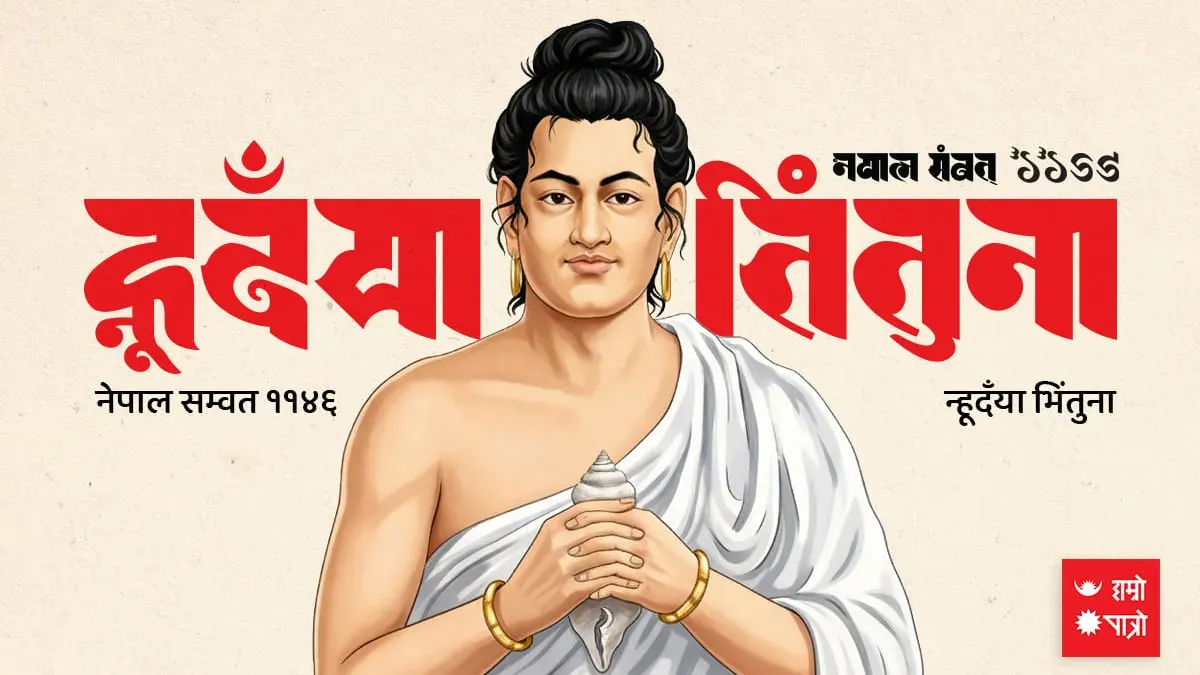
Nepal Samvat is the epoch run by national luminary Shankhadhar Sakhwa by freeing the people across the country from debt. On this occasion, Bhintuna rallies are being held all over the country and abroad saying 'Nhudanya Bhintuna'.
Nepal Samvat is based on the lunar month. The first day of Nepal Samvat falls on the day of Kartik Shukla Paksha of Bikram Samvat.
There is a history of Nepal Samvat in government offices from the time of King Raghav Dev of Bhaktapur to the time of Chandra Shamsher. In this Samvat a month is measured between one no moon day (Aaunshi) to another Aaunshi and in this Samvat a year of 354 days falls.
According to the Nepal Samvat, the months are called Kachla, Thinla, Ponhela, Silla, Chilla, Chwala, Banchala, Tanthala, Della, Gunla, Nala, and Kaula respectively. The Government of Nepal has also given official recognition to this Samvat. In the Newari community, this samvat is widely used and measured.
Welcome to the month of Kachla of Nepal 1146.
Gobardan Puja
Gobardan Puja
Special Audio
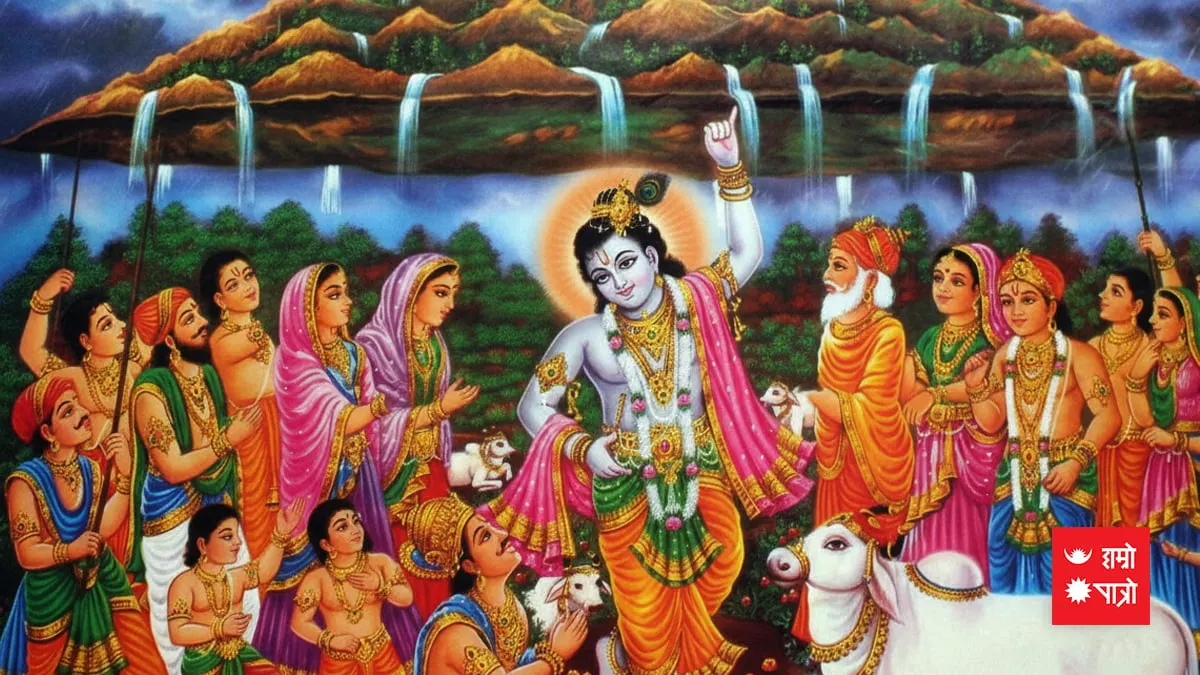
It is also mentioned that Indra today regretted his behavior and apologized to Lord Krishna. Today, the same Gobardhana mountain that Sri Krishna lifted with his finger is worshiped. Thus, while worshiping Gobardhan mountain, it has been customary to worship the Gobar as a symbol of Gobardhan mountain.
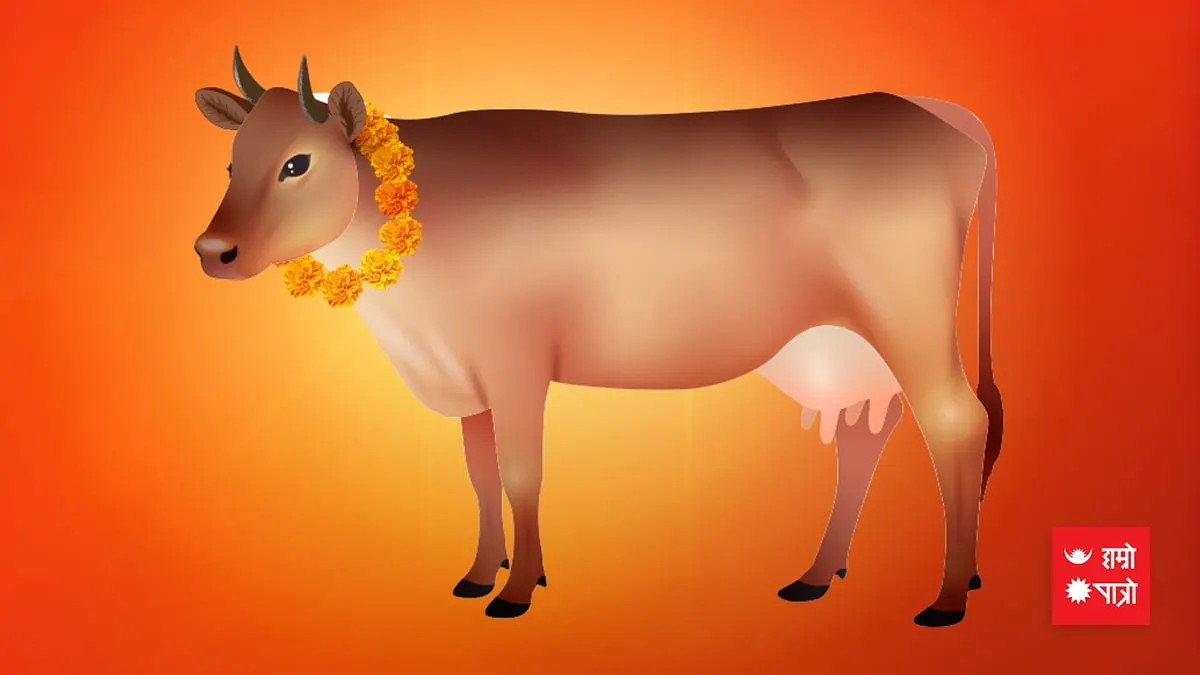
Today is Gobardhan Puja, Gobar means the holy cow dung so today Sanatan people acknowledge the importance of the mother cow. Crows, dogs, cows, and other animals involved in ancient agricultural work are hugely acknowledged in Yamapanchak days. Gobardhan Puja reminds us of the importance placed on our agricultural life by animals.
It is mentioned in the Bhagavad Gita that Lord Krishna lifted the Gobardhan mountain with his little finger to save the people of Dwarika from the catastrophe caused by the incessant rains that fell in Gokul due to the wrath of King Indra of heaven.
Gai Goru Puja
Gai Goru Puja
Special Audio
Today cows, oxen, traditional wooden plows (Hali or halo), and other agricultural implements are worshiped. With the onset of winter in the agricultural doors of Nepal, it is customary to take out the tools such as plows, and spades that have been kept after the rainy season for worship. Hali means plow, so this Tihar is called Hali Tihar, we worship agricultural tools on this day.Another big highlight of the day is Deusi. Yesterday's Bhaile's Vaka and today Deunse's Vaka.
Deunse
Deunse is a prehistoric storytelling and singing tradition, where a group of people visits a neighbor's doorstep, courtyard, and organizes a musical and lyrical event for a short time. This is a traditional way of storytelling, those Deunse narrates several stories of ancient King Bali and other ancient pauranik characters. Later Deunse receives foods, grains, money, and thanks from the house owner, the ceremony ends with the flow of best wishes and blessings to the house owner, family, and society.
Mha Puja
Mha Puja
Special Audio
Meaning of "Mha"
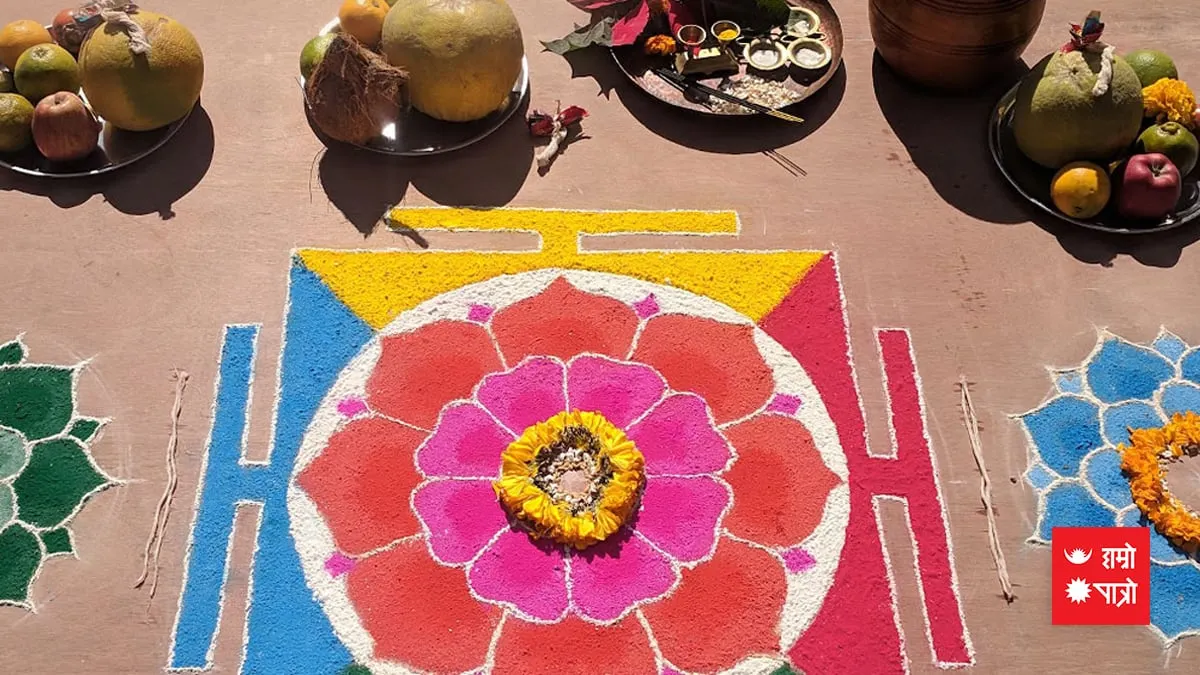
In the Newari community today, it is customary to celebrate Mha puja and value self-existence. In the Newari language, there is a predominance of small words like Mha, Mha means self,, and puja is worship, so today is respecting self and acknowledging the preciousness of life.
Sometimes, I feel that this is one of the most scientific and social cultures, as today Newa people take time to value self and re-realize the value of living.
Today, the Newar community living in and out of the Kathmandu Valley celebrates the new year (Nepal Sambat) i.e. "Nhudanya Bhintuna" (exchange of New Year greetings) and develops ethnic unity and ancestral common culture. This Samvat, especially considered by the Newar community, is also a fundamental Samvat of Nepal.
Nepal Samvat is the epoch run by national luminary Shankhadhar Sakhwa by freeing the people across the country from debt. On this occasion, Bhintuna rallies are being held all over the country and abroad saying 'Nhudanya Bhintuna'.
Hali Tihar
Hali Tihar
Special Audio
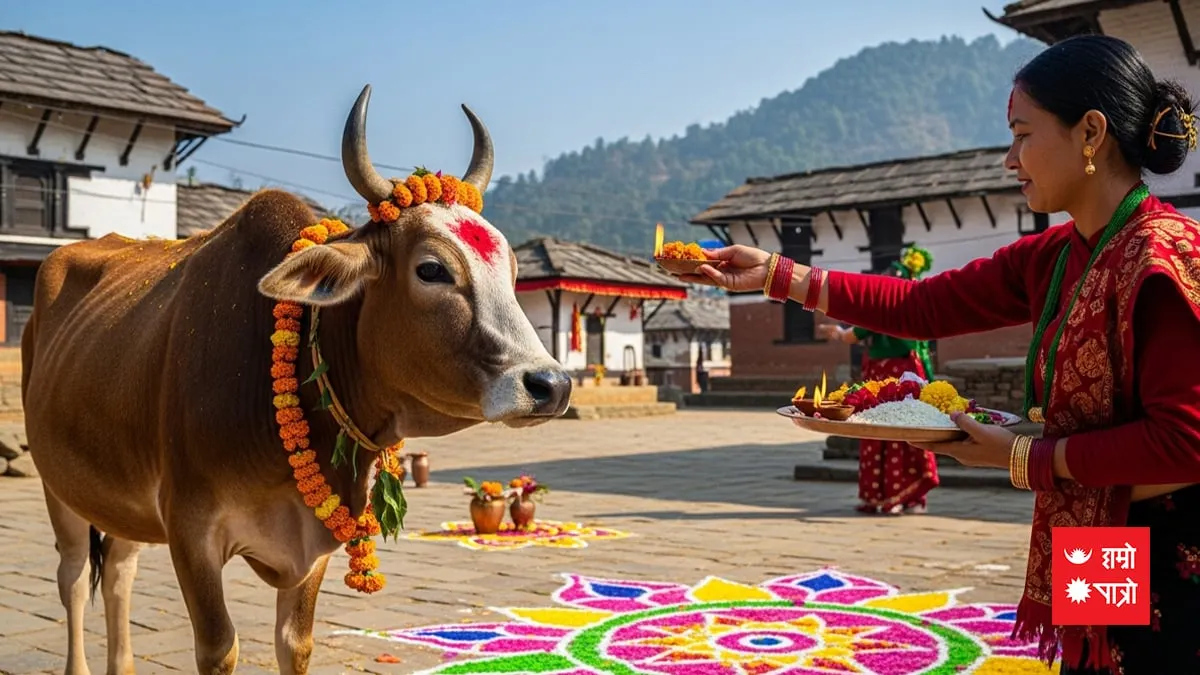
Today is the day when cows, oxen, ploughs, and other agricultural tools are worshipped. In Nepal’s agrarian households, with the beginning of winter, it is customary to take out the ploughs, spades, sickles, and other tools that were stored away during the rainy season and worship them today. For this reason, the day is also called Hal Tihar (Plough Festival).
On this day, the animals that accompany humans in farming—such as cows and oxen—are also worshipped. In ancient times, there was even a folk belief that people would pass under a cow’s legs on this day for blessings. Today, cows, oxen, and even the farmers who plough the fields are honored and worshipped, and the festival is celebrated as Hali Tihar (Farmer’s Festival).
The tradition of worshipping cows is based on the religious belief that offering reverence to cows brings the same affection and blessings as one receives from their own mother.
The musical group of men from the neighborhood, believed to have been sent by King Bali, is called Deuse, and the musical offerings they sing and perform are known as Deusi.
In Deusi, there is usually a lead chanter—someone who needs to be knowledgeable about tunes, melodies, and rhythms. Apart from a few of the most popular chants, many other verses can be improvised according to the situation. Sometimes, when the group does not receive the expected offering (Dakshina) for their Deusi performance…
यो घर हेर्दा सिँहदरवार जस्तो
आँगन हेर्दा टुँडिखेल जत्रो
दक्षिणा हेर्दा माग्नेलाई जस्तो
केराको थम्बा
हामी यति जना भाइ जम्मा
झिलिमिली झिल्ला
ताते रोटी मिल्ला जस्ता पत्तिंहरु हामी मध्य धेरैको बाल्यकालसँग जोडिएको होला ।
देउसीले दिएको आशिषले साँच्चीकै विशेष मान्यता राख्दछ,
यसपाला आउँदा जस्ताको छाना
अर्को साल आउँदा पक्काको छाना
त्यसपछि आउँदा चाँदीको छाना
त्यसपछि आउँदा सुनको छाना
यो घरैका केटा केटी
Blessings such as “May you flourish like sacred dubo grass” are truly meaningful and relevant. Indeed, may all of us receive the blessings of Deusi, and may harmony grow among us. On this day, it is customary to forget anger and grudges, go to the neighbors’ houses to play Deusi, and strengthen social bonds. The money collected from Deusi is traditionally used either for some social cause, shared among the group, or spent on a community feast—an age-old practice that Nepali society has continued for generations.
Warm wishes on this special day.
Upcomming Events
-
27Aashadha
-
28AashadhaPradosh Vrata tomorrow
-
29AashadhaBhanu Jayanti 2 days remaning
-
31AashadhaWorld Youth Skill Day 4 days remaning
-
1ShrawanSaune Shankranti/Luto Falne Din/Dakshinaayan Arambha 6 days remaning
-
5ShrawanSurya Pooja 10 days remaning
-
6ShrawanBudhastami Vrata/Gorakhkali Puja 11 days remaning
-
9ShrawanHarishayani Ekadashi Vrata/Chaturmaas Vrata Aarambha 14 days remaning
-
10ShrawanPradosh Vrata 15 days remaning
-
12ShrawanWorld Hepatitis Day 17 days remaning
-
13ShrawanGuru Purnima Vrata/Vyas Jayanti/World Tiger Day 18 days remaning
-
14Shrawan
-
15ShrawanKhir Khane Din 20 days remaning
-
16ShrawanWorld BreastFeeding Week 21 days remaning
-
18ShrawanVitak Katha Prarambha 23 days remaning
-
21ShrawanGorakhkali Puja 26 days remaning
-
23ShrawanNational Soil Conservation Day 28 days remaning
-
24Shrawan
-
25ShrawanSom Pradosh Vrata 30 days remaning
-
26ShrawanGathāṃmugaḥ Caḥhre 31 days remaning
-
27ShrawanInternational Youth Day 32 days remaning
-
28ShrawanGunla Parwa Arambha/World Calligraphy Day 33 days remaning
-
30ShrawanVaraha Jayanti 35 days remaning
-
1BhadraNag Panchami Barta/Tharu Guriya Parwa/Singh Sankranti 37 days remaning
-
2BhadraKalki Jayanti 38 days remaning
-
3BhadraTulasidas Jayanti/National Information Day/World Photography Day 39 days remaning
-
4BhadraGorakhkali Puja 40 days remaning
-
7BhadraPutrada Ekadashi Vrata 43 days remaning
-
9BhadraPradosh Vrata 45 days remaning
-
12Bhadra
-
13BhadraGaijatra/International Day Against Nuclear Tests 49 days remaning
-
14Bhadra
-
15BhadraNational Library Day 51 days remaning
-
16BhadraMangal Chauthi Vrata 52 days remaning
-
18BhadraGaura Saptami 54 days remaning
-
19BhadraShree Krishna Janmashtami/Gaura Parva/Gorakhkali Puja/Durwashtami 55 days remaning
-
20Bhadra
-
22BhadraAja Ekadashi Vrata/Nijamati Sewa Diwas 58 days remaning
-
23Bhadra
-
25BhadraWorld Suicide Prevention Day 61 days remaning
Jyotish
-
Jyotish Pandit Mukunda Nepalज्योतिष पण्डित मुकुन्द नेपाल�...
-
Jyotish Smarika Acharyaबाल्मीकि बिद्यापिठ बाट ज्योत�...
-
Jyotish Vaman Sapkotaशिक्षा - व्याकरणाचार्य, पौरोही...
-
Jyotish Narayan Prasad Bhandariज्योतिषका उप-प्राध्यापक (lecturer of A...
-
Jyotish Mukunda Sharmaस्वाध्याय, सत्सङ्ग र सदाचारजस�...
-
Jyotish Purushottam Ghimireनेपाल संस्कृत विश्वविद्यालय, �...
-
Jyotish Khageshwor Subediगुरुकुल पद्दति बाट ज्योतिषीय �...
-
Jyotish Dharmendra Krishna Paudelशास्त्री धर्मेन्द्र कृष्ण पौ�...
-
Jyotish Mohan Ghimireसम्पुर्णानन्द संस्कृत विश्वव...
-
Jyotish Narayan Prasad Gautamगुरुकुल शिक्षा प्रणालीबाट ज्�...
-
Jyotish Krishna Prasad Bhandariउपप्राध्यापक (Asst. professor of Sanskrit) नेपा�...
-
Jyotish Hamro patroनेपाल संस्कृत विश्वविद्यालय �...
-
Jyotish Damodar Kaushikज्योतिष र व्याकरण विषयमा आचार�...
-
Jyotish Damodar Poudelनेपाल संस्कृत विश्व बिद्यालय�...
-
Jyotish Amrit Paudelवाराणसीकै सम्पूर्णानन्द संस्...
-
Jyotish Dipendra Khatiwadaसम्पुर्णानन्द संस्कृत बिश्वब...
-
Jyotish Deepak Prasad Kafleसम्पूर्णानन्द संस्कृत विश्वव...
-
Jyotish Kuresh Pandey११ वर्षको अनुभवसहित विभिन्न ध�...
-
Jyotish Ghanashyam Pokharelनेपाल संस्कृत विश्वविद्यालयब...
call
Hororscope
मेष (चु, चे, चो, ला, लि, लु, ले, लो, अ) नोकरी वा पेशामा तर्कशक्तिले अरुलाई प्रभावित पार्न सक्नुहुनेछ। महत्वकांक्षी योजना पूरा गर्नको लागि संघर्ष गर्नुपर्ला। स्वास्थ्यमा चिसोबाट जोगिनुहोस्। आजको शुभ रंग हरियो हो भने शुभ अंक ६ रहेको छ।




Liked by: