
Upcomming Events
-
27Aashadha
-
28AashadhaPradosh Vrata tomorrow
-
29AashadhaBhanu Jayanti 2 days remaning
-
31AashadhaWorld Youth Skill Day 4 days remaning
-
1ShrawanSaune Shankranti/Luto Falne Din/Dakshinaayan Arambha 6 days remaning
-
5ShrawanSurya Pooja 10 days remaning
-
6ShrawanBudhastami Vrata/Gorakhkali Puja 11 days remaning
-
9ShrawanHarishayani Ekadashi Vrata/Chaturmaas Vrata Aarambha 14 days remaning
-
10ShrawanPradosh Vrata 15 days remaning
-
12ShrawanWorld Hepatitis Day 17 days remaning
-
13ShrawanGuru Purnima Vrata/Vyas Jayanti/World Tiger Day 18 days remaning
-
14Shrawan
-
15ShrawanKhir Khane Din 20 days remaning
-
16ShrawanWorld BreastFeeding Week 21 days remaning
-
18ShrawanVitak Katha Prarambha 23 days remaning
-
21ShrawanGorakhkali Puja 26 days remaning
-
23ShrawanNational Soil Conservation Day 28 days remaning
-
24Shrawan
-
25ShrawanSom Pradosh Vrata 30 days remaning
-
26ShrawanGathāṃmugaḥ Caḥhre 31 days remaning
-
27ShrawanInternational Youth Day 32 days remaning
-
28ShrawanGunla Parwa Arambha/World Calligraphy Day 33 days remaning
-
30ShrawanVaraha Jayanti 35 days remaning
-
1BhadraNag Panchami Barta/Tharu Guriya Parwa/Singh Sankranti 37 days remaning
-
2BhadraKalki Jayanti 38 days remaning
-
3BhadraTulasidas Jayanti/National Information Day/World Photography Day 39 days remaning
-
4BhadraGorakhkali Puja 40 days remaning
-
7BhadraPutrada Ekadashi Vrata 43 days remaning
-
9BhadraPradosh Vrata 45 days remaning
-
12Bhadra
-
13BhadraGaijatra/International Day Against Nuclear Tests 49 days remaning
-
14Bhadra
-
15BhadraNational Library Day 51 days remaning
-
16BhadraMangal Chauthi Vrata 52 days remaning
-
18BhadraGaura Saptami 54 days remaning
-
19BhadraShree Krishna Janmashtami/Gaura Parva/Gorakhkali Puja/Durwashtami 55 days remaning
-
20Bhadra
-
22BhadraAja Ekadashi Vrata/Nijamati Sewa Diwas 58 days remaning
-
23Bhadra
-
25BhadraWorld Suicide Prevention Day 61 days remaning
Jyotish
-
Jyotish Pandit Mukunda Nepalज्योतिष पण्डित मुकुन्द नेपाल�...
-
Jyotish Smarika Acharyaबाल्मीकि बिद्यापिठ बाट ज्योत�...
-
Jyotish Vaman Sapkotaशिक्षा - व्याकरणाचार्य, पौरोही...
-
Jyotish Narayan Prasad Bhandariज्योतिषका उप-प्राध्यापक (lecturer of A...
-
 Jyotish Mukunda Sharmaस्वाध्याय, सत्सङ्ग र सदाचारजस�...
-
Jyotish Purushottam Ghimireनेपाल संस्कृत विश्वविद्यालय, �...
-
Jyotish Khageshwor Subediगुरुकुल पद्दति बाट ज्योतिषीय �...
-
 Jyotish Dharmendra Krishna Paudelशास्त्री धर्मेन्द्र कृष्ण पौ�...
-
Jyotish Mohan Ghimireसम्पुर्णानन्द संस्कृत विश्वव...
-
Jyotish Narayan Prasad Gautamगुरुकुल शिक्षा प्रणालीबाट ज्�...
-
Jyotish Krishna Prasad Bhandariउपप्राध्यापक (Asst. professor of Sanskrit) नेपा�...
-
Jyotish Hamro patroनेपाल संस्कृत विश्वविद्यालय �...
-
Jyotish Damodar Kaushikज्योतिष र व्याकरण विषयमा आचार�...
-
 Jyotish Damodar Poudelनेपाल संस्कृत विश्व बिद्यालय�...
-
Jyotish Amrit Paudelवाराणसीकै सम्पूर्णानन्द संस्...
-
Jyotish Dipendra Khatiwadaसम्पुर्णानन्द संस्कृत बिश्वब...
-
Jyotish Deepak Prasad Kafleसम्पूर्णानन्द संस्कृत विश्वव...
-
 Jyotish Kuresh Pandey११ वर्षको अनुभवसहित विभिन्न ध�...
-
Jyotish Ghanashyam Pokharelनेपाल संस्कृत विश्वविद्यालयब...


call
Hororscope
 Mesh
Mesh Brish
Brish Mithun
 Karkat
  Singha
  Kanya
Kanya Tula
Tula Brischik
 Dhanu
Dhanu  Makar
Makar  Kumbha
 Meen
Meen
मेष (चु, चे, चो, ला, लि, लु, ले, लो, अ) नोकरी वा पेशामा तर्कशक्तिले अरुलाई प्रभावित पार्न सक्नुहुनेछ। महत्वकांक्षी योजना पूरा गर्नको लागि संघर्ष गर्नुपर्ला। स्वास्थ्यमा चिसोबाट जोगिनुहोस्। आजको शुभ रंग हरियो हो भने शुभ अंक ६ रहेको छ।



2082 Kartik
19
Wednesday
Nov 05, 2025
कार्तिक शुक्ल पूर्णिमा
Poornima Vrata/Sakimana Punhi/Chaturmas Wrata Samapti/ Kartik Snan Samapti/Nimbarkacharya jayanti/Guru Nanak Jayanti
कार्तिक शुक्ल पूर्णिमा

MY NOTE


Guru Nanak Jayanti/nimbarkacharya jayanti
Special Audio
नानकः सत्यमार्गस्य दाता करुणया युतः।
समत्वभावसम्पन्नो गुरुः सर्वहिते रतः॥
Translation: "Guru Nanak, the giver of the path of truth and filled with compassion, embodies equality and is devoted to the welfare of all."
Sarwa Ishworbad and Guru Nanak
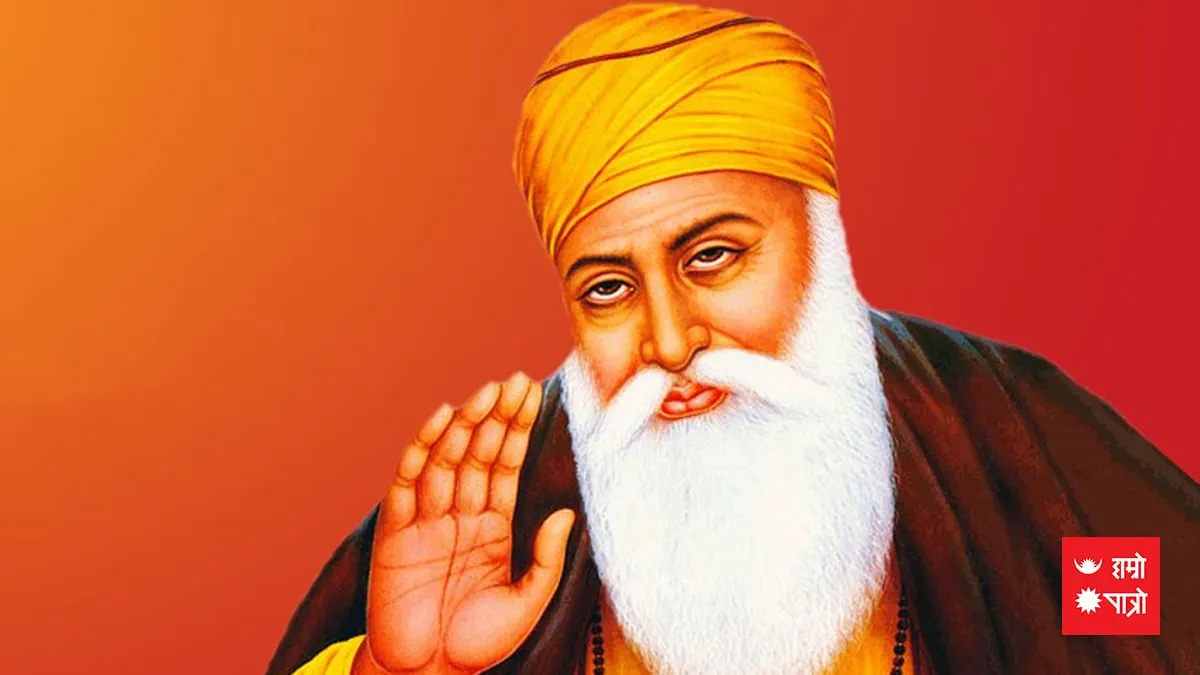
Sri Guru Nanak Devji gave the world the message of Sarva Dharma, which gave birth to all the values and truths that are essential to human progress and well-being. Shri Guru Nanak Devji was a revolutionary visionary, a great philosopher, thinker and a revolutionary social reformer. His philosophy was a humanist philosophy whose influence would remain in the world for many centuries to come.
Sikhism and Guru Nanak
Sikhism is guided by the principles of ten holy gurus and Guru Nanak is the first of those and the founder of the entire Sikhism. Celebrated with utmost reverence, today is the most sacred festival for Sikhs across the globe. This day is known as Guru Parva among the Sikh community.
Guru Nanak was not just a founder of Sikhism but a social reformer and philosopher, who has given a new edge to entire humanity and social structures. Born in 1469, his birthplace Nakhana Sahib is currently in Pakistan, every Sikh wishes to visit this place at least once in their lifetime.
Amrit Bhela
The day begins with the morning procession of devotees at the Gurudwara, the holy place of daily worship of the Sikhs, and the glory of the Guru is described by chanting various mantras and chanting hymns. The hymn performed in the morning is called 'Asa Di Bhar'.
Such gatherings are called 'Amrit Bhela' and after 'Amrit Bhela' it is customary to have 'Laganaru' meaning a free community meal and such feasts are organized by the volunteers of the Gurdwara. By organizing such parties, people of any caste, colour, gender, or community are free to participate in them.
Especially after studying the holy book 'Guru Granth Sahib' for 48 hours two days in advance, the day of Guru Parva is concluded according to the rules and regulations. Such a continuous religious study is called 'Akhandpathu.
Nimbarkacharya jayanti
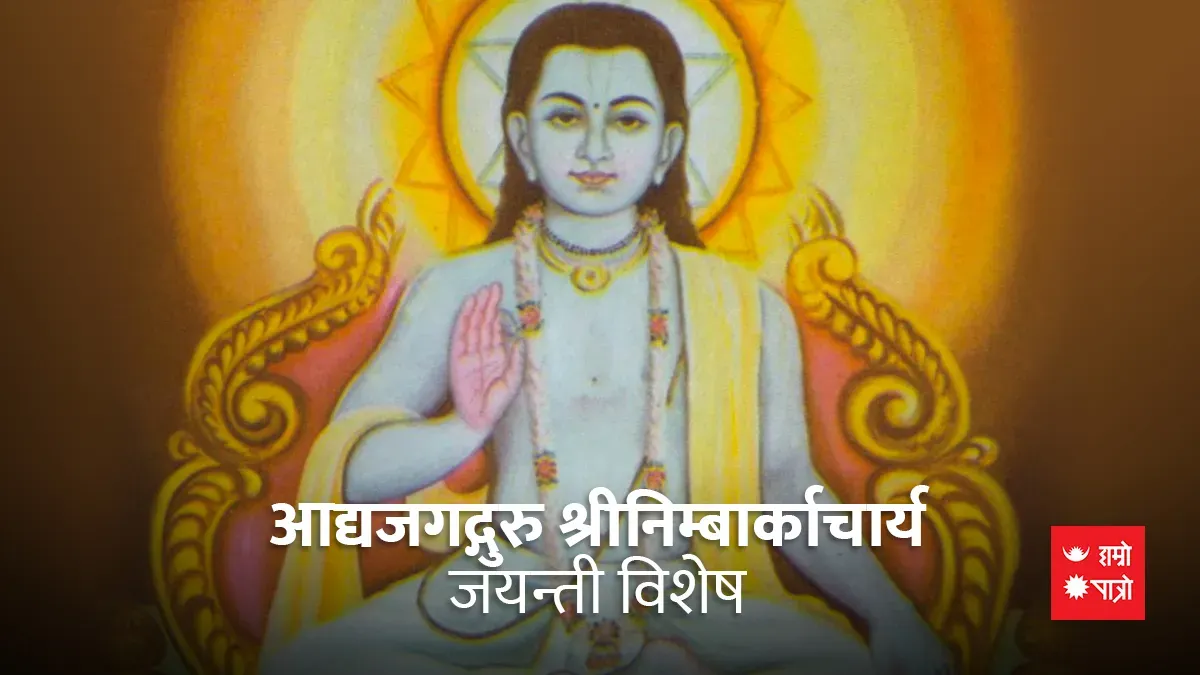
Today is also the birth anniversary of Guru Nimbarkacharya. Many of us may not have heard of Guru Nimbarkacharya. Let us take a moment today to talk briefly about him.
About Guru Nimbarkacharya
It is believed that Guru Nimbarkacharya was born in the Indian region on the banks of the Godavari River, in a city called Vaiduryapattan. Some believe that his birth occurred during the Dwapara Yuga, while others say it was in the 11th century CE.
The reason behind his name is associated with the neem tree and the sun. “Nimb” refers to the neem tree, and “Arka” refers to the sun. Hence, the name Nimbarka is said to have originated from this association.
Although he was born on the banks of the Godavari, it is believed that Guru Nimbarkacharya undertook his spiritual practice on the banks of the Yamuna. One day, while Guru Nimbarkacharya was sitting in his ashram, it is believed that a wandering monk (Dandi Swami) arrived there. By then, the evening had already set in.
Since the Dandi Swami stated that he would not eat at that time, Guru Nimbarkacharya, not wanting to send his guest away hungry, is believed to have manifested the Sun God in the neem tree in his courtyard. Upon seeing the Sun, the Dandi Swami is believed to have eaten his meal. This incident is still celebrated and remembered. It is said that this event is how Guru Nimbarkacharya got his name.
Guru Nimbarkacharya is also regarded as an incarnation of the Sun. Some even consider him a part of Lord Vishnu’s Sudarshana Chakra. It is believed that he was born on the full moon day of the Kartik month, which is why his birth anniversary is observed with special attention, importance, and reverence.
Sakimana Punhi
Sakimana Punhi
Exclusive audio
Every year on Kartik Shukla Purnima (known in Nepal Sambat as Kachalathwa Punhi), the Newar community of the Kathmandu Valley celebrates Sakimana Punhi also called Sakimila or Halimali Punhi. It marks one of the first and most meaningful festivals of the Nepal Sambat calendar.
In Nepalbhasa, “Saki” means yam and “Mana” means to boil hence, Sakimana Punhi literally means “Full Moon of Boiled Yams.” On this day, Newars boil or roast yams, sweet potatoes, maize, soybeans, and other grains, offering them first to their deities before sharing with family. This simple act reflects deep respect toward nature offering before consuming.
The festival symbolizes gratitude to Mother Earth for her harvest. It is believed that these seasonal roots and grains provide strength and vitality, aligning with both spiritual and scientific reasoning.
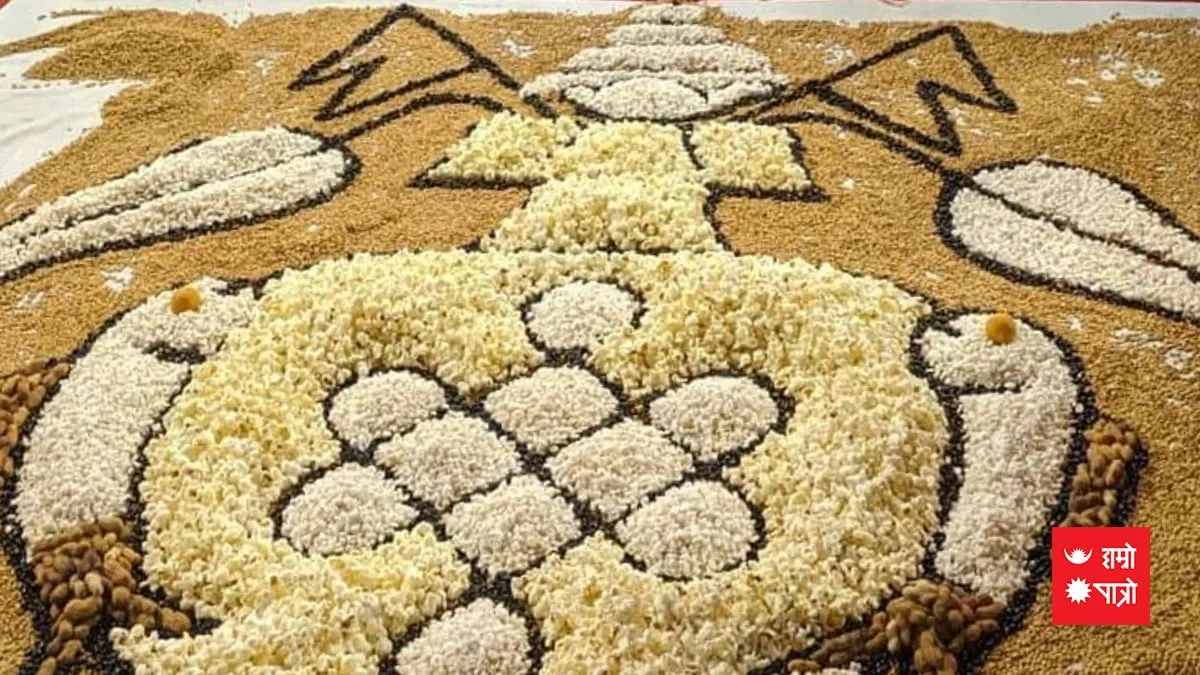
A major highlight of the day is “Halimali Byegu”the creation of artistic patterns using roasted grains, depicting temples, deities, and symbols. This creative ritual expresses the harmony between agriculture, art, and community spirit. Traditional Dapha music and chants bring people together, reconnecting them with their ancestors, deities, and nature.
More than a religious event, Sakimana Punhi is a cultural classroom. In a time dominated by fast food and plastic culture, this festival reminds us to return to nature, to see divinity in food, and beauty in labor.
It stands as a celebration not just for Newars but for all Nepalis a festival of creativity, cooperation, and gratitude that fills life with fullness Sakimana Punhi.
Poornima Vrata
पूर्णिमा व्रत
विशेष अडियो सामग्री
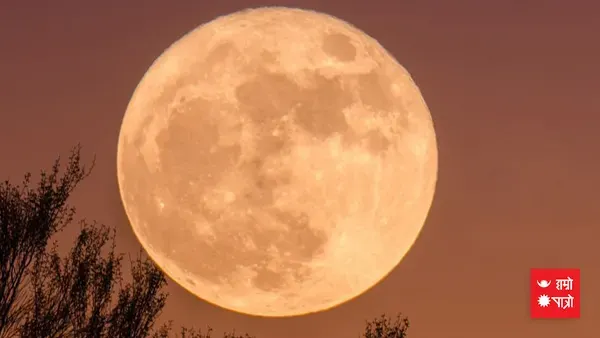
The last day of Shukla Paksha is the full moon day. On this tithi, the moon is the brightest and magnificent. It is believed that fasting on this day brings immense lunar grace to health, prosperity, and peace. On the full moon day, Lord Shiva and Vishnu are especially worshiped. Special worship to Lord Vishnu is done in the form of Satya Narayan Puja. Satya Narayan Puja is usually performed whenever possible, although the fruits of this puja performed on the day of the full moon are very abundant.
From a scientific point of view, it is said that gravity will have a great effect on the earth on the day of the full moon and self-purification will be done by fasting on this day and remembering the name of God. By fasting on this day, the metabolic process will be strengthened, gastric problems will be solved and positive energy will increase in the body.
This day is fasted from sunrise in the morning to moonrise in the evening. Some people observe this fast without drinking water, while others observe this fast by eating only one meal and eating no salt (alino) food. In the evening, after the moonrise, the fast ends with the sighting of the moon. Happy Jestha Shukla Purnima to everyone this year.
Let there be an end to the flood and landslide, let there be the protection of both religion and the followers of religion.
Chaturmas Vrata Samapti/ Kartik Snan Samapti
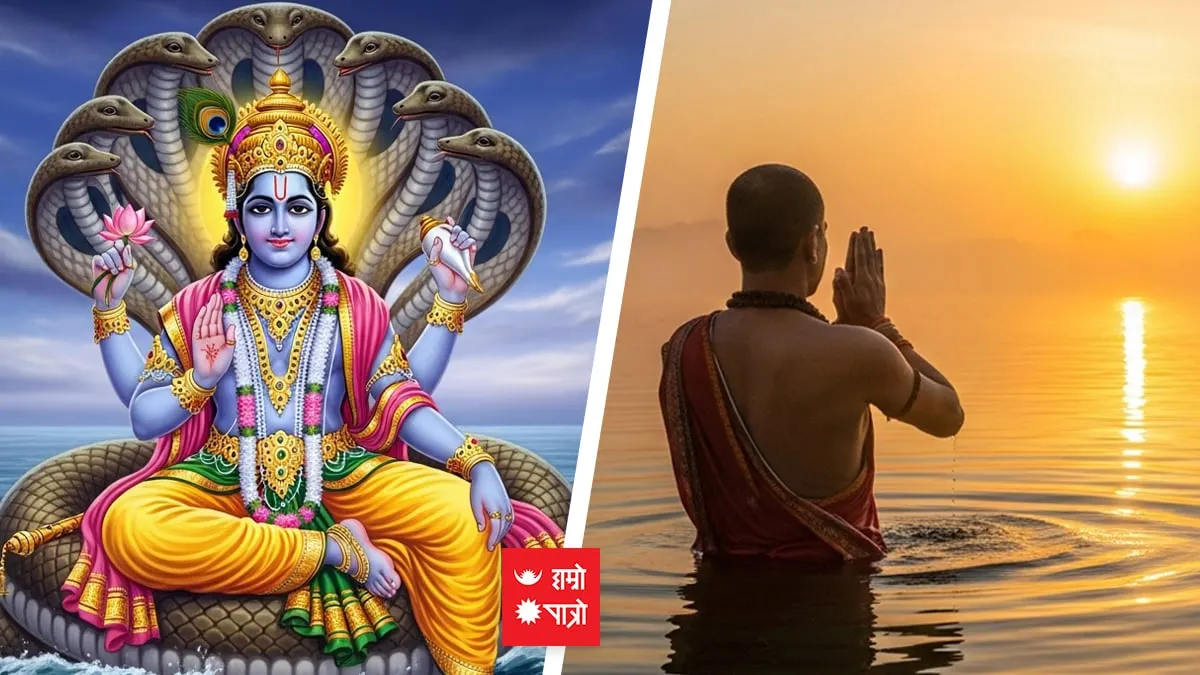
Chaturmas Vrata Samapti/ Kartik Snan Samapti
विशेष अडियो
What is Chaturmas?
Chaturmas is a sacred four-month period in Hindu tradition, observed from the eleventh day (Ekadashi) of the Hindu month of Ashadha (around June-July) to the eleventh day of Kartika (around October-November). This period is known as the "Chaturmas," which literally means "four months." It marks the time when Lord Vishnu is believed to enter a state of yoga-nidra (divine sleep), and during these months, various religious activities, rituals, and austerities are observed.
Chaturmas is considered highly auspicious for spiritual growth, self-discipline, and penance. Devotees undertake fasts, avoid certain foods, and often engage in pilgrimage, charity, and other spiritual practices. It is also a time when monks, sages, and sadhus typically reside in one place, giving teachings and discourses, rather than traveling as they usually do. Due to the sacred nature of this period, marriages and other auspicious ceremonies are generally postponed. Chaturmas serves as an opportunity for devotees to cleanse themselves spiritually, practice self-control, and deepen their devotion.
Chaturmas ends on the full moon day of Kartik Shukla Paksha. Auspicious rituals (Marriage/ Brabandha and specific pujas) are not performed during the four months of Chaturmas as there is a belief that doing good deeds in Chatrasmas will not bring any success. Since Lord Vishnu is sleeping in the Ksheer Sagar during this period, auspicious deeds were stopped for 4 months. Today, such rituals can be started.
After this full moon, Mangsir month starts, and now the Sahits of marriage are being counted and planned in full swing. Kartik is considered to be the beloved month of Lord Vishnu. If it had been like other years, there would have been a big fair on this day in all four Narayan temples around Kathmandu and all the Narayan temples across Nepal.
Marriages, Bratabandhas, and big worships, which have been stopped due to the Chaturmas, may now go well with adequate blessings and fortunes.
The Kartik Snan has also come to an end today along with the Chaturmas. The holy Kartik Snan, which started with the conclusion of Dashain, has ended today. On the day of Ashwin Shukla Purnima, by worshiping Mahalakshmi and staying awake at night, the big Dashain was formally concluded and today the Kartik bath is also over.
The winter has started, the temperature is dropping, and these dewdrops have started to wet the earth in the morning. Since the fear of corona infection can become more active with the cold, we should all stay alert and stay safe. Please look at Hamro Patro for festivals and ceremonies.
Upcomming Events
-
27Aashadha
-
28AashadhaPradosh Vrata tomorrow
-
29AashadhaBhanu Jayanti 2 days remaning
-
31AashadhaWorld Youth Skill Day 4 days remaning
-
1ShrawanSaune Shankranti/Luto Falne Din/Dakshinaayan Arambha 6 days remaning
-
5ShrawanSurya Pooja 10 days remaning
-
6ShrawanBudhastami Vrata/Gorakhkali Puja 11 days remaning
-
9ShrawanHarishayani Ekadashi Vrata/Chaturmaas Vrata Aarambha 14 days remaning
-
10ShrawanPradosh Vrata 15 days remaning
-
12ShrawanWorld Hepatitis Day 17 days remaning
-
13ShrawanGuru Purnima Vrata/Vyas Jayanti/World Tiger Day 18 days remaning
-
14Shrawan
-
15ShrawanKhir Khane Din 20 days remaning
-
16ShrawanWorld BreastFeeding Week 21 days remaning
-
18ShrawanVitak Katha Prarambha 23 days remaning
-
21ShrawanGorakhkali Puja 26 days remaning
-
23ShrawanNational Soil Conservation Day 28 days remaning
-
24Shrawan
-
25ShrawanSom Pradosh Vrata 30 days remaning
-
26ShrawanGathāṃmugaḥ Caḥhre 31 days remaning
-
27ShrawanInternational Youth Day 32 days remaning
-
28ShrawanGunla Parwa Arambha/World Calligraphy Day 33 days remaning
-
30ShrawanVaraha Jayanti 35 days remaning
-
1BhadraNag Panchami Barta/Tharu Guriya Parwa/Singh Sankranti 37 days remaning
-
2BhadraKalki Jayanti 38 days remaning
-
3BhadraTulasidas Jayanti/National Information Day/World Photography Day 39 days remaning
-
4BhadraGorakhkali Puja 40 days remaning
-
7BhadraPutrada Ekadashi Vrata 43 days remaning
-
9BhadraPradosh Vrata 45 days remaning
-
12Bhadra
-
13BhadraGaijatra/International Day Against Nuclear Tests 49 days remaning
-
14Bhadra
-
15BhadraNational Library Day 51 days remaning
-
16BhadraMangal Chauthi Vrata 52 days remaning
-
18BhadraGaura Saptami 54 days remaning
-
19BhadraShree Krishna Janmashtami/Gaura Parva/Gorakhkali Puja/Durwashtami 55 days remaning
-
20Bhadra
-
22BhadraAja Ekadashi Vrata/Nijamati Sewa Diwas 58 days remaning
-
23Bhadra
-
25BhadraWorld Suicide Prevention Day 61 days remaning
Jyotish
-
Jyotish Pandit Mukunda Nepalज्योतिष पण्डित मुकुन्द नेपाल�...
-
Jyotish Smarika Acharyaबाल्मीकि बिद्यापिठ बाट ज्योत�...
-
Jyotish Vaman Sapkotaशिक्षा - व्याकरणाचार्य, पौरोही...
-
Jyotish Narayan Prasad Bhandariज्योतिषका उप-प्राध्यापक (lecturer of A...
-
Jyotish Mukunda Sharmaस्वाध्याय, सत्सङ्ग र सदाचारजस�...
-
Jyotish Purushottam Ghimireनेपाल संस्कृत विश्वविद्यालय, �...
-
Jyotish Khageshwor Subediगुरुकुल पद्दति बाट ज्योतिषीय �...
-
Jyotish Dharmendra Krishna Paudelशास्त्री धर्मेन्द्र कृष्ण पौ�...
-
Jyotish Mohan Ghimireसम्पुर्णानन्द संस्कृत विश्वव...
-
Jyotish Narayan Prasad Gautamगुरुकुल शिक्षा प्रणालीबाट ज्�...
-
Jyotish Krishna Prasad Bhandariउपप्राध्यापक (Asst. professor of Sanskrit) नेपा�...
-
Jyotish Hamro patroनेपाल संस्कृत विश्वविद्यालय �...
-
Jyotish Damodar Kaushikज्योतिष र व्याकरण विषयमा आचार�...
-
Jyotish Damodar Poudelनेपाल संस्कृत विश्व बिद्यालय�...
-
Jyotish Amrit Paudelवाराणसीकै सम्पूर्णानन्द संस्...
-
Jyotish Dipendra Khatiwadaसम्पुर्णानन्द संस्कृत बिश्वब...
-
Jyotish Deepak Prasad Kafleसम्पूर्णानन्द संस्कृत विश्वव...
-
Jyotish Kuresh Pandey११ वर्षको अनुभवसहित विभिन्न ध�...
-
Jyotish Ghanashyam Pokharelनेपाल संस्कृत विश्वविद्यालयब...
call
Hororscope
मेष (चु, चे, चो, ला, लि, लु, ले, लो, अ) नोकरी वा पेशामा तर्कशक्तिले अरुलाई प्रभावित पार्न सक्नुहुनेछ। महत्वकांक्षी योजना पूरा गर्नको लागि संघर्ष गर्नुपर्ला। स्वास्थ्यमा चिसोबाट जोगिनुहोस्। आजको शुभ रंग हरियो हो भने शुभ अंक ६ रहेको छ।




Liked by: