
Upcomming Events
-
7Aashadha
-
8AashadhaGorakhkali Puja/Vayu Asthami tomorrow
-
9AashadhaInternational Widows Day 2 days remaning
-
11AashadhaNirjala Ekadashi Vrata/Tulasi ko Dal Rakhne Din/Bhumi Pooja 4 days remaning
-
12AashadhaInternational Day against Drug Abuse and Illicit Trafficking 5 days remaning
-
13AashadhaShani Pradosh Vrata 6 days remaning
-
15Aashadha
-
18AashadhaWorld Sports Journalist Day 11 days remaning
-
20AashadhaInternational Cooperative Day 13 days remaning
-
23AashadhaGorakhkali Puja 16 days remaning
-
24AashadhaBudhastami Vrata 17 days remaning
-
26AashadhaYogini Ekadashi Vrata (Smarta) 19 days remaning
-
27AashadhaYogini Ekadashi Vrata (Vaishnava)/World Population Day 20 days remaning
-
28AashadhaPradosh Vrata 21 days remaning
-
29AashadhaBhanu Jayanti 22 days remaning
-
31AashadhaWorld Youth Skill Day 24 days remaning
-
1Shrawan
-
5ShrawanSurya Pooja 30 days remaning
-
6ShrawanBudhastami Vrata/Gorakhkali Puja 31 days remaning
-
9ShrawanHarishayani Ekadashi Vrata/Chaturmaas Vrata Aarambha 34 days remaning
-
10ShrawanPradosh Vrata 35 days remaning
-
12ShrawanWorld Hepatitis Day 37 days remaning
-
13ShrawanGuru Purnima Vrata/Vyas Jayanti/World Tiger Day 38 days remaning
-
14Shrawan
-
15ShrawanKhir Khane Din 40 days remaning
-
16ShrawanWorld BreastFeeding Week 41 days remaning
-
18ShrawanVitak Katha Prarambha 43 days remaning
-
21ShrawanGorakhkali Puja 46 days remaning
-
23ShrawanNational Soil Conservation Day 48 days remaning
-
24Shrawan
-
25ShrawanSom Pradosh Vrata 50 days remaning
-
26ShrawanGathāṃmugaḥ Caḥhre 51 days remaning
-
27ShrawanInternational Youth Day 52 days remaning
-
28ShrawanGunla Parwa Arambha/World Calligraphy Day 53 days remaning
-
30ShrawanVaraha Jayanti 55 days remaning
-
1BhadraNag Panchami Barta/Singh Sankranti 57 days remaning
-
2BhadraKalki Jayanti 58 days remaning
-
3BhadraTulasidas Jayanti/National Information Day/World Photography Day 59 days remaning
-
4BhadraGorakhkali Puja 60 days remaning
-
7BhadraPutrada Ekadashi Vrata 63 days remaning
Jyotish
-
Jyotish Pandit Mukunda Nepalज्योतिष पण्डित मुकुन्द नेपाल�...
-
 Jyotish Dharmendra Krishna Paudelशास्त्री धर्मेन्द्र कृष्ण पौ�...
-
Jyotish Vaman Sapkotaशिक्षा - व्याकरणाचार्य, पौरोही...
-
 Jyotish Mukunda Sharmaस्वाध्याय, सत्सङ्ग र सदाचारजस�...
-
Jyotish Narayan Prasad Gautamगुरुकुल शिक्षा प्रणालीबाट ज्�...
-
Jyotish Mohan Ghimireसम्पुर्णानन्द संस्कृत विश्वव...
-
Jyotish Smarika Acharyaबाल्मीकि बिद्यापिठ बाट ज्योत�...
-
Jyotish Purushottam Ghimireनेपाल संस्कृत विश्वविद्यालय, �...
-
Jyotish Amrit Paudelवाराणसीकै सम्पूर्णानन्द संस्...
-
Jyotish Damodar Kaushikज्योतिष र व्याकरण विषयमा आचार�...
-
Jyotish Krishna Prasad Bhandariउपप्राध्यापक (Asst. professor of Sanskrit) नेपा�...
-
Jyotish Khageshwor Subediगुरुकुल पद्दति बाट ज्योतिषीय �...
-
 Jyotish Damodar Poudelनेपाल संस्कृत विश्व बिद्यालय�...
-
Jyotish Narayan Prasad Bhandariज्योतिषका उप-प्राध्यापक (lecturer of A...
-
Jyotish Deepak Prasad Kafleसम्पूर्णानन्द संस्कृत विश्वव...
-
 Jyotish Kuresh Pandey११ वर्षको अनुभवसहित विभिन्न ध�...
-
Jyotish Hamro patroनेपाल संस्कृत विश्वविद्यालय �...
-
Jyotish Dipendra Khatiwadaसम्पुर्णानन्द संस्कृत बिश्वब...
-
Jyotish Ghanashyam Pokharelनेपाल संस्कृत विश्वविद्यालयब...


call
Hororscope
 Mesh
Mesh Brish
Brish Mithun
 Karkat
  Singha
  Kanya
Kanya Tula
Tula Brischik
 Dhanu
Dhanu  Makar
Makar  Kumbha
 Meen
Meen
मेष (चु, चे, चो, ला, लि, लु, ले, लो, अ) मनपरेको काम गर्न समय मिल्नेछ। परिवारका सदस्यसँग रमाइलो समय बित्नेछ। धेरै दिनदेखि सोचिरहेको एउटा काम सुरु गर्ने जाँगर आउनेछ। दिन हल्का र रमाइलो रहनेछ। आजको शुभ रंग गुलाबी हो भने शुभ अंक ७ रहेको छ।



2082 Bhadra
22
Sunday
Sep 07, 2025
भदौ शुक्ल पूर्णिमा
Khagras Chandra Grahan/Poornima Vrata
भदौ शुक्ल पूर्णिमा

MY NOTE


खग्रास चन्द्रग्रहण
Exclusive audio
This year’s first total lunar eclipse will be visible in the Nepali sky on Sunday, the night of Bhadra Shukla Purnima. According to the Nepal Panchang Decision Development Committee, the eclipse will begin at 10:11 PM, reach its maximum at 11:56 PM, and end at 1:41 AM.
In the words of the committee’s former chairman, Prof. Shreekrishna Adhikari, the moon will remain completely covered for about three and a half hours and can be observed across the country, including Kathmandu. This is not only a scientific phenomenon but is also considered a significant moment from cultural and religious perspectives. It will be the first eclipse of 2082 B.S. The committee further informed that after this, a partial lunar eclipse will occur on the night of Phalgun Shukla Purnima.
According to traditional beliefs, certain rules are to be followed on the day of an eclipse. From 1:11 PM on Sunday afternoon, except for children, the elderly, and the sick, others are expected to refrain from eating food. It is also widely believed that lunar eclipses generally occur on full moon nights, while solar eclipses occur on new moon days.
This night is called the “Corn Moon Eclipse,” which will scatter across our sky as a marvelous celestial sight. Nepalese people will have the rare fortune to witness this mysterious play of nature with their own eyes.
On Bhadra 22, 2082 B.S. (September 7, 2025), a lunar eclipse occurred on the day of the full moon. Let’s talk a bit about this eclipse.
Generally, lunar eclipses take place only on a full moon day. This was the second lunar eclipse of the year, but the first one visible from Nepal. It was also visible from the northeastern part of Europe, the whole of Asia, Australia, North America, and many countries along the Atlantic and Pacific coasts.
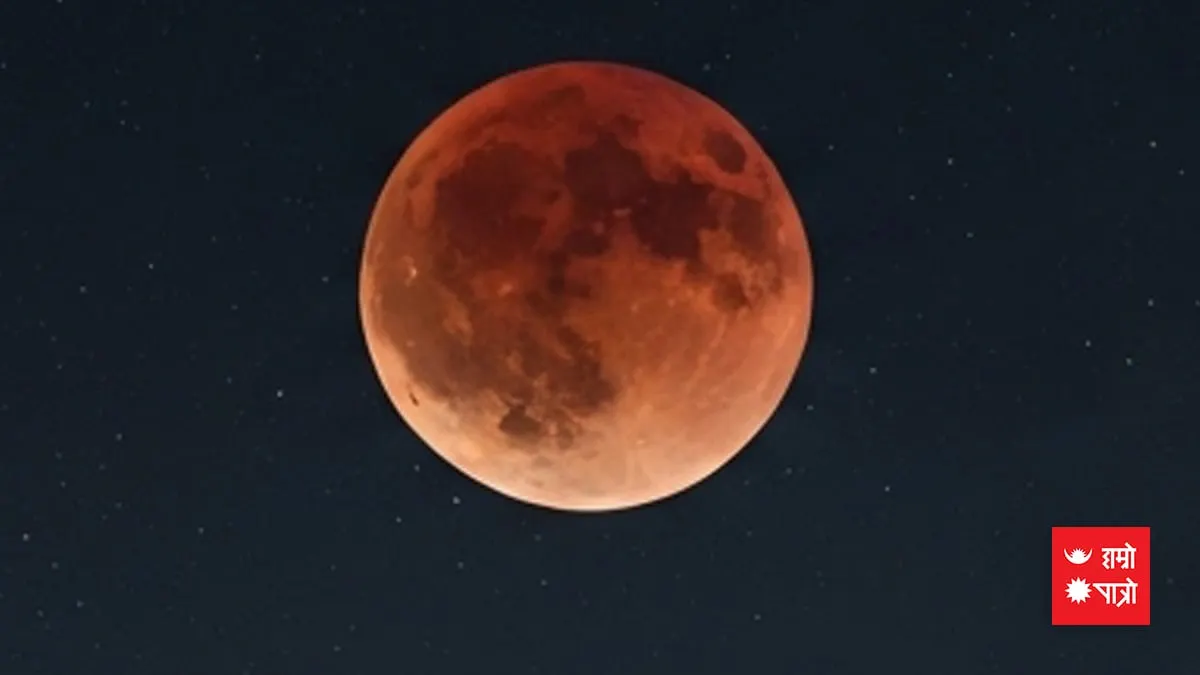
What is a lunar eclipse?
A lunar eclipse is a natural astronomical event where the Earth comes between the Sun and the Moon. During this time, the distance between the Earth, Moon, and Sun is at its minimum. As a result, the shadow of the Earth falls on the Moon, making it appear dark due to the absence of sunlight. This phenomenon is called a lunar eclipse.
Total vs. Partial Lunar Eclipse
If only a part of the Moon falls under the Earth's shadow, it is called a partial lunar eclipse (Khanda Graas). If the entire Moon is covered, it is called a total lunar eclipse (Khagraas).
Is an eclipse bad?
Although lunar eclipses are often interpreted as inauspicious in cultural traditions, in reality, they are simply natural processes. However, in Sanatan belief, they are thought to have some effect on human emotions, behavior, and social interactions. In the past, eclipses were often linked to national crises or social contexts, but nowadays, the impact is considered mostly personal.
Cultural practices include performing charity and virtuous acts after the eclipse, avoiding food and drink during the eclipse, singing devotional songs, and bathing in rivers or pilgrimage sites afterward.
May this lunar eclipse bring an end to unrest and intolerance, and may peace spread throughout Nepal. May the Moon’s gentle light bring serenity to the hearts of all Nepalis, from Mechi in the east to Mahakali in the west, and to those living abroad.
Poornima Vrata
पूर्णिमा व्रत
Exclusive audio
When is Poornima?
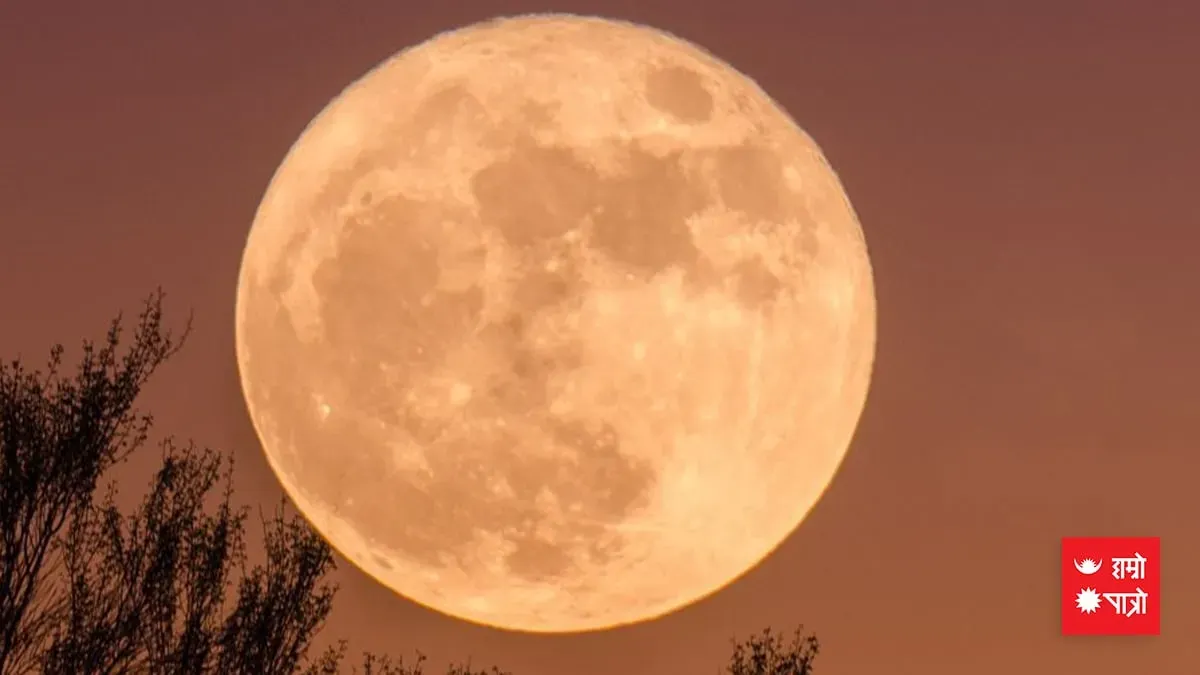
The last day of Shukla Paksha is the full moon day. On this tithi, the moon is the brightest and magnificent. It is believed that fasting on this day brings immense lunar grace to health, prosperity, and peace. On the full moon day, Lord Shiva and Vishnu are especially worshiped. Special worship to Lord Vishnu is done in the form of Satya Narayan Puja. Satya Narayan Puja is usually performed whenever possible, although the fruits of this puja performed on the day of the full moon are very abundant.
From a scientific point of view, it is said that gravity will have a great effect on the earth on the day of the full moon and self-purification will be done by fasting on this day and remembering the name of God. By fasting on this day, the metabolic process will be strengthened, gastric problems will be solved and positive energy will increase in the body.
This day is fasted from sunrise in the morning to moonrise in the evening. Some people observe this fast without drinking water, while others observe this fast by eating only one meal and eating no salt (alino) food. In the evening, after the moonrise, the fast ends with the sighting of the moon. Happy Shukla Purnima to everyone .
Let there be an end to the flood and landslide, let there be the protection of both religion and the followers of religion.
Upcomming Events
-
7Aashadha
-
8AashadhaGorakhkali Puja/Vayu Asthami tomorrow
-
9AashadhaInternational Widows Day 2 days remaning
-
11AashadhaNirjala Ekadashi Vrata/Tulasi ko Dal Rakhne Din/Bhumi Pooja 4 days remaning
-
12AashadhaInternational Day against Drug Abuse and Illicit Trafficking 5 days remaning
-
13AashadhaShani Pradosh Vrata 6 days remaning
-
15Aashadha
-
18AashadhaWorld Sports Journalist Day 11 days remaning
-
20AashadhaInternational Cooperative Day 13 days remaning
-
23AashadhaGorakhkali Puja 16 days remaning
-
24AashadhaBudhastami Vrata 17 days remaning
-
26AashadhaYogini Ekadashi Vrata (Smarta) 19 days remaning
-
27AashadhaYogini Ekadashi Vrata (Vaishnava)/World Population Day 20 days remaning
-
28AashadhaPradosh Vrata 21 days remaning
-
29AashadhaBhanu Jayanti 22 days remaning
-
31AashadhaWorld Youth Skill Day 24 days remaning
-
1Shrawan
-
5ShrawanSurya Pooja 30 days remaning
-
6ShrawanBudhastami Vrata/Gorakhkali Puja 31 days remaning
-
9ShrawanHarishayani Ekadashi Vrata/Chaturmaas Vrata Aarambha 34 days remaning
-
10ShrawanPradosh Vrata 35 days remaning
-
12ShrawanWorld Hepatitis Day 37 days remaning
-
13ShrawanGuru Purnima Vrata/Vyas Jayanti/World Tiger Day 38 days remaning
-
14Shrawan
-
15ShrawanKhir Khane Din 40 days remaning
-
16ShrawanWorld BreastFeeding Week 41 days remaning
-
18ShrawanVitak Katha Prarambha 43 days remaning
-
21ShrawanGorakhkali Puja 46 days remaning
-
23ShrawanNational Soil Conservation Day 48 days remaning
-
24Shrawan
-
25ShrawanSom Pradosh Vrata 50 days remaning
-
26ShrawanGathāṃmugaḥ Caḥhre 51 days remaning
-
27ShrawanInternational Youth Day 52 days remaning
-
28ShrawanGunla Parwa Arambha/World Calligraphy Day 53 days remaning
-
30ShrawanVaraha Jayanti 55 days remaning
-
1BhadraNag Panchami Barta/Singh Sankranti 57 days remaning
-
2BhadraKalki Jayanti 58 days remaning
-
3BhadraTulasidas Jayanti/National Information Day/World Photography Day 59 days remaning
-
4BhadraGorakhkali Puja 60 days remaning
-
7BhadraPutrada Ekadashi Vrata 63 days remaning
Jyotish
-
Jyotish Pandit Mukunda Nepalज्योतिष पण्डित मुकुन्द नेपाल�...
-
Jyotish Dharmendra Krishna Paudelशास्त्री धर्मेन्द्र कृष्ण पौ�...
-
Jyotish Vaman Sapkotaशिक्षा - व्याकरणाचार्य, पौरोही...
-
Jyotish Mukunda Sharmaस्वाध्याय, सत्सङ्ग र सदाचारजस�...
-
Jyotish Narayan Prasad Gautamगुरुकुल शिक्षा प्रणालीबाट ज्�...
-
Jyotish Mohan Ghimireसम्पुर्णानन्द संस्कृत विश्वव...
-
Jyotish Smarika Acharyaबाल्मीकि बिद्यापिठ बाट ज्योत�...
-
Jyotish Purushottam Ghimireनेपाल संस्कृत विश्वविद्यालय, �...
-
Jyotish Amrit Paudelवाराणसीकै सम्पूर्णानन्द संस्...
-
Jyotish Damodar Kaushikज्योतिष र व्याकरण विषयमा आचार�...
-
Jyotish Krishna Prasad Bhandariउपप्राध्यापक (Asst. professor of Sanskrit) नेपा�...
-
Jyotish Khageshwor Subediगुरुकुल पद्दति बाट ज्योतिषीय �...
-
Jyotish Damodar Poudelनेपाल संस्कृत विश्व बिद्यालय�...
-
Jyotish Narayan Prasad Bhandariज्योतिषका उप-प्राध्यापक (lecturer of A...
-
Jyotish Deepak Prasad Kafleसम्पूर्णानन्द संस्कृत विश्वव...
-
Jyotish Kuresh Pandey११ वर्षको अनुभवसहित विभिन्न ध�...
-
Jyotish Hamro patroनेपाल संस्कृत विश्वविद्यालय �...
-
Jyotish Dipendra Khatiwadaसम्पुर्णानन्द संस्कृत बिश्वब...
-
Jyotish Ghanashyam Pokharelनेपाल संस्कृत विश्वविद्यालयब...
call
Hororscope
मेष (चु, चे, चो, ला, लि, लु, ले, लो, अ) मनपरेको काम गर्न समय मिल्नेछ। परिवारका सदस्यसँग रमाइलो समय बित्नेछ। धेरै दिनदेखि सोचिरहेको एउटा काम सुरु गर्ने जाँगर आउनेछ। दिन हल्का र रमाइलो रहनेछ। आजको शुभ रंग गुलाबी हो भने शुभ अंक ७ रहेको छ।




Liked by: