
Upcomming Events
-
27Aashadha
-
28AashadhaPradosh Vrata tomorrow
-
29AashadhaBhanu Jayanti 2 days remaning
-
31AashadhaWorld Youth Skill Day 4 days remaning
-
1ShrawanSaune Shankranti/Luto Falne Din/Dakshinaayan Arambha 6 days remaning
-
5ShrawanSurya Pooja 10 days remaning
-
6ShrawanBudhastami Vrata/Gorakhkali Puja 11 days remaning
-
9ShrawanHarishayani Ekadashi Vrata/Chaturmaas Vrata Aarambha 14 days remaning
-
10ShrawanPradosh Vrata 15 days remaning
-
12ShrawanWorld Hepatitis Day 17 days remaning
-
13ShrawanGuru Purnima Vrata/Vyas Jayanti/World Tiger Day 18 days remaning
-
14Shrawan
-
15ShrawanKhir Khane Din 20 days remaning
-
16ShrawanWorld BreastFeeding Week 21 days remaning
-
18ShrawanVitak Katha Prarambha 23 days remaning
-
21ShrawanGorakhkali Puja 26 days remaning
-
23ShrawanNational Soil Conservation Day 28 days remaning
-
24Shrawan
-
25ShrawanSom Pradosh Vrata 30 days remaning
-
26ShrawanGathāṃmugaḥ Caḥhre 31 days remaning
-
27ShrawanInternational Youth Day 32 days remaning
-
28ShrawanGunla Parwa Arambha/World Calligraphy Day 33 days remaning
-
30ShrawanVaraha Jayanti 35 days remaning
-
1BhadraNag Panchami Barta/Tharu Guriya Parwa/Singh Sankranti 37 days remaning
-
2BhadraKalki Jayanti 38 days remaning
-
3BhadraTulasidas Jayanti/National Information Day/World Photography Day 39 days remaning
-
4BhadraGorakhkali Puja 40 days remaning
-
7BhadraPutrada Ekadashi Vrata 43 days remaning
-
9BhadraPradosh Vrata 45 days remaning
-
12Bhadra
-
13BhadraGaijatra/International Day Against Nuclear Tests 49 days remaning
-
14Bhadra
-
15BhadraNational Library Day 51 days remaning
-
16BhadraMangal Chauthi Vrata 52 days remaning
-
18BhadraGaura Saptami 54 days remaning
-
19BhadraShree Krishna Janmashtami/Gaura Parva/Gorakhkali Puja/Durwashtami 55 days remaning
-
20Bhadra
-
22BhadraAja Ekadashi Vrata/Nijamati Sewa Diwas 58 days remaning
-
23Bhadra
-
25BhadraWorld Suicide Prevention Day 61 days remaning
Jyotish
-
 Jyotish Damodar Poudelनेपाल संस्कृत विश्व बिद्यालय�...
-
Jyotish Pandit Mukunda Nepalज्योतिष पण्डित मुकुन्द नेपाल�...
-
Jyotish Smarika Acharyaबाल्मीकि बिद्यापिठ बाट ज्योत�...
-
Jyotish Vaman Sapkotaशिक्षा - व्याकरणाचार्य, पौरोही...
-
Jyotish Narayan Prasad Bhandariज्योतिषका उप-प्राध्यापक (lecturer of A...
-
 Jyotish Mukunda Sharmaस्वाध्याय, सत्सङ्ग र सदाचारजस�...
-
Jyotish Purushottam Ghimireनेपाल संस्कृत विश्वविद्यालय, �...
-
Jyotish Khageshwor Subediगुरुकुल पद्दति बाट ज्योतिषीय �...
-
 Jyotish Dharmendra Krishna Paudelशास्त्री धर्मेन्द्र कृष्ण पौ�...
-
Jyotish Mohan Ghimireसम्पुर्णानन्द संस्कृत विश्वव...
-
Jyotish Narayan Prasad Gautamगुरुकुल शिक्षा प्रणालीबाट ज्�...
-
Jyotish Krishna Prasad Bhandariउपप्राध्यापक (Asst. professor of Sanskrit) नेपा�...
-
Jyotish Hamro patroनेपाल संस्कृत विश्वविद्यालय �...
-
Jyotish Damodar Kaushikज्योतिष र व्याकरण विषयमा आचार�...
-
Jyotish Amrit Paudelवाराणसीकै सम्पूर्णानन्द संस्...
-
Jyotish Dipendra Khatiwadaसम्पुर्णानन्द संस्कृत बिश्वब...
-
Jyotish Deepak Prasad Kafleसम्पूर्णानन्द संस्कृत विश्वव...
-
 Jyotish Kuresh Pandey११ वर्षको अनुभवसहित विभिन्न ध�...
-
Jyotish Ghanashyam Pokharelनेपाल संस्कृत विश्वविद्यालयब...


call
Hororscope
 Mesh
Mesh Brish
Brish Mithun
 Karkat
  Singha
  Kanya
Kanya Tula
Tula Brischik
 Dhanu
Dhanu  Makar
Makar  Kumbha
 Meen
Meen
मेष (चु, चे, चो, ला, लि, लु, ले, लो, अ) नोकरी वा पेशामा तर्कशक्तिले अरुलाई प्रभावित पार्न सक्नुहुनेछ। महत्वकांक्षी योजना पूरा गर्नको लागि संघर्ष गर्नुपर्ला। स्वास्थ्यमा चिसोबाट जोगिनुहोस्। आजको शुभ रंग हरियो हो भने शुभ अंक ६ रहेको छ।



2082 Bhadra
21
Saturday
Sep 06, 2025
भदौ शुक्ल चतुर्दशी
Indra Jaatra/Ananta Chaturdashi Vrata
भदौ शुक्ल चतुर्दशी

MY NOTE


इन्द्रजात्रा
Exclusive audio
'Yenya Punhi'
Kathmandu is a city of history precisely a prehistoric city, the origin of the holy Pashupatinath region of Devadeva Mahadev is not mentioned in any scriptures or history copperplate or inscription, but the tolerance, culture, civilization and cultural heritage of this city has become an invaluable ancient asset to the world today.
There is a taste of civilization and peace in the soil and climate of Kathmandu and Kathmandu is not only a city of gods and temples but also a city of many festivals and ancient civilizations with diversity. Indra Jatra i.e. 'Yenya Poonhi' in Nepal language is one of the biggest festivals celebrated in Basantapur, an ancient settlement of Kathmandu city.
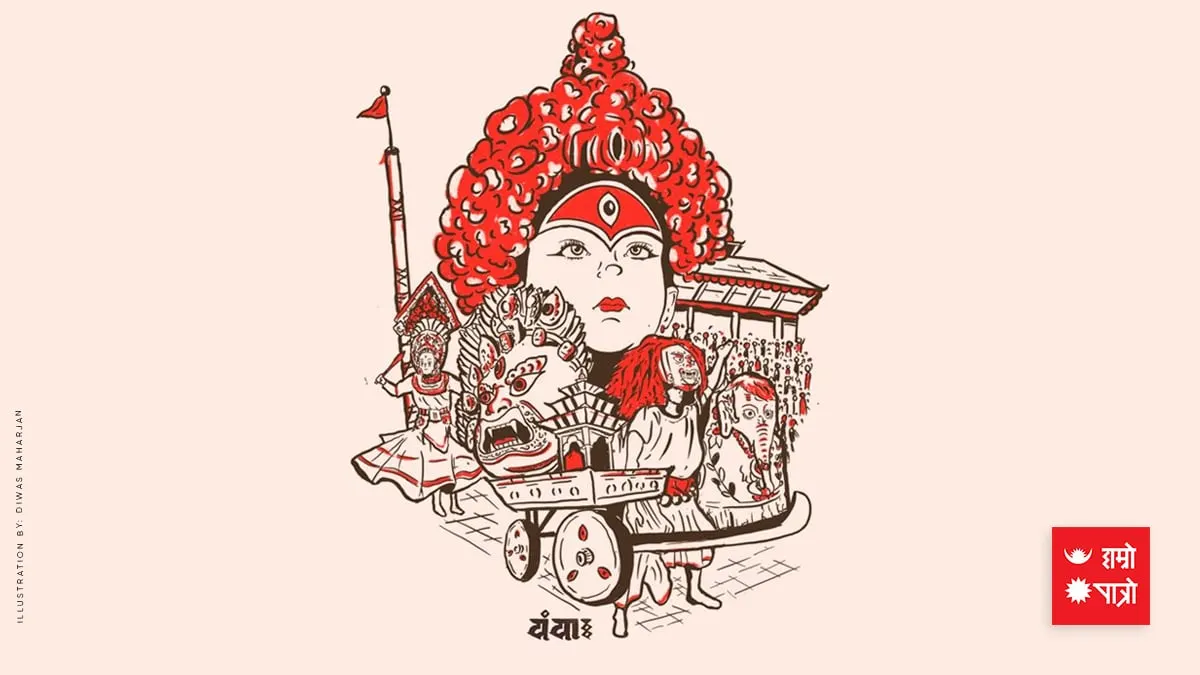
When Kathmandu people captured Lord Indra
Let's start with the legend that Lord Indra of the heavens came to Kathmandu in human form to steal the flowers and Parijat required for the fast of Vasundhara Devi, his mother. As lord Indra stole flowers without asking permission from the gardener, they used their tantric power to find Indra and tied him up in the middle of the road.
The idols of Indra tied at Indrachowk, Kilagal and Naradevi in Kathmandu are also displayed in high Dabali, stage. To free her son Indra, who was imprisoned by the people of Kathmandu, his mother herself came to Kathmandu and took Indra back, promising to give adequate fog and mists in return for her son. The legend that rice grows and ripens on time due to the same special fog in this season is still alive in the vernacular. The main function of Indrajatra is to set up a lingo (flag) and organize a rath yatra in a joyous atmosphere.
After the black book/ Goat, prepared for a special ritual by worshiping the tantric method, is left in the forest at Ugrachandi Nala in Kavre district, the first plant's leaf eaten by the goat is cut and the rainbow flag lingo on Ekadashi day is prepared from that tree.
The lingo prepared in this way is also called 'Yonsi' in the local Nepal language. The lingo is placed in front of the idol of the great Kal Bhairav at Hanuman Dhoka in Basantapur Darwar Square. Once this Lingo holds high, Indra Jatra movement commences. However, this year is stagnant, we hope and wish the commemoration could be continued next year. The special lingo prepared in this way is decorated with various symbols and flags. Worship is done by placing a statue of an elephant with Indra at the base of the lingo.
History and process of Indra Jatra
In Kathmandu, the Indra Jatra is believed to have been practiced by the Lichchavikalin king Gunakamdev in the tenth century, while the Kumari Jatra is believed to have started in the mid-eighteenth century. On this day, the unprecedented tolerant relationship between the Buddhist Newa community of Kathmandu and the Newa communities of Hindu faith can be seen in Basantapur Durbar Square in Kathmandu. Thus, the Newa community celebrates Indrajatra with joy and enthusiasm for eight days with various stages and cultural pageants.
Also, three days after the holding of the lingo, Kumari, Ganesh, and Akash Bhairav (Savbhaku), who are living goddesses in the Basantapur Durbar Square area, have a tradition of making a rath yatra. It is also customary to stay awake all night at Indradaha in Dahchok, about 7.2 km west of Kathmandu, and take a bath the next day.
Ananta Chaturdashi Vrata
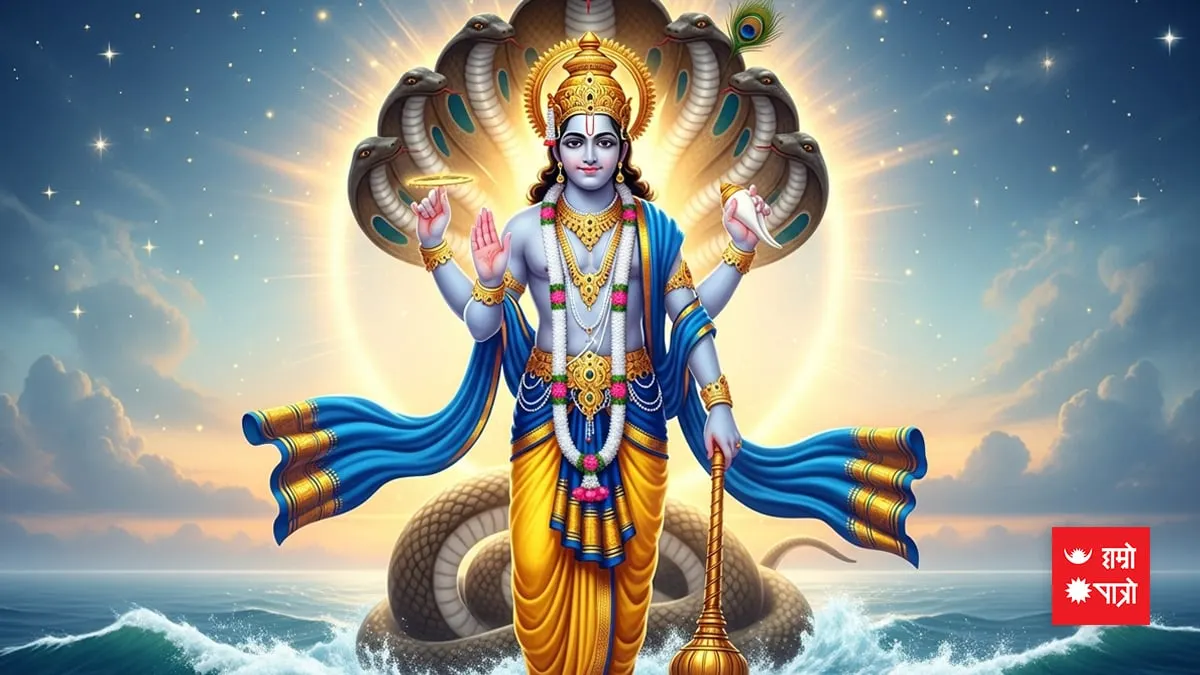
अनन्त चतुर्दशी व्रत
Exclusive audio
Om Anantaya Namah
The day of Ananta Chaturdashi is observed by worshipping and venerating Lord Ananta (Lord Vishnu) with devotion and fasting. It falls on the Chaturdashi (14th day) of the bright fortnight (Shukla Paksha) in the month of Bhadra.
Religious Significance:
According to Hindu belief, after the Pandavas lost all their wealth and honor in a game of dice, they were forced to live a difficult life in the forest with their wife, Draupadi. During this time, Lord Krishna advised Yudhishthira to observe the Ananta Chaturdashi fast with full devotion. Following Krishna’s guidance, the five Pandavas performed the rituals of this fast, and as a result, they were relieved from their suffering and misfortune.
Connection with Janai Purnima:
Those who, for any reason, couldn’t change their sacred thread (Janai/Yajnopavita) on Shravan Shukla Purnima (Janai Purnima), do so today with proper rituals. A sacred thread consecrated with the “Ananta mantra” is tied today, which is believed to bring auspicious outcomes for the entire year. This thread is called “Ananta Sutra”, and the fourteen knots in the thread symbolize the fourteen worlds (lokas). Traditionally, men tie it on their right arm, while women tie it on their left arm.
In Hinduism, today is also considered an auspicious day to begin any new, positive venture
Puja Method (Worship Procedure):
On this day, one should wake up early in the morning, take a bath, and perform daily purification rituals with a pure and focused mind. Then, prepare the necessary items for the worship. First, establish a Kalash (sacred water pot) and place it on an eight-petaled lotus design (Ashta Dal). Next, make a symbolic idol of Lord Ananta (a form of Lord Vishnu) using Kusha grass, and place it beside the Kalash. Then, place the Ananta Sutra, a sacred thread with fourteen knots, near the Kalash.With a pure heart and mind, perform the worship of Lord Anantanath (Lord Vishnu). Offer incense (dhoop), lamp (deep), food offerings (naivedya), and rice grains (akshata) to the deity. After completing the worship, one should make a wish and offer donations to a Brahmin according to their capacity, which is considered highly auspicious.
Finally, tie the Ananta Sutra which was placed near the Kalash on your arm. It is believed that by doing so, Lord Ananta is pleased and bestows blessings and prosperity. The afternoon is considered the most suitable time to perform this puja. This fast is believed to be especially beneficial for those desiring children or those facing financial difficulties, as it brings peace and relief from hardships.
Upcomming Events
-
27Aashadha
-
28AashadhaPradosh Vrata tomorrow
-
29AashadhaBhanu Jayanti 2 days remaning
-
31AashadhaWorld Youth Skill Day 4 days remaning
-
1ShrawanSaune Shankranti/Luto Falne Din/Dakshinaayan Arambha 6 days remaning
-
5ShrawanSurya Pooja 10 days remaning
-
6ShrawanBudhastami Vrata/Gorakhkali Puja 11 days remaning
-
9ShrawanHarishayani Ekadashi Vrata/Chaturmaas Vrata Aarambha 14 days remaning
-
10ShrawanPradosh Vrata 15 days remaning
-
12ShrawanWorld Hepatitis Day 17 days remaning
-
13ShrawanGuru Purnima Vrata/Vyas Jayanti/World Tiger Day 18 days remaning
-
14Shrawan
-
15ShrawanKhir Khane Din 20 days remaning
-
16ShrawanWorld BreastFeeding Week 21 days remaning
-
18ShrawanVitak Katha Prarambha 23 days remaning
-
21ShrawanGorakhkali Puja 26 days remaning
-
23ShrawanNational Soil Conservation Day 28 days remaning
-
24Shrawan
-
25ShrawanSom Pradosh Vrata 30 days remaning
-
26ShrawanGathāṃmugaḥ Caḥhre 31 days remaning
-
27ShrawanInternational Youth Day 32 days remaning
-
28ShrawanGunla Parwa Arambha/World Calligraphy Day 33 days remaning
-
30ShrawanVaraha Jayanti 35 days remaning
-
1BhadraNag Panchami Barta/Tharu Guriya Parwa/Singh Sankranti 37 days remaning
-
2BhadraKalki Jayanti 38 days remaning
-
3BhadraTulasidas Jayanti/National Information Day/World Photography Day 39 days remaning
-
4BhadraGorakhkali Puja 40 days remaning
-
7BhadraPutrada Ekadashi Vrata 43 days remaning
-
9BhadraPradosh Vrata 45 days remaning
-
12Bhadra
-
13BhadraGaijatra/International Day Against Nuclear Tests 49 days remaning
-
14Bhadra
-
15BhadraNational Library Day 51 days remaning
-
16BhadraMangal Chauthi Vrata 52 days remaning
-
18BhadraGaura Saptami 54 days remaning
-
19BhadraShree Krishna Janmashtami/Gaura Parva/Gorakhkali Puja/Durwashtami 55 days remaning
-
20Bhadra
-
22BhadraAja Ekadashi Vrata/Nijamati Sewa Diwas 58 days remaning
-
23Bhadra
-
25BhadraWorld Suicide Prevention Day 61 days remaning
Jyotish
-
Jyotish Damodar Poudelनेपाल संस्कृत विश्व बिद्यालय�...
-
Jyotish Pandit Mukunda Nepalज्योतिष पण्डित मुकुन्द नेपाल�...
-
Jyotish Smarika Acharyaबाल्मीकि बिद्यापिठ बाट ज्योत�...
-
Jyotish Vaman Sapkotaशिक्षा - व्याकरणाचार्य, पौरोही...
-
Jyotish Narayan Prasad Bhandariज्योतिषका उप-प्राध्यापक (lecturer of A...
-
Jyotish Mukunda Sharmaस्वाध्याय, सत्सङ्ग र सदाचारजस�...
-
Jyotish Purushottam Ghimireनेपाल संस्कृत विश्वविद्यालय, �...
-
Jyotish Khageshwor Subediगुरुकुल पद्दति बाट ज्योतिषीय �...
-
Jyotish Dharmendra Krishna Paudelशास्त्री धर्मेन्द्र कृष्ण पौ�...
-
Jyotish Mohan Ghimireसम्पुर्णानन्द संस्कृत विश्वव...
-
Jyotish Narayan Prasad Gautamगुरुकुल शिक्षा प्रणालीबाट ज्�...
-
Jyotish Krishna Prasad Bhandariउपप्राध्यापक (Asst. professor of Sanskrit) नेपा�...
-
Jyotish Hamro patroनेपाल संस्कृत विश्वविद्यालय �...
-
Jyotish Damodar Kaushikज्योतिष र व्याकरण विषयमा आचार�...
-
Jyotish Amrit Paudelवाराणसीकै सम्पूर्णानन्द संस्...
-
Jyotish Dipendra Khatiwadaसम्पुर्णानन्द संस्कृत बिश्वब...
-
Jyotish Deepak Prasad Kafleसम्पूर्णानन्द संस्कृत विश्वव...
-
Jyotish Kuresh Pandey११ वर्षको अनुभवसहित विभिन्न ध�...
-
Jyotish Ghanashyam Pokharelनेपाल संस्कृत विश्वविद्यालयब...
call
Hororscope
मेष (चु, चे, चो, ला, लि, लु, ले, लो, अ) नोकरी वा पेशामा तर्कशक्तिले अरुलाई प्रभावित पार्न सक्नुहुनेछ। महत्वकांक्षी योजना पूरा गर्नको लागि संघर्ष गर्नुपर्ला। स्वास्थ्यमा चिसोबाट जोगिनुहोस्। आजको शुभ रंग हरियो हो भने शुभ अंक ६ रहेको छ।




Liked by: