
Upcomming Events
-
27Aashadha
-
28AashadhaPradosh Vrata tomorrow
-
29AashadhaBhanu Jayanti 2 days remaning
-
31AashadhaWorld Youth Skill Day 4 days remaning
-
1ShrawanSaune Shankranti/Luto Falne Din/Dakshinaayan Arambha 6 days remaning
-
5ShrawanSurya Pooja 10 days remaning
-
6ShrawanBudhastami Vrata/Gorakhkali Puja 11 days remaning
-
9ShrawanHarishayani Ekadashi Vrata/Chaturmaas Vrata Aarambha 14 days remaning
-
10ShrawanPradosh Vrata 15 days remaning
-
12ShrawanWorld Hepatitis Day 17 days remaning
-
13ShrawanGuru Purnima Vrata/Vyas Jayanti/World Tiger Day 18 days remaning
-
14Shrawan
-
15ShrawanKhir Khane Din 20 days remaning
-
16ShrawanWorld BreastFeeding Week 21 days remaning
-
18ShrawanVitak Katha Prarambha 23 days remaning
-
21ShrawanGorakhkali Puja 26 days remaning
-
23ShrawanNational Soil Conservation Day 28 days remaning
-
24Shrawan
-
25ShrawanSom Pradosh Vrata 30 days remaning
-
26ShrawanGathāṃmugaḥ Caḥhre 31 days remaning
-
27ShrawanInternational Youth Day 32 days remaning
-
28ShrawanGunla Parwa Arambha/World Calligraphy Day 33 days remaning
-
30ShrawanVaraha Jayanti 35 days remaning
-
1BhadraNag Panchami Barta/Tharu Guriya Parwa/Singh Sankranti 37 days remaning
-
2BhadraKalki Jayanti 38 days remaning
-
3BhadraTulasidas Jayanti/National Information Day/World Photography Day 39 days remaning
-
4BhadraGorakhkali Puja 40 days remaning
-
7BhadraPutrada Ekadashi Vrata 43 days remaning
-
9BhadraPradosh Vrata 45 days remaning
-
12Bhadra
-
13BhadraGaijatra/International Day Against Nuclear Tests 49 days remaning
-
14Bhadra
-
15BhadraNational Library Day 51 days remaning
-
16BhadraMangal Chauthi Vrata 52 days remaning
-
18BhadraGaura Saptami 54 days remaning
-
19BhadraShree Krishna Janmashtami/Gaura Parva/Gorakhkali Puja/Durwashtami 55 days remaning
-
20Bhadra
-
22BhadraAja Ekadashi Vrata/Nijamati Sewa Diwas 58 days remaning
-
23Bhadra
-
25BhadraWorld Suicide Prevention Day 61 days remaning
Jyotish
-
Jyotish Pandit Mukunda Nepalज्योतिष पण्डित मुकुन्द नेपाल�...
-
 Jyotish Dharmendra Krishna Paudelशास्त्री धर्मेन्द्र कृष्ण पौ�...
-
 Jyotish Damodar Poudelनेपाल संस्कृत विश्व बिद्यालय�...
-
Jyotish Smarika Acharyaबाल्मीकि बिद्यापिठ बाट ज्योत�...
-
Jyotish Vaman Sapkotaशिक्षा - व्याकरणाचार्य, पौरोही...
-
Jyotish Narayan Prasad Bhandariज्योतिषका उप-प्राध्यापक (lecturer of A...
-
 Jyotish Mukunda Sharmaस्वाध्याय, सत्सङ्ग र सदाचारजस�...
-
Jyotish Purushottam Ghimireनेपाल संस्कृत विश्वविद्यालय, �...
-
Jyotish Khageshwor Subediगुरुकुल पद्दति बाट ज्योतिषीय �...
-
Jyotish Mohan Ghimireसम्पुर्णानन्द संस्कृत विश्वव...
-
Jyotish Narayan Prasad Gautamगुरुकुल शिक्षा प्रणालीबाट ज्�...
-
Jyotish Krishna Prasad Bhandariउपप्राध्यापक (Asst. professor of Sanskrit) नेपा�...
-
Jyotish Hamro patroनेपाल संस्कृत विश्वविद्यालय �...
-
Jyotish Damodar Kaushikज्योतिष र व्याकरण विषयमा आचार�...
-
Jyotish Amrit Paudelवाराणसीकै सम्पूर्णानन्द संस्...
-
Jyotish Dipendra Khatiwadaसम्पुर्णानन्द संस्कृत बिश्वब...
-
Jyotish Deepak Prasad Kafleसम्पूर्णानन्द संस्कृत विश्वव...
-
 Jyotish Kuresh Pandey११ वर्षको अनुभवसहित विभिन्न ध�...
-
Jyotish Ghanashyam Pokharelनेपाल संस्कृत विश्वविद्यालयब...


call
Hororscope
 Mesh
Mesh Brish
Brish Mithun
 Karkat
  Singha
  Kanya
Kanya Tula
Tula Brischik
 Dhanu
Dhanu  Makar
Makar  Kumbha
 Meen
Meen
मेष (चु, चे, चो, ला, लि, लु, ले, लो, अ) नोकरी वा पेशामा तर्कशक्तिले अरुलाई प्रभावित पार्न सक्नुहुनेछ। महत्वकांक्षी योजना पूरा गर्नको लागि संघर्ष गर्नुपर्ला। स्वास्थ्यमा चिसोबाट जोगिनुहोस्। आजको शुभ रंग हरियो हो भने शुभ अंक ६ रहेको छ।



2082 Jestha
9
Friday
May 23, 2025
जेठ कृष्ण एकादशी
Apara Ekadashi Vrata/Chittadhar Hridaya Janma Jayanti/Yugkavi Siddhicharan Shrestha Janma Jayanti
जेठ कृष्ण एकादशी

MY NOTE


अपरा एकादशी व्रत
Exclusive audio
Meaning of "APARA"
Apara means limitless. By observing the fast of this Ekadashi, people are believed to achieve unlimited and evergreen health and spirit.
Apara Ekadashi
It is believed that by observing Apara Ekadashi vrat all the sins of the person will be washed away. This Ekadashi is also popular by the name of ‘Achla Ekadashi’ and gives divine and auspicious results. Like all Ekadashi, the Apara Ekadashi is also dedicated to worshipping Lord Vishnu.
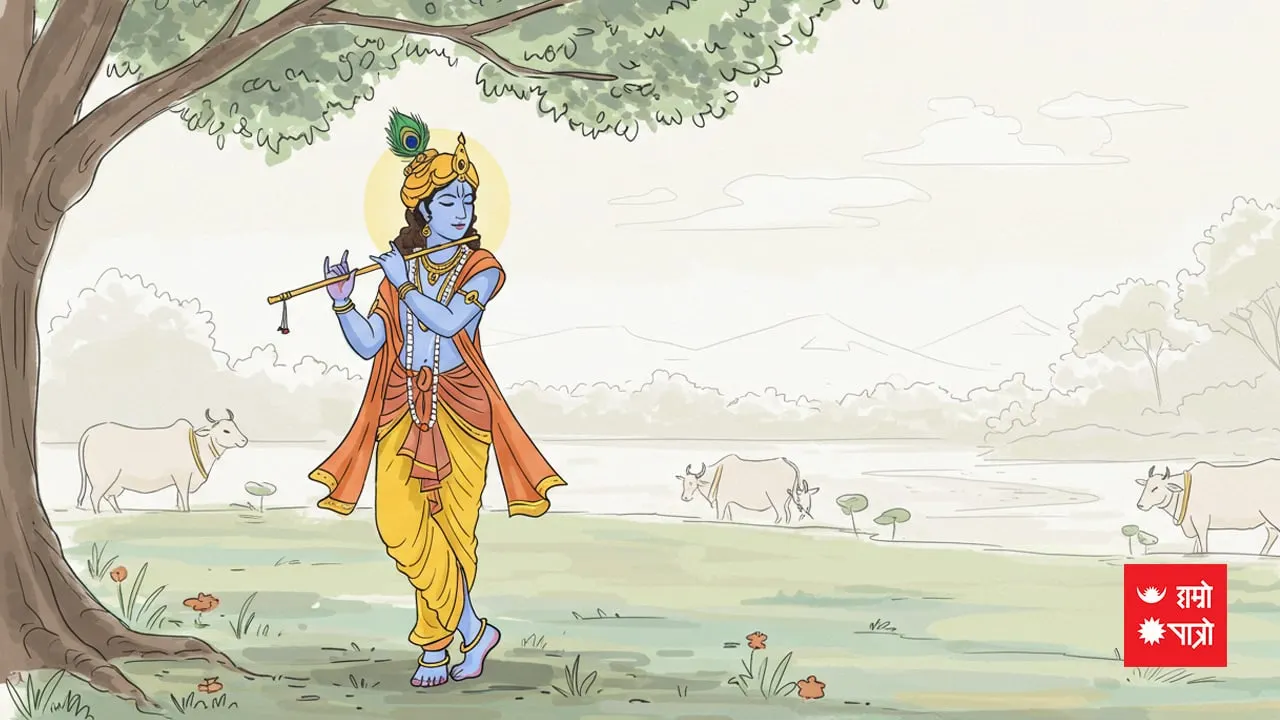
Apara Ekadashi described by Lord Krishna
The glory of Apara Ekadashi has been described by Lord Krishna Himself in the Brahmanda Purana, the simple translation of which is presented in this holy Ekadashi today. One day Yudhisthira asks Janardhan. What is the Ekadashi of Krishna paksha in the month of Jeshta? Yudhisthira urges Krishna to give a comprehensive description of the glory of this Ekadashi and to summarize Hari's grace.Shri Krishna reveals with great respect and love, King, you have asked a good question, the answer to this question will benefit the entire human society.
Shri Krishna said that the poetic nectar, devotional context, and holy grace of this Ekadashi will bring welfare to the entire human world.Krishna ji added. O Rajan, this holy Ekadashi of the month of Jeshtha is Apara Ekadashi. Devotees who glorify by fasting on this Ekadashi will be famous all over the world. Even great sins like cow slaughter, killing of Brahmins, killing of fetuses, or adultery will be cut off by fasting and devotion, and penance on this Ekadashi.
The real meaning of Brahman is not related to any caste, religion, or creed, but we want to make everyone aware of the essence of being counted in the category of Brahman is because of their quest for knowledge and welfare. Shri Krishna commands.O Rajan, those people who give false information, conspire for untruth without supporting the truth, they are considered to be extremely sinful. Lord Krishna believes that those who misinterpret or read the Vedas, do not do their duty, deceive others, and do bad deeds are all great sinners.
Lord Krishna believes that all these great sinners can take refuge in Hari and devotion to this Ekadashi to atone for their sins. Those who do not fast on this day are forced to be born on earth again, this day is very important for divine integration.
What is done in Apara Ekadashi?
Tribikarma is worshiped on this day, there are few other dates more important than this Ekadashi for atonement and penance. Apaar means infinite or limitless, the name is used because of the glory and fruit of this Ekadashi. After waking up in the morning, bathing before sunrise, using basil leaves, lightening incense, and lamps (Diyo) to Lord Bishnu, visiting the temple of Lord Bishnu, hearing the Apara Ekadashi Mahatma from the mouthpiece of the speaker are the rituals of this day.
On this Ekadashi, it is advised not to consume food and use oil on the body, all these things have the same scientific significance. Remember that in Ekadashi Vrat, it is important to focus not only on food fasting but also on reducing negative thoughts and stress. The recitation of Bishnu Sahasranama is indispensable in Ekadashi, let this Ekadashi pass in the proximity of bhajan kirtan and purity as well as devotion.
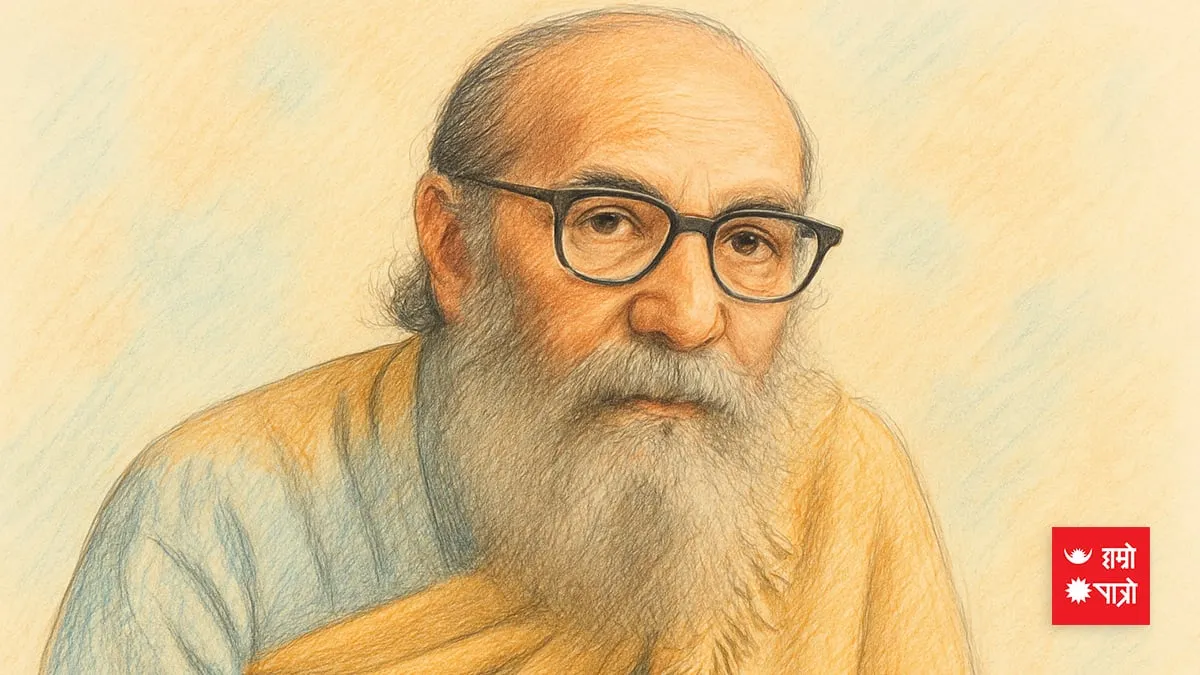
Chittadhar Hridaya Janmajayanti: an inspiration for Nepali poetry
चित्तधर हृदय जन्मजयन्ती
विशेष अडियो सामग्री
A rebel born as a poet
Poet Chittadhar was born on Jestha 5, 1962 BS in Raktakali, Kathmandu. His father Dravyadhar Tuladhar was a local businessman and mother Gyanalakshmi was a housewife. Chittadhar was jailed in 1997 BS for creating a poem "childless child", as this was a satire against autocratic Ranas, he was jailed by the Rana government. At that time, in 2002 BS, his wife moved to Kalimpong at her father's house and then Calcutta, she was also afraid of Ranas. Chittadhar was released from prison in 2002 BS. Since then, he has grown a beard. Chittadhar is also known for his long beard besides his immortal poetry that depicted the misery and oppression during the Rana regime.
Bicycle shop of Chittadhar
Upon release from prison, he cut his hair and beard only for three occasions, after the death of King Tribhuvan, after the death of King Mahendra and the death of his wife. He was married to Gyanprava but the couple did not have children. Together with his uncle Mandas Tuladhar, he set up a bicycle shop in Kamalachhi, Bhotahiti. The name of the shop was 'Mandas Chittadhar's Bicycle Shop'. He also sold books from this shop.
At that time, the shop was very busy with cycles and readers. In that shop, many writers also gave the address of their correspondence. Pandit Somnath Sigdel also concluded his correspondence address in the same shop, the shop was well-known for the mobility of cycles and the knowledge seekers and rebels.
33 Books
Chittadhar wrote 33 books. They were based on the Nepal language. Due to his dedicated writing, unceasing creation, and unceasing practice, King Mahendra awarded him the title of 'Kavikeshwari' in 2013 BS. According to Phanindra Ratna Bajracharya, he was also given a literary title from Chwasapasa, a Newa literary platform of those days. Chittadhar created literature under different names. Sometimes he wrote as a devotee of Buddhism and sometimes as a devotee of Chittadhar. He also wrote as Chitta, Hridaya, Ruparatna Upasak, Hridayadarshan Upasak, Dharmavir, Manmaya, and Buddhibajra Bajracharya. It was his inspiration that led Yuga Kawi Siddhicharan Shrestha to Dharmaratna Yami to write poetry in their mother tongue. Kedarman Vyathit also became a poet due to his inspiration.
Chittadhar was the first prose poet of Nepal language (Newa/ Newari Vasa). He wrote epics, short stories, songs, stories, essays, novels, plays, children's literature, criticism, and autobiographies. He was also known as a researcher and editor. He was also a publisher and translator. Accordingly, Ganesh Man Singh, the iron man of Nepali politics wrote, “After 2007, the Nepali language movement gained momentum and this was under the leadership of Chitadhar." Chittadhar was also at the forefront of giving alms. He donated more than a hundred valuable books from his collection to the Anandakuti Library. He sold his land to the Nepal Language Council and gave it in cash. He was also the one who offered gold deities to Swayambhu Vikas Mandal.

He also visited India, China, and Burma as the Deputy Leader of the Nepali Cultural Council.
His wife used to say, 'You have to do business.' Then Chittadhar would reply, 'Poets are poor and this is the destiny of words.' And he would go astray and draw pictures. He had learned to draw from Chandra Man Singh Maske in jail. Chitadhar's life is not a mediocre narration, its full of anecdotes, courage, life, and creativity. While giving a speech in Kathmandu in 2028 BS, Chittadhar was paralyzed.
After the arduous journey of 11 years, that is, on Jestha 26, 2039, he suffered a heart attack. Ten years after Chittadhar's death, a postage stamp with his face was issued. Various Guthis and awards were also established in his name.
A silver coin of five hundred rupees was also issued in his honor. His statue is also instituted in Kalimati, Kathmandu. Because he is the heritage of Nepali culture.
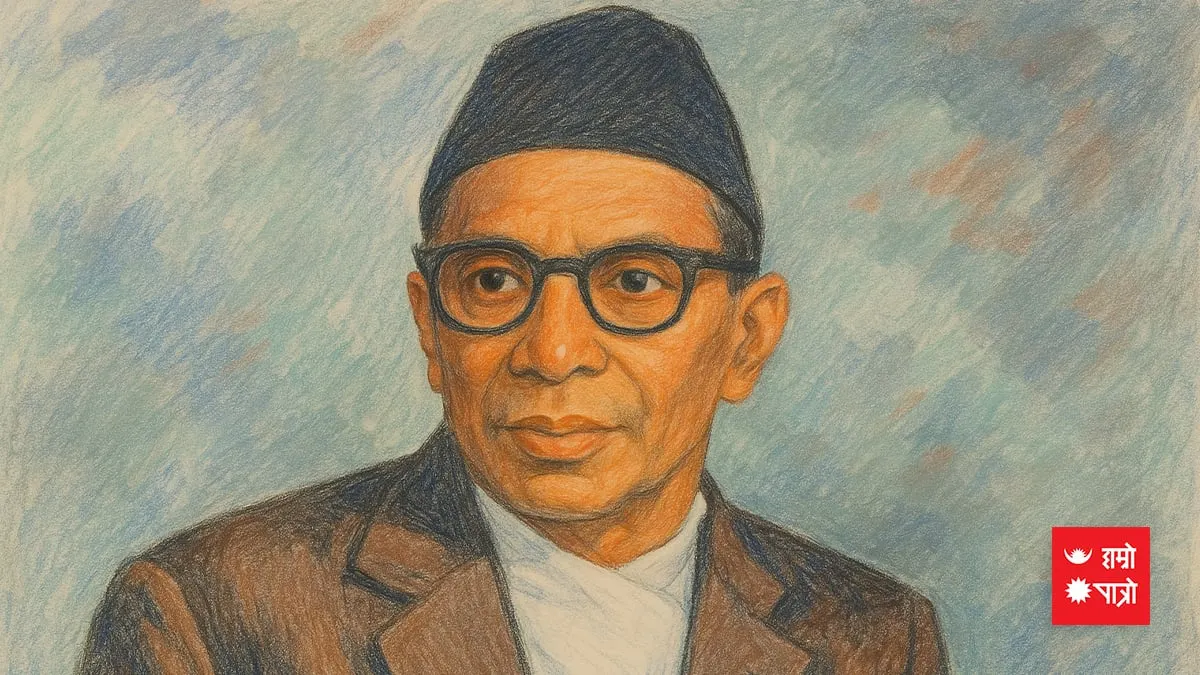
Yugakavi Siddhicharan Shrestha Janma Jayanti
युगकवि सिद्धिचरण श्रेष्ठ जन्म जयन्ती
Exclusive audio
Yugakavi Sidhhicharan Shrestha Janma Jayanti
113 years ago from today
Let's travel back to 1969BS, about 110 years ago from today, Siddhicharan Shrestha, the great poet of Nepali literature, was born in Okhaldhunga, a city of eastern Nepal. Every year on the day of Jeshtha Shukla Panchami, the birth anniversary of Yugakavi Siddhicharan Shrestha is celebrated.
Poet Shrestha's poems are equally relevant today that is why he is called Yugakavi, the poet of the era. We want to start with some of his lines (Translated from Nepali) very few people have heard or read this poem.
Like a swimming fish
Like a flying bird,
Like running time
He looked at
He went to the water and said “Catch That Fish”
He went to the sky and insisted Catch that bird
He went to Mahakala (God of Death) and begged me to stop time. No one said no, and they both got married.
What a twisted but wonderful feeling in this poem, as if the mood of a person is clearly expressed. Who says that this poem has traveled so many springs? It is still fresh and its proximity to the truth still holds universal. From the time of Siddhicharan to the present and commencing thousands of years, such feelings and lines have been and will be remembered in human beings, the poet Siddhicharan Shrestha. How sweet the simplicity of the concluding melody, marriage is not just a metaphor in his poem.
Mero Pyaro Okhaldhunga"
"Mero Pyaro Okhaldhunga" poem of Siddhicharan has become an anthem of the birthplace of Nepali who have left their birthplace and come to a different place of work. Narayan Gopal has sung this poem in the song immaculately sink with the feelings, adding the meanings to the verses immersed in the spirit of the poem. Okhaldhunga and poet Shrestha are so closely connected that the highway connecting Okhaldhunga and Katari has also been named as Siddhicharan Highway in memory of the poet. Poet Sidhhicharan advocates about the waves of destiny in his poem "Mero pyaro Okhaldhunga", these waves carry people out of their birthplaces and brings them to different cities and countries of work.
Poet Sidhhicharan had nine children. After the death of his first son at the age of 4, he has covered the pain of his son's grief in his creation "Bishwo Betha". This great poet started composing poetry at the young age of 13. After the catastrophic earthquake of 1990 BS, he collected the stories of the earthquake and wrote a collection of poems called Bhuichalo.
His poems can be found in both Nepali and Newari languages. The epoch-maker Siddhicharan Shrestha, with his profound knowledge of both languages, seems to be keen on portraying the realities of society and bringing reformist currents in his expressions. In his poems, there is a feeling and wish for everyone to be well and smile. What can portray global brotherhood "Vasudhaiva Kutumbakam" as much as his poems?Probably he wrote this poem as a threat to freedom, allow me to translate some verses of his poem "Bahula"
Poem "Bahula"
Mother, whatever they say, I am not a lunatic.
I haven't done anything I shouldn't have done,
I have not said anything that should not be said.
I have eyes, so let me see
I have a stomach, let me fill
May no one walk around naked, may everyone cover their shame
May my ear hear the voices?
May I be able to put ideas into speeches?
Even so, they say me lunatic
Mother, I am not a lunatic.
In the above poem "Bahula", there is a taste of his freedom, patriotism, and democratic expression. Let me present another translation of his creation, this one he wrote after the Rana regime fell, this is titled "Ba aaunuvayena" Father didn't come mother.
Poem: "Ba aaunuvayena"
It's raining
The wind is blowing
Time is running out, darkness alarms
The light is on,
The rice is cooked,
Mom is screaming
Ba (Father) has not come.
The era has changed,
Rana has fallen,
Says the chain is broken
But my father is yet to arrive
Awareness is found in his poems. While reading the poems, these social reformer lines feel like warriors, his pens have raised issues of multi-dimensional progress, carved things of prosperity and improvement.
He was sentenced to 18 years in prison by the Rana rulers for his views and freedom-oriented writings. Can you believe that poet Shrestha was sentenced to 18 years in prison by the Rana rulers just for using the word "revolution" in his poems? There was a time when anti-revolutionary rulers weighed every word of Shrestha's poems. It is said that the great warriors of the Nepali political revolution were also kept in jail along with Siddhicharan. Ganeshman Singh had praised the inspiration and personality of Shrestha's poetry in many formal and informal meetings and speeches.

Poet Shrestha was a huge fan of smoking "Hookah" a traditional oriental pipe for smoking tobacco. His friends called him "Kaji Dai."
The poet also worked in Sarada magazine, Gorkhapatra, Dainik Awaj, and Kavita magazine. At that time, Gorkhapatra was published only twice a week, he also worked as the editor of the daily Awaaz and Kavita magazines. In Nepali language, Urbasi, Mero Pratibimba, Anshu, Kopila, Vishwa Betha, Mangal Man, Junkiri, Kuhiro ra Gham, Bachiraheko Awaj, Jyanmara Saill, Tirimiritantra, Wali, Bhimsen Thapa, Yudhha ra Shanti, Atma Bilauna, Siddhicharanka pratinidhi kawita and Siddhicharan's Jail memoirs are the remarkable creations of this poet. The Newa languages include Lumbini, Trishna, Fuswan, Siswan, Gwaiswan, Muswan, Siddhicharan's essay collection and Gham.
Not yesterday, not tomorrow.
Laughs, plays, and cries, walks around, sings his songs
Sidhhicharan is here today
A philingo (Lightning substance) rose from the deep blacktop,
For the sake of extinguishing, the name of the one who lives is blinking
From postage cards to several statues of this poet, everywhere he smiles and his words translate a rebel into us. The poet, who addressed the era through poetry, died in the year 2049 BS. Every year on the 9th of Jeshta, the birth anniversary of this poet is celebrated.
-Suyog Dhakal
Upcomming Events
-
27Aashadha
-
28AashadhaPradosh Vrata tomorrow
-
29AashadhaBhanu Jayanti 2 days remaning
-
31AashadhaWorld Youth Skill Day 4 days remaning
-
1ShrawanSaune Shankranti/Luto Falne Din/Dakshinaayan Arambha 6 days remaning
-
5ShrawanSurya Pooja 10 days remaning
-
6ShrawanBudhastami Vrata/Gorakhkali Puja 11 days remaning
-
9ShrawanHarishayani Ekadashi Vrata/Chaturmaas Vrata Aarambha 14 days remaning
-
10ShrawanPradosh Vrata 15 days remaning
-
12ShrawanWorld Hepatitis Day 17 days remaning
-
13ShrawanGuru Purnima Vrata/Vyas Jayanti/World Tiger Day 18 days remaning
-
14Shrawan
-
15ShrawanKhir Khane Din 20 days remaning
-
16ShrawanWorld BreastFeeding Week 21 days remaning
-
18ShrawanVitak Katha Prarambha 23 days remaning
-
21ShrawanGorakhkali Puja 26 days remaning
-
23ShrawanNational Soil Conservation Day 28 days remaning
-
24Shrawan
-
25ShrawanSom Pradosh Vrata 30 days remaning
-
26ShrawanGathāṃmugaḥ Caḥhre 31 days remaning
-
27ShrawanInternational Youth Day 32 days remaning
-
28ShrawanGunla Parwa Arambha/World Calligraphy Day 33 days remaning
-
30ShrawanVaraha Jayanti 35 days remaning
-
1BhadraNag Panchami Barta/Tharu Guriya Parwa/Singh Sankranti 37 days remaning
-
2BhadraKalki Jayanti 38 days remaning
-
3BhadraTulasidas Jayanti/National Information Day/World Photography Day 39 days remaning
-
4BhadraGorakhkali Puja 40 days remaning
-
7BhadraPutrada Ekadashi Vrata 43 days remaning
-
9BhadraPradosh Vrata 45 days remaning
-
12Bhadra
-
13BhadraGaijatra/International Day Against Nuclear Tests 49 days remaning
-
14Bhadra
-
15BhadraNational Library Day 51 days remaning
-
16BhadraMangal Chauthi Vrata 52 days remaning
-
18BhadraGaura Saptami 54 days remaning
-
19BhadraShree Krishna Janmashtami/Gaura Parva/Gorakhkali Puja/Durwashtami 55 days remaning
-
20Bhadra
-
22BhadraAja Ekadashi Vrata/Nijamati Sewa Diwas 58 days remaning
-
23Bhadra
-
25BhadraWorld Suicide Prevention Day 61 days remaning
Jyotish
-
Jyotish Pandit Mukunda Nepalज्योतिष पण्डित मुकुन्द नेपाल�...
-
Jyotish Dharmendra Krishna Paudelशास्त्री धर्मेन्द्र कृष्ण पौ�...
-
Jyotish Damodar Poudelनेपाल संस्कृत विश्व बिद्यालय�...
-
Jyotish Smarika Acharyaबाल्मीकि बिद्यापिठ बाट ज्योत�...
-
Jyotish Vaman Sapkotaशिक्षा - व्याकरणाचार्य, पौरोही...
-
Jyotish Narayan Prasad Bhandariज्योतिषका उप-प्राध्यापक (lecturer of A...
-
Jyotish Mukunda Sharmaस्वाध्याय, सत्सङ्ग र सदाचारजस�...
-
Jyotish Purushottam Ghimireनेपाल संस्कृत विश्वविद्यालय, �...
-
Jyotish Khageshwor Subediगुरुकुल पद्दति बाट ज्योतिषीय �...
-
Jyotish Mohan Ghimireसम्पुर्णानन्द संस्कृत विश्वव...
-
Jyotish Narayan Prasad Gautamगुरुकुल शिक्षा प्रणालीबाट ज्�...
-
Jyotish Krishna Prasad Bhandariउपप्राध्यापक (Asst. professor of Sanskrit) नेपा�...
-
Jyotish Hamro patroनेपाल संस्कृत विश्वविद्यालय �...
-
Jyotish Damodar Kaushikज्योतिष र व्याकरण विषयमा आचार�...
-
Jyotish Amrit Paudelवाराणसीकै सम्पूर्णानन्द संस्...
-
Jyotish Dipendra Khatiwadaसम्पुर्णानन्द संस्कृत बिश्वब...
-
Jyotish Deepak Prasad Kafleसम्पूर्णानन्द संस्कृत विश्वव...
-
Jyotish Kuresh Pandey११ वर्षको अनुभवसहित विभिन्न ध�...
-
Jyotish Ghanashyam Pokharelनेपाल संस्कृत विश्वविद्यालयब...
call
Hororscope
मेष (चु, चे, चो, ला, लि, लु, ले, लो, अ) नोकरी वा पेशामा तर्कशक्तिले अरुलाई प्रभावित पार्न सक्नुहुनेछ। महत्वकांक्षी योजना पूरा गर्नको लागि संघर्ष गर्नुपर्ला। स्वास्थ्यमा चिसोबाट जोगिनुहोस्। आजको शुभ रंग हरियो हो भने शुभ अंक ६ रहेको छ।




Liked by: